
UPSC Mains 2025 GS2 Q16: model answer
Inequality in the ownership pattern of resources is one of the major causes of poverty. Discuss in the context of ‘paradox of poverty’.
What the question wants
Explain the paradox of poverty amid plenty and link it to unequal ownership of land, wealth and natural resources.
How to structure it
Intro: paradox defined. Body: ownership inequalities and how they cause poverty; resource-rich poor regions; remedies. Conclusion.
- 1Ownership inequalities and how they cause poverty
- 2Resource-rich poor regions
- 3Remedies
Model answer
The 'paradox of poverty' is the coexistence of widespread poverty with abundant resources and fast growth. India is the world's fourth largest economy by size, yet millions remain poor because ownership of assets is concentrated.
Ownership inequality
- Land: Agriculture Census 2015-16: marginal holdings are about 68% of holdings but operate about a quarter of the area. Landless labourers depend on wages.
- Wealth: Oxfam estimated the top 1% hold over 40% of national wealth (2023).
- Social: SCs and STs own less land and capital; women rarely hold land titles.
Why ownership causes poverty
- Without collateral, the poor cannot borrow; growth gains go to asset owners.
- Rent and interest flow from poor to rich.
- Weak bargaining power keeps wages low.
Resource-rich, people poor
- Jharkhand, Odisha and Chhattisgarh hold much of India's coal and iron ore but have among the highest poverty rates.
- Mining displaces tribals while profits go elsewhere; this is the local 'resource curse'.
Remedies
- Land reforms, tenancy laws, women's titles (SVAMITVA records).
- District Mineral Foundations and Samatha (1997) principle of sharing.
- Asset creation through MGNREGA, credit through SHGs and Mudra.
Multidimensional poverty fell sharply, with NITI Aayog estimating about 25 crore people moving out between 2013-14 and 2022-23. Lasting progress needs wider ownership, not only transfers.
Keywords, cases and data to drop in
poverty amid plenty land concentration resource curse DMF SVAMITVA MPI
Where most answers lose marks
- Not explaining the 'paradox'.
- Using unverifiable statistics.
Fresh examples from current affairs
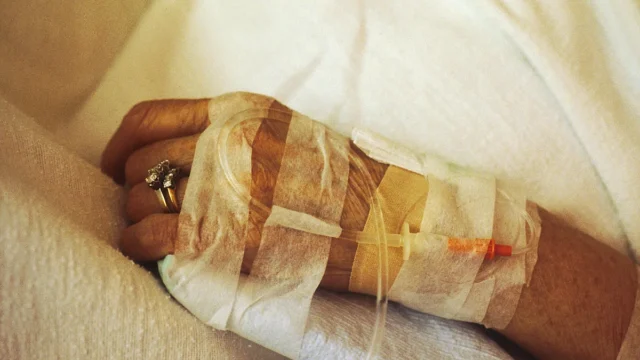
NPPA caps trade margins on 137 anti-cancer drugs: prices to fall up to 70% from 9 November
On 17 October 2026 the National Pharmaceutical Pricing Authority (NPPA) capped trade margins on 137 non-scheduled anti-cancer drugs at 30%, using its special public-interest power under Paragraph 19 of the Drugs (Prices Control) Order, 2013. The Government expects the retail price of these medicines to fall by up to 70%, and the new prices apply from 9 November 2026. The list includes costly immunotherapy drugs such as pembrolizumab and durvalumab.
UPSC angle: Prelims: NPPA, DPCO 2013 Para 19, trade margin, scheduled vs non-scheduled drugs. · Mains GS-II: affordable medicines and health equity.
18 Oct 2026
Draft rule to stop drug retailers and wholesalers from advertising prescription-only medicines
The Health Ministry has proposed amending the Drugs Rules, 1945 so that drug retailers, wholesalers and distributors also need prior Central Government sanction to advertise Schedule H, H1 and X medicines. Manufacturers already face this rule. The draft, G.S.R. 861(E) of 28 September 2026, follows DTAB advice and is open for comments for 30 days.
UPSC angle: Prelims: Drug schedules, DTAB. · Mains GS-II: health regulation; GS-III: AMR.
9 Oct 2026
Trade-margin cap of 30% extended to non-scheduled cancer medicines
The government has approved a cap on trade margins for non-scheduled anti-cancer medicines at 30% of MRP. It expects prices to fall by up to 70% and patients to save about ₹2,500 crore a year. NPPA found average mark-ups of about 170% on such drugs. A 2019 cap on 42 cancer drugs saved ₹984 crore a year.
UPSC angle: Prelims: NPPA, DPCO. · Mains GS-II: health; GS-III: pharma regulation.
8 Oct 2026
NCAHP notifies autonomous boards and digital registration for allied and healthcare professionals
The National Commission for Allied and Healthcare Professions has notified regulations for Autonomous Boards and a Central Assessment Committee, and for registering allied and healthcare professionals with unique IDs in State and Central Registers. It also notified a two-year competency-based Diploma in Medical Radiology and Imaging Technology with a six-month internship.
UPSC angle: Prelims: NCAHP Act year, D.MRIT. · Mains GS-II: health human resources.
7 Oct 2026Learn the concept
Question text as printed in the official UPSC question paper: https://www.upsc.gov.in/sites/default/files/GENERAL-STUDIES-PAPER-II-QP-CSM-25-010925.pdf The model answer is original Battle IAS work; use it to learn structure, not to memorise.