
UPSC Mains 2025 GS3 Q8: model answer
Seawater intrusion in the coastal aquifers is a major concern in India. What are the causes of seawater intrusion and the remedial measures to combat this hazard ?
What the question wants
Explain the process, causes and remedies, with Indian areas.
How to structure it
Intro: process. Body: (1) Causes; (2) Affected areas; (3) Remedies. Conclusion: Once an aquifer turns saline, restoring it takes decades; prevention is far cheaper.
- 1(1) Causes
- 2(2) Affected areas
- 3(3) Remedies
Model answer
Seawater intrusion is the movement of saline water into fresh coastal aquifers. Normally fresh groundwater pushes seaward; when its pressure falls, the salt-fresh boundary moves inland.
- 1Over-pumping and low recharge
- 2Fresh groundwater pressure falls
- 3Salt-fresh interface moves inland
- 4Wells turn saline
- 5Remedy: cut pumping, recharge, tidal barriers, injection wells
Causes
- Over-pumping of wells for farming, industry and cities.
- Less recharge due to paving, deforestation and dams reducing river flow.
- Sea-level rise and storm surges.
- Sand mining in rivers and on beaches, removing natural barriers.
- Aquaculture ponds and backwater salinity.
Affected areas: Saurashtra and Kutch coast (Gujarat), Minjur aquifer north of Chennai, parts of Kerala, Odisha and West Bengal coasts.
Remedies
- Regulate pumping; licensing under groundwater laws.
- Artificial recharge: check dams, recharge wells, percolation tanks.
- Tidal regulators and salinity barriers (bandharas in Gujarat).
- Injection wells to create a fresh water barrier.
- Protect mangroves and dunes; stop illegal sand mining.
- Monitoring wells and aquifer mapping under NAQUIM.
Once an aquifer turns saline, restoring it takes decades; prevention is far cheaper.
Keywords, cases and data to drop in
saline-fresh interface over-extraction Saurashtra Minjur bandharas NAQUIM
Where most answers lose marks
- Confusing intrusion with surface flooding.
Fresh examples from current affairs
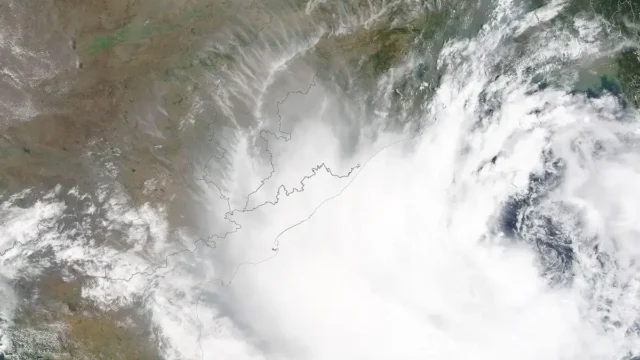
IMD launches a map-based Decision Support System for cyclone and marine warnings
On 12 October 2026 the India Meteorological Department dedicated a Cyclone Warning and Marine Weather Services Decision Support System to the nation. The WebGIS platform shows cyclone track, intensity, winds, rainfall, storm surge and district-wise warnings on one map for disaster managers and the public.
UPSC angle: Prelims: IMD, cone of uncertainty, storm surge. · Mains GS-III: early warning and disaster preparedness.
13 Oct 2026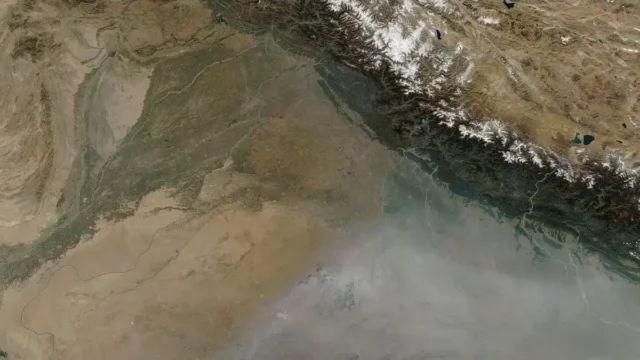
CAQM reviews stubble-burning hotspots in Amritsar and Tarn Taran
A CAQM team visited Amritsar and Tarn Taran, two Punjab hotspots of paddy stubble burning, on 9-10 October 2026 and reviewed crop residue machinery, baler supply chains and control rooms. CAQM flying squads are deployed in 18 Punjab districts from 1 October to 30 November 2026 to check burning during harvest.
UPSC angle: Prelims: CAQM, in-situ/ex-situ. · Mains GS-III: air pollution, crop residue.
10 Oct 2026
CAQM flying squads find 17 road-dust violations along Delhi’s Ring Road
On 3 October 2026 four CAQM flying squads inspected 25 stretches, about 35 km, of Delhi's Inner and Outer Ring Road managed by PWD. They found 17 violations of heavy visible road dust and construction and demolition waste. CAQM directed agencies to clean roads regularly to stop traffic from lifting dust back into the air.
UPSC angle: Prelims: CAQM, pollution sources. · Mains GS-III: urban air pollution.
4 Oct 2026
Mumbai Port’s Jawahar Dweep declared India’s first plastic-free oil terminal
On 2 October 2026 the Mumbai Port Authority declared its Jawahar Dweep Marine Oil Terminal plastic-free, making it India's first plastic-free oil terminal. The Union Ports Minister marked it at the port's Swachhata Abhiyan on Gandhi Jayanti, honoured sanitation workers and dedicated the port's Oil Spill Response facilities to the nation.
UPSC angle: Mains: Green port initiatives.
2 Oct 2026Learn the concept
Question text as printed in the official UPSC question paper: https://www.upsc.gov.in/sites/default/files/GENERAL-STUDIES-PAPER-III-QP-CSM-25-010925.pdf The model answer is original Battle IAS work; use it to learn structure, not to memorise.