
Non-Cooperation Movement (1920-22): Background, Programme, Spread, Chauri Chaura and Significance (UPSC Notes + PYQs)
UPSC has already asked about this. Read the story with these questions in mind.
Background: the world after 1918
The First World War ended with Indians expecting reward for their help: over a million men had served overseas and India had paid heavily in money and goods. Instead came rising prices, shortages, the influenza epidemic of 1918, and disappointment with the Montagu-Chelmsford reforms, which offered only limited dyarchy in the provinces. The Rowlatt Act of March 1919 allowed detention without trial. Gandhi, fresh from Champaran (1917), Kheda (1918) and the Ahmedabad mill strike (1918), called the first all-India satyagraha against it. In April 1919 General Dyer fired on an unarmed crowd at Jallianwala Bagh in Amritsar, and the Hunter Committee’s mild verdict, along with praise for Dyer in Britain, turned many moderates. At the same time Indian Muslims were angry at the harsh treatment of the Ottoman Sultan, the Khalifa. These streams came together into the first nationwide mass movement under Gandhi.
Background
- Rowlatt Act (March 1919): detention without trial; “no appeal, no vakil, no daleel”.
- Jallianwala Bagh (13 April 1919) and the Hunter Committee whitewash.
- Khilafat issue: the harsh treaty with Turkey; the Ali brothers joined hands with Gandhi.
- Post-war economic distress and disappointment with the Montagu-Chelmsford reforms.
- 1War-time hardship and disappointing reforms
- 2Rowlatt Act and satyagraha (1919)
- 3Jallianwala Bagh (13 April 1919)
- 4Khilafat grievance
- 5Non-Cooperation launched (1 August 1920)
Programme
Boycott: government schools and colleges, law courts, legislatures (elections of 1920), foreign cloth, titles. Constructive: national schools (Jamia Millia, Kashi Vidyapith, Gujarat Vidyapith), panchayats for disputes, khadi and the charkha, Hindu-Muslim unity, removal of untouchability. A Tilak Swaraj Fund of one crore rupees was raised.
Spread across India
- Awadh Kisan Sabha (Baba Ramchandra), Eka movement.
- Moplah uprising in Malabar (1921).
- Forest satyagraha in Andhra; Alluri Sitarama Raju’s Rampa rebellion.
- Akali movement in Punjab for control of gurdwaras.
- Assam tea garden workers’ strikes.
- Boycott of the Prince of Wales’s visit (November 1921).
- SurrenderTitles and honours
- BoycottSchools, courts, councils, foreign cloth
- BuildNational schools, panchayats, khadi
- Later stageNon-payment of taxes, civil disobedience
Chauri Chaura and withdrawal
On 4 February 1922, a crowd at Chauri Chaura (Gorakhpur) set fire to a police station, killing 22 policemen. Gandhi called off the movement at the Bardoli meeting on 12 February 1922. Many leaders, including Motilal Nehru and C.R. Das, were critical; the Swaraj Party (1923) followed.
Khilafat and the Congress
The Khilafat Committee, led by the Ali brothers (Muhammad Ali and Shaukat Ali), Maulana Azad, Hakim Ajmal Khan and Hasrat Mohani, demanded that the Sultan of Turkey keep control over Muslim holy places. Gandhi saw this as a chance to build Hindu-Muslim unity. In June 1920 an all-party meeting at Allahabad approved non-cooperation, and the Khilafat Committee launched it on 31 August 1920. The Congress approved the programme at a special session in Calcutta (September 1920) under Lala Lajpat Rai, and the regular session at Nagpur (December 1920) under C. Vijayaraghavachariar endorsed it, also reorganising the Congress on linguistic provinces, with village and mohalla committees and a four-anna membership.
| Session | Date | Decision |
|---|---|---|
| Calcutta (special) | September 1920 | Programme of non-cooperation approved |
| Nagpur | December 1920 | Programme ratified; swaraj within a year; new Congress constitution |
| Ahmedabad | December 1921 | Gandhi given authority to lead civil disobedience |
| Bardoli (CWC) | February 1922 | Movement withdrawn after Chauri Chaura |
Significance
First truly all-India mass movement; the Congress became a mass organisation with a new constitution (linguistic PCCs, four-anna membership); fear of the Raj weakened; Hindu-Muslim unity peaked, though it frayed after the Khilafat issue ended in 1924.
Who took part and how
| Group | Form of participation |
|---|---|
| Students | Left government schools; joined Jamia Millia Islamia, Kashi Vidyapith, Gujarat Vidyapith, Bihar Vidyapith |
| Lawyers | C.R. Das, Motilal Nehru, Rajendra Prasad, Vallabhbhai Patel gave up practice |
| Merchants | Refused to import foreign cloth; value of imports fell sharply in 1921-22 |
| Peasants | Awadh Kisan Sabha, no-revenue campaigns in Guntur, forest satyagrahas |
| Workers | Strikes in Assam tea gardens and on railways |
| Women | Picketing of liquor and cloth shops; spinning; donations to the Tilak Swaraj Fund |
The government’s response was firm. By December 1921 about 30,000 people were in jail. The visit of the Prince of Wales in November 1921 was met with a hartal across India and with riots in Bombay.
Regional streams within the movement
Non-Cooperation drew in local struggles that had their own grievances. In Punjab, the Akali movement fought to free gurdwaras from corrupt mahants. In Malabar, the Moplah (Mappila) rising of 1921 began as a tenant and Khilafat struggle against landlords and the state but turned violent and partly communal. In Andhra, peasants in Guntur refused to pay taxes and forest laws were defied. In Assam, tea garden workers walked off the plantations. In Awadh, Baba Ramchandra led tenants against eviction and illegal levies. Many of these went further than Gandhi wanted, which showed both the reach of the movement and the difficulty of keeping a mass struggle disciplined and non-violent.
Was withdrawal right? The debate
On 5 February 1922 a crowd at Chauri Chaura in Gorakhpur district set fire to a police station, killing 22 policemen. Gandhi called off the movement at Bardoli on 12 February. Motilal Nehru, C.R. Das, Subhas Bose and Jawaharlal Nehru were dismayed, and many Khilafatists felt betrayed. Gandhi’s defenders argue that he had always made non-violence a condition, that the movement was losing energy and that the government was preparing heavy repression; withdrawal saved the movement from being crushed and allowed it to regroup. Critics say a national movement cannot be halted for one local incident. In a Mains answer, present both sides and conclude that withdrawal was consistent with Gandhi’s strategy of struggle, truce and struggle, but cost the Hindu-Muslim unity built in 1920-21, especially after Turkey itself abolished the Caliphate in 1924.
Non-Cooperation in Prelims: common traps
Remember that the Khilafat Committee began non-cooperation on 31 August 1920, while Gandhi’s formal launch is dated 1 August 1920, the day Tilak died. Gandhi returned the Kaiser-i-Hind medal he had received for work in South Africa. The national institutions of this period include Jamia Millia Islamia (Aligarh, 1920, later moved to Delhi), Kashi Vidyapith and Gujarat Vidyapith. Chauri Chaura lies in Gorakhpur district of present-day Uttar Pradesh, and the withdrawal resolution was passed at Bardoli, not Ahmedabad. Gandhi was tried for sedition for his articles in Young India.
Non-cooperation Movement: UPSC angle
For UPSC CSE
Prelims: sessions, programme items, regional movements, Chauri Chaura. Mains GS-I: why Gandhi withdrew; significance of the movement.
Non-cooperation Movement UPSC PYQs (Prelims)
Questions UPSC has actually asked, from the official papers. Pick an option to check yourself.
Consider the following subjects with regard to Non-Cooperation Programme :
– I. Boycott of law-courts and foreign cloth
– II. Observance of strict non-violence
– III. Retention of titles and honours without using them in public
– IV. Establishment of Panchayats for settling disputes
How many of the above were parts of Non-Cooperation Programme?
The Nagpur Congress (1920) asked people to surrender titles and honours, not keep them. It also asked them to boycott courts, schools, councils and foreign cloth, to set up panchayats to settle disputes, and to stay strictly non-violent. I, II and IV were part of it; III was not. Answer as per the official UPSC key · Battle IAS PYQ bankAnswer (c) & why
The Rowlatt Act aimed at
The Rowlatt Act (March 1919) let the government jail suspects without trial for up to two years and try cases in special courts with no appeal: “no vakil, no dalil, no appeal”. Gandhi’s Rowlatt Satyagraha against it led to Jallianwala Bagh. Answer as per the official UPSC key · Battle IAS PYQ bankAnswer (b) & why
Mains PYQs on this topic
Questions from the official UPSC Mains papers (2023-2026 in the Battle IAS Mains bank), newest first. Each links to a model answer.
- UPSC Mains 2026 · GS Paper I · Q3 · 10 marks
The significance of the Gandhian movements lay in the masses they mobilized. Elucidate.
Quick quiz
The Non-Cooperation programme was approved at which regular Congress session?
The special Calcutta session first accepted it; Nagpur ratified it.Answer (b)
Chauri Chaura is in which district?
Gorakhpur, UP.Answer (b)
FAQs
When did the Non-Cooperation Movement start?
On 1 August 1920.
Why was it withdrawn?
Because of violence at Chauri Chaura on 4 February 1922.
Which issue linked Muslims to the movement?
The Khilafat issue.
What was the Tilak Swaraj Fund?
A fund of one crore rupees raised to finance the movement.
What was the Khilafat movement?
A movement by Indian Muslims after the First World War to protect the position of the Ottoman Sultan as Khalifa. Gandhi linked it with non-cooperation to build Hindu-Muslim unity.
Why was the Congress constitution changed at Nagpur?
To turn the Congress into a mass party: provincial committees on linguistic lines, a Working Committee of 15, committees down to villages and a membership fee of four annas.
What came after the withdrawal?
The Congress split into Swarajists (C.R. Das, Motilal Nehru), who entered councils, and No-changers, who focused on constructive work under Gandhi.
Spotted an error? Tell us. We correct within 48 hours.
Image: Paper Jewels, Wikimedia Commons, CC BY 4.0
How to use this in Mains
If asked: UPSC Mains 2026, GS-I: The significance of the Gandhian movements lay in the masses they mobilized. Elucidate.
Quote: “On 5 February 1922 a crowd at Chauri Chaura in Gorakhpur district set fire to a police station, killing 22 policemen.”
Use it: Use when you explain the withdrawal debate.
In the news
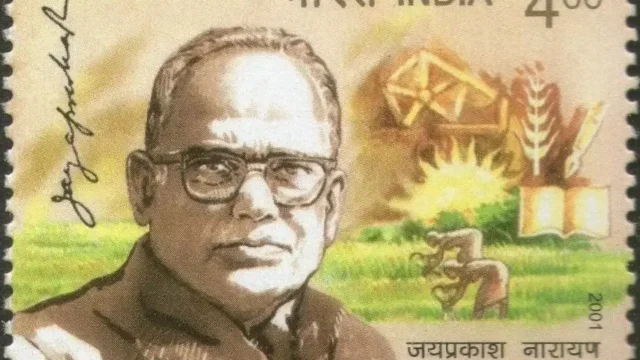
Birth anniversaries: Jayaprakash Narayan and Nanaji Deshmukh
11 October is the birth anniversary of Loknayak Jayaprakash Narayan and Nanaji Deshmukh, both Bharat Ratna awardees. The Prime Minister recalled JP's voice during the Emergency and his concern for good governance, and Nanaji's work in rural development and community participation. Treat this as a personality note for Prelims.
11 Oct 2026
ASI and Denmark museum to search for 1619 Danish shipwreck Oresund off Karaikal
The Archaeological Survey of India's Underwater Archaeology Wing and the National Museum of Denmark (Njord Centre, Copenhagen) signed an MoU to locate and document the Danish ship Oresund, wrecked off Karaikal, Puducherry, in 1619 CE. It is described as the first Danish ship known to have reached India.
15 Jun 2026
Veer Bal Diwas and the Rashtriya Bal Puraskar
The PM announced the day on 9 January 2022 and the first Veer Bal Diwas was held on 26 December 2022 [PMO].
26 Dec 2025
Stamp on Emperor Perumbidugu Mutharaiyar II
Questions on lesser-known regional dynasties are common in Prelims. Stamps and anniversaries often bring them into the news.
14 Dec 2025