
Chapter 5 · Topic 5.1 · Prelims + Mains1 of 3
Money and Capital Market: Money market, capital market and exchanges
Key points
- Money market.
- Capital market.
- Exchanges.
- SEBI.
- Bonds.
- Funds.
2 PYQs 2015–2024
Prelims box: facts and traps
| Instrument | Feature |
|---|---|
| Call / notice money | Interbank lending overnight (call) or for 2–14 days (notice) |
| Treasury bills | Central Government; 91, 182 and 364 days; issued at a discount (zero coupon) |
| Commercial paper | Short-term unsecured promissory note issued by companies |
| Certificate of deposit | Short-term deposit instrument issued by banks and financial institutions |
| Repo / TREPS | Collateralised short-term borrowing against securities. |
- The money market deals in short-term funds (up to one year) and is regulated by the RBI.
- SEBI allowed exchanges to move to T+1 in phases from February 2022, and the move was fully implemented on 27 January 2023, making India one of the first large markets with next-day settlement.
- Trap (UPSC Prelims 2021, India): “The 'Central Depository Services Ltd.' is jointly promoted by the Reserve Bank of India and the Bombay Stock Exchange” is incorrect.
- Trap (UPSC Prelims 2023): “Government Bond Market” is incorrect. “Call Money Market” is incorrect. “Treasury Bill Market” is incorrect. “Stock Market” is incorrect.
On this page (3 sections)
The money market
The financial market has two parts. The money market deals in short-term funds (up to one year) and is regulated by the RBI. The capital market deals in long-term funds and is regulated mainly by SEBI.
| Instrument | Feature |
|---|---|
| Call / notice money | Interbank lending overnight (call) or for 2–14 days (notice) |
| Treasury bills | Central Government; 91, 182 and 364 days; issued at a discount (zero coupon) |
| Commercial paper | Short-term unsecured promissory note issued by companies |
| Certificate of deposit | Short-term deposit instrument issued by banks and financial institutions |
| Repo / TREPS | Collateralised short-term borrowing against securities |
Prelims 2020: commercial paper is a short-term unsecured promissory note and call money is short-term interbank finance. A certificate of deposit is not a long-term RBI instrument, and zero-coupon bonds pay no interest. Answer: 1 and 3 only.
With reference to the Indian economy, consider the following statements : 1. ‘Commercial Paper’ is a short-term unsecured promissory note. 2. ‘Certificate of Deposit’ is a long-term instrument issued by the Reserve Bank of India to a corporation. 3. ‘Call Money’ is a short-term finance used for interbank transactions. 4. ‘Zero-Coupon Bonds’ are the interest bearing short-term bonds issued by the Scheduled Commercial Banks to corporations. Which of the statements given above is/are correct ?
- 1 and 2 only
- 4 only
- 1 and 3 only
- 2, 3 and 4 only
Show answer
Answer: (c) · UPSC official key
Prelims 2023 asked which markets are part of the capital market. The government bond market and stock market are; call money and treasury bills are money market. Answer: Only two.
Consider the following markets : 1. Government Bond Market 2. Call Money Market 3. Treasury Bill Market 4. Stock Market How many of the above are included in capital markets?
- Only one
- Only two
- Only three
- All four
Show answer
Answer: (b) · UPSC official key
The capital market: primary and secondary
| Term | Meaning |
|---|---|
| Primary market | New securities issued for the first time |
| IPO / FPO | First public issue / later public issue by a listed company |
| Rights issue / QIP / OFS | Offer to existing shareholders / placement with institutions / promoters selling existing shares |
| Secondary market | Trading of existing securities on stock exchanges |
| Alternative Investment Funds | SEBI’s AIF Regulations, 2012: Category I (venture capital, angel funds), II (private equity, debt), III (hedge funds) |
Prelims 2014 asked what venture capital means. Answer: A long-term start-up capital provided to new entrepreneurs.
What does venture capital mean?
- A short-term capital provided to industries
- A long-term start-up capital provided to new entrepreneurs
- Funds provided to industries at times of incurring losses
- Funds provided for replacement and renovation of industries
Show answer
Answer: (b) · UPSC official key
Prelims 2025 asked how many of bonds, hedge funds, stocks and venture capital are alternative investment funds. Hedge funds and venture capital are, so the answer was Only two.
With reference to investments, consider the following : I. Bonds II. Hedge Funds III. Stocks IV. Venture Capital How many of the above are treated as Alternative Investment Funds?
- Only one
- Only two
- Only three
- All the four
Show answer
Answer: (b) · UPSC official key
Stock exchanges and depositories
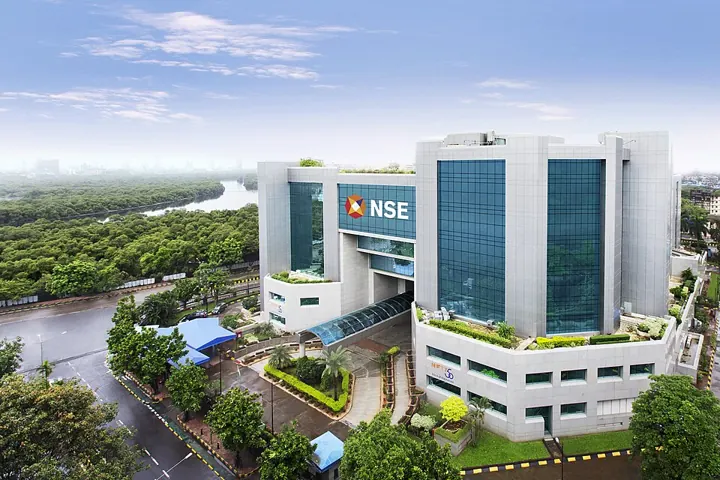
| Body | Detail |
|---|---|
| BSE (1875) | Asia’s oldest stock exchange; index Sensex (30 stocks; base 1978-79 = 100) |
| NSE (1992) | First fully electronic exchange (trading from 1994); index Nifty 50 |
| Depositories | NSDL (1996) and CDSL (1999, promoted by BSE with banks) hold shares in demat form |
| Settlement | T+1 settlement fully in place from January 2023 |
| Government securities | RBI Retail Direct (2021) lets individuals buy G-secs and T-bills; NDS-OM is the RBI’s G-sec trading platform |
Prelims 2021: retail investors can buy T-bills and government bonds in the primary market through demat accounts, and NDS-OM is the RBI’s G-sec trading platform, but CDSL was not promoted by the RBI. Answer: 1 and 2.
With reference to India, consider the following statements : 1. Retail investors through demat account can invest in ‘Treasury Bills’ and ‘Government of India Debt Bonds’ in primary market. 2. The ‘Negotiated Dealing System-Order Matching’ is a government securities trading platform of the Reserve Bank of India. 3. The ‘Central Depository Services Ltd.’ is jointly promoted by the Reserve Bank of India and the Bombay Stock Exchange. Which of the statements given above is/are correct?
- 1 only
- 1 and 2
- 3 only
- 2 and 3
Show answer
Answer: (b) · UPSC official key
Prelims 2025 noted that India accounts for a very large share of global equity option contracts and that its stock market overtook Hong Kong’s at one point. A regulator does exist (SEBI), so the answer was I and II only.
Consider the following statements : I. India accounts for a very large portion of all equity option contracts traded globally thus exhibiting a great boom. II. India’s stock market has grown rapidly in the recent past even overtaking Hong Kong’s at some point of time. III. There is no regulatory body either to warn the small investors about the risks of options trading or to act on unregistered financial advisors in this regard. Which of the statements given above are correct?
- I and II only
- II and III only
- I and III only
- I, II and III
Show answer
Answer: (a) · UPSC official key
Mains box: analysis and answer points
- A certificate of deposit is not a long-term RBI instrument, and zero-coupon bonds pay no interest.
- The capital market deals in long-term funds and is regulated mainly by SEBI.
- Likely next angle: RBI regulates
Practice
Practice MCQs (8)
The index-based market-wide circuit breakers in the Indian stock market are triggered when
Answer (d) & explanation
Under SEBI's framework of 2001, market-wide circuit breakers are triggered when either the Sensex or the Nifty 50 moves by 10, 15 or 20 per cent, whichever index breaches the level first. A trigger halts trading in all equity and equity derivative markets across the country; the length of the halt depends on the level and the time of day, and at 20 per cent trading stops for the rest of the day. Trading resumes through a pre-open call auction. Separate price bands apply to individual stocks, while the India VIX and FPI flows are indicators, not triggers.
The Triparty Repo Dealing System (TREPS), which replaced the Collateralised Borrowing and Lending Obligation (CBLO) segment in November 2018, is mainly a platform for
Answer (a) & explanation
On 5 November 2018 the Clearing Corporation of India Ltd (CCIL) discontinued CBLO and launched triparty repo. In a triparty repo, a third entity, the triparty agent, handles collateral selection, settlement and custody for the borrower and the lender. On TREPS, an anonymous order-matching system of CCIL's subsidiary Clearcorp, members borrow and lend funds against Government securities, and CCIL is the central counterparty to every trade. It is a key money market segment where mutual funds, banks and others deploy or raise overnight and short-term funds.
With reference to depositories in the Indian securities market, consider the following statements:
1. The Depositories Act, 1996 made dematerialised holding of securities possible, and the National Securities Depository Ltd was the first depository set up under it.
2. Investors open their demat accounts directly with a depository and no intermediary is involved.
3. Since 1 April 2019, transfer of securities of listed companies, except in cases such as transmission or transposition, can be done only in dematerialised form.
Which of the statements given above is/are correct?
Answer (c) & explanation
Statements 1 and 3 are correct. The Depositories Act, 1996 allowed securities to be held and transferred as electronic book entries; NSDL began operations in 1996, and CDSL, promoted by BSE, followed in 1999. Under regulation 40 of the SEBI (LODR) Regulations, transfers of listed securities other than transmission or transposition must be in demat form from 1 April 2019. Statement 2 is wrong: an investor does not deal with NSDL or CDSL directly but opens an account with a depository participant (DP), such as a bank or stock broker registered with SEBI, which acts as the depository's agent.
The India VIX, computed by the National Stock Exchange, is best described as a measure of
Answer (c) & explanation
India VIX is a volatility index built from the best bid and ask quotes of near-month and next-month Nifty 50 options. It expresses, as an annualised percentage, the volatility that the options market expects over the next 30 calendar days, which is why it is called a 'fear gauge': it tends to rise when markets fall sharply or uncertainty grows. It is forward-looking, unlike historical volatility, and it concerns the equity index, not currency or turnover ratios.
Consider the following statements about the benchmark equity indices of India:
1. The BSE Sensex is made up of 30 stocks and has 1978-79 as its base year.
2. The Nifty 50 is an index maintained by BSE Ltd.
3. Both the Sensex and the Nifty 50 are calculated by the free-float market capitalisation method.
Which of the statements given above is/are correct?
Answer (b) & explanation
Statements 1 and 3 are correct. The Sensex, launched in 1986, tracks 30 large, liquid stocks listed on BSE, with 1978-79 = 100 as its base. Both the Sensex (since 2003) and the Nifty 50 (since 2009) are computed on the free-float market capitalisation method, which counts only shares available for trading and leaves out promoter and other locked-in holdings. Statement 2 is wrong: the Nifty 50 belongs to the National Stock Exchange and is maintained by its index subsidiary, NSE Indices Ltd; its base is 3 November 1995 = 1,000.
Consider the following statements about the settlement cycle in the Indian equity cash market:
1. India completed the shift of all listed equity shares to the T+1 rolling settlement cycle in January 2023.
2. In March 2024, SEBI introduced an optional beta version of T+0 settlement for a limited set of 25 scrips alongside T+1.
3. Under T+1 settlement, funds and securities are exchanged on the trading day itself.
Which of the statements given above is/are correct?
Answer (a) & explanation
Statements 1 and 2 are correct. SEBI allowed exchanges to move to T+1 in phases from February 2022, and the move was fully implemented on 27 January 2023, making India one of the first large markets with next-day settlement. SEBI then launched an optional beta version of T+0 (same-day) settlement from 28 March 2024 for 25 scrips and a limited set of brokers, running alongside T+1. Statement 3 is wrong: in T+1, 'T' is the trade day and settlement of funds and shares takes place on the next working day; same-day settlement is T+0.
Consider the following statements about short selling of shares under SEBI's framework reiterated in January 2024:
1. All classes of investors, retail as well as institutional, are permitted to short sell.
2. Naked short selling is not permitted, so every investor must deliver the securities at the time of settlement.
3. Institutional investors must disclose upfront, at the time of placing the order, that the transaction is a short sale.
4. Short selling is permitted in all listed securities.
How many of the statements given above are correct?
Answer (c) & explanation
Three statements are correct. Short selling means selling a stock one does not own at the time of the trade. SEBI's circular of 5 January 2024 confirms that all classes of investors may short sell, that naked short selling is not allowed and every seller must deliver securities on settlement (borrowing them through the securities lending and borrowing scheme if needed), and that institutional investors must disclose a short sale upfront, while retail investors may disclose it by the end of the trading day. Statement 4 is wrong: only securities traded in the F&O segment are eligible for short selling, and SEBI may review this list.
With reference to clearing corporations in the Indian securities market, consider the following statements:
1. Through novation, the clearing corporation becomes the buyer to every seller and the seller to every buyer, and so guarantees settlement of trades.
2. Clearing corporations maintain a Core Settlement Guarantee Fund to meet settlement obligations if a member defaults.
3. Trades on Indian stock exchanges are cleared and settled by the stock exchanges themselves and not by separate clearing corporations.
Which of the statements given above is/are correct?
Answer (a) & explanation
Statements 1 and 2 are correct. A clearing corporation acts as central counterparty: through novation it steps between the two sides of each trade, so each party faces the clearing corporation rather than an unknown counterparty, and settlement is guaranteed even if one side fails. SEBI requires each clearing corporation to maintain a Core Settlement Guarantee Fund, built from contributions of the clearing corporation, the exchange and members, to cover defaults. Statement 3 is wrong: clearing and settlement are done by separate SEBI-recognised clearing corporations such as NSE Clearing Ltd and Indian Clearing Corporation Ltd (for BSE), not by the exchanges' trading arms.
0 / 0 correct
Prelims PYQs on this topic (2)
With reference to the Indian economy, "Collateral Borrowing and Lending Obligations" are the instruments of :
Answer (c) & explanation
CBLO was a money market instrument (c). Collateralised Borrowing and Lending Obligation (CBLO) was a short-term borrowing tool run by the Clearing Corporation of India (CCIL), using government securities as collateral, for periods from one day up to a year. Anything that lends and borrows for up to one year belongs to the money market. Option (a) is wrong: the bond market deals in long-term debt. Option (b) is wrong: the forex market deals in currencies. Option (d) is wrong: the stock market deals in shares.
Notice that CBLO was replaced in 2018 by TREPS (tri-party repo), which works the same way and is now the largest part of India's money market. Mutual funds and banks use it to park spare cash.
the word "collateral" makes one think of bonds. Look at the time period: short-term funds mean money market.
Answer as per the official UPSC answer key.
Consider the following markets :
- 1. Government Bond Market
- 2. Call Money Market
- 3. Treasury Bill Market
- 4. Stock Market
How many of the above are included in capital markets?
Answer (b) & explanation
Two of them belong to the capital market (b). The capital market deals in long-term funds, over one year. It includes the stock market (item 4), where shares are traded, and the government bond market (item 1), where long-dated bonds are bought and sold. The money market deals in funds for up to one year. Item 2 is wrong: call money is borrowing between banks for one day, up to 14 days for notice money. Item 3 is wrong: Treasury Bills are short-term government papers of 91, 182 and 364 days.
Notice the regulators: SEBI watches the capital market, while the RBI looks after the money market and government securities. Commercial paper and certificates of deposit are other money market tools.
both bonds and T-Bills are government paper. What decides the market is maturity, not the issuer.
Answer as per the official UPSC answer key.
Write an answer
In 150 words, explain the significance of Money and Capital Market with one recent example.
Flashcards (11)
Money market maturity?
Up to one year.
T-bill tenors?
91, 182 and 364 days.
Commercial paper is?
Short-term unsecured promissory note.
Who regulates the money market?
RBI.
Primary market?
New securities issued.
Venture capital is?
Long-term start-up capital for new entrepreneurs.
Hedge funds fall in which AIF category?
Category III.
Asia's oldest stock exchange?
BSE (1875).
Sensex has how many stocks?
30.
Which depository did BSE promote?
CDSL.
Settlement cycle in India?
T+1.
In the news
- 24 Oct 2026Net FDI positive for third straight month: $3.3 billion in August 2026, says RBI Bulletin
- 23 Oct 2026Carbon capture: how India can make its ₹20,000 crore CCUS push count, in three phases
- 23 Oct 2026Colour-coded driving licences: draft CMVR amendments for Indian and foreign nationals explained
- 22 Oct 2026Haryana’s first private power distributor: what a parallel licence means for Gurugram and Nuh
 Next topic · 5.2 →Money and Capital Market: SEBI, bonds and funds