
Chapter 3 · Topic 3.1 · Prelims + Mains1 of 3
Chemistry: Matter, acids and batteries
Key points
- Physical change: no new substance. Chemical change: new substance (souring milk).
- Water is bent and dipolar (1.85 D), so it is the universal solvent.
- Periodic table runs to 118. Last four named 28 November 2016.
- pH 7 neutral. Natural rain about 5.6. Tooth decay below 5.5.
- Acid rain: SO2 and NOx, not CO or ozone.
- Li-ion Nobel 2019. Cathode: Ni, Mn, Co, Li. Anode: graphite.
Prelims box: facts and traps
| Salt | Formula | Use |
|---|---|---|
| Baking soda | NaHCO₃ | antacids, fire extinguishers |
| Washing soda | Na₂CO₃·10H₂O | glass, soap, hard water |
| Bleaching powder | Ca(ClO)₂ (approx.) | disinfecting water |
- Trap (Prelims 2022): carbon monoxide and ozone do not cause acid rain.
- Trap (Prelims 2014): crystallisation of salt and melting of ice are physical changes.
On this page (3 sections)
Matter, its changes, and why water is special
All matter is made of atoms. Atoms join to form molecules. Elements contain one kind of atom, and compounds contain two or more kinds in a fixed ratio. Mass is conserved in both physical and chemical changes (NCERT Science, Class 9, Chapter 9).
There are two kinds of change (NCERT Science, Class 9, Chapter 9, Class 10, Chapter 1):
- A physical change alters only the form or state, and no new substance forms. Examples: dissolving sugar, melting ice, crystallising salt from its solution.
- A chemical change makes new substances. Signs include a change in state or colour, a gas given off and a change in temperature. Cooking an egg is one: you cannot uncook it.
UPSC asked which are chemical changes. Crystallisation of sodium chloride and melting of ice are physical, while souring of milk is a chemical change, since new substances form (Prelims 2014: answer (b), 3 only).
Which of the following is/are the example/examples of chemical change? 1. Crystallization of sodium chloride 2. Melting of ice 3. Souring of milk Select the correct answer using the code given below.
- 1 and 2 only
- 3 only
- 1, 2 and 3
- None
Show answer
Answer: (b) · UPSC official key
In a water molecule the two O–H bonds sit at an angle, so the molecule is bent, not straight. Oxygen pulls the shared electrons harder, so one end is slightly negative and the other slightly positive. This gives a net dipole moment of 1.85 D (NCERT Chemistry, Class 11, Chapter 4, dipole moment table). Because it is dipolar, water surrounds and pulls apart ions and polar molecules, like tiny magnets tugging at salt crystals. That is why it dissolves more substances than any other liquid and is called the universal solvent (Prelims 2021: answer (a)).
Water can dissolve more substances than any other liquid because
- it is dipolar in nature
- it is a good conductor of heat
- it has high value of specific heat
- it is an oxide of hydrogen
Show answer
Answer: (a) · UPSC official key
The modern periodic table arranges elements by atomic number, the number of protons in an atom. It now runs to element 118. IUPAC announced the approved names and symbols of the last four, elements 113, 115, 117 and 118, on 28 November 2016 (IUPAC).
Acids, bases, salts and acid rain
Acids, like lemon juice and vinegar, turn blue litmus red and give H⁺ ions in water. Bases, like soap solution, turn red litmus blue and give OH⁻ ions. An acid and a base neutralise each other to form a salt and water (NCERT Science, Class 10, Chapter 2).
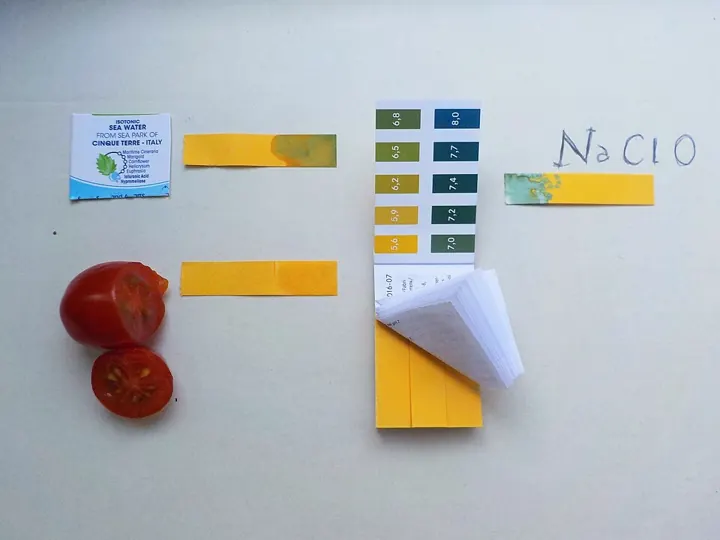
The pH scale runs from 0 to 14. A neutral solution has pH 7. Values below 7 are acidic and above 7 are basic. Our body works within a narrow pH range. Tooth decay starts when the pH in the mouth falls below 5.5. Plants and aquatic life also survive only in a narrow pH range (NCERT Science, Class 10, Chapter 2).
Rain is naturally slightly acidic, about pH 5.6, because carbon dioxide dissolves in it to form weak carbonic acid. Acid rain forms when sulphur dioxide and nitrogen oxides from burning fuels are carried by wind and turn into sulphuric and nitric acids (US EPA). In UPSC’s list, only nitrogen oxide and sulphur dioxide cause acid rain. Carbon monoxide and ozone do not (Prelims 2022: answer (b), 2 and 4 only). NCERT calls rain with pH below 5.6 acid rain. It lowers the pH of rivers and harms aquatic life.
Consider the following : 1. Carbon monoxide 2. Nitrogen oxide 3. Ozone 4. Sulphur dioxide Excess of which of the above in the environment is/are cause(s) of acid rain ?
- 1, 2 and 3
- 2 and 4 only
- 4 only
- 1, 3 and 4
Show answer
Answer: (b) · UPSC official key
Common salts and their uses:
| Salt | Formula | Main uses |
|---|---|---|
| Baking soda (sodium hydrogencarbonate) | NaHCO₃ | baking powder, antacids, soda-acid fire extinguishers |
| Washing soda (sodium carbonate decahydrate) | Na₂CO₃·10H₂O | glass, soap and paper industries; removing permanent hardness of water |
| Bleaching powder | Ca(ClO)₂ (approx.) | bleaching cotton, paper pulp; disinfecting drinking water |
| Common salt | NaCl | raw material for NaOH, chlorine, baking soda and washing soda |
Source: NCERT Science, Class 10, Chapter 2 (Reprint 2026-27). Definitions, not data.
Batteries and electrochemistry
A battery turns chemical energy into electrical energy. Electrons flow out of the anode (the negative terminal while discharging) through the circuit to the cathode. In a lithium-ion cell, lithium ions shuttle between the electrodes through the electrolyte (the liquid or gel between them) as the cell charges and discharges.
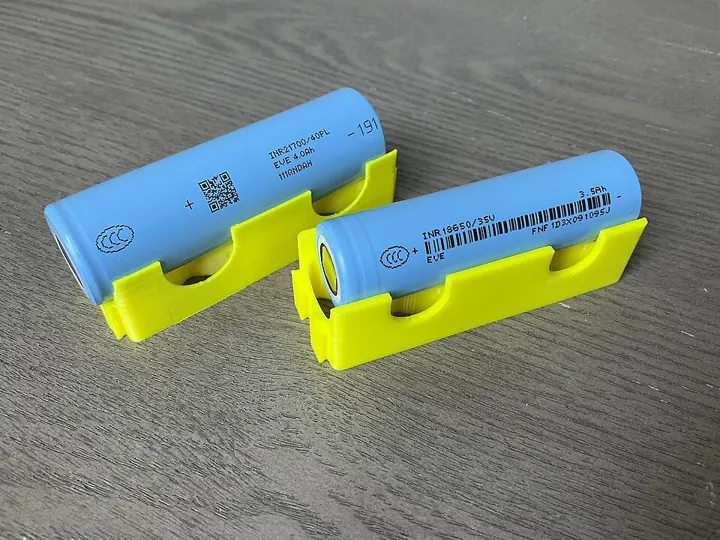
The 2019 Chemistry Nobel went to John Goodenough, M. Stanley Whittingham and Akira Yoshino “for the development of lithium-ion batteries” (nobelprize.org). These batteries now power phones, laptops and electric vehicles.
EV battery cathodes are usually made of lithium compounds with nickel, manganese and cobalt (NMC) or lithium iron phosphate (LFP). Graphite is the usual anode, as in the IEA’s model of an NMC811 cathode with a graphite anode (IEA, Global EV Outlook 2024). So of cobalt, graphite, lithium and nickel, three usually make up battery cathodes: cobalt, lithium and nickel (Prelims 2025: answer (c)).
In the context of electric vehicle batteries, consider the following elements : I. Cobalt II. Graphite III. Lithium IV. Nickel How many of the above usually make up battery cathodes?
- Only one
- Only two
- Only three
- All the four
Show answer
Answer: (c) · UPSC official key
| EV battery fact (IEA, Global EV Outlook 2024) | Value | Status |
|---|---|---|
| LFP share of global EV battery demand, 2023 | more than 40% (by capacity) | measured |
| China’s share of installed cathode active material manufacturing capacity | nearly 90% | measured |
| China’s share of anode active material manufacturing capacity | over 97% | measured |
| Korea / Japan share of cathode capacity | 9% / 3% | measured |
Source: IEA, Global EV Outlook 2024, Trends in electric vehicle batteries. Shares refer to 2023-24. China’s near-total hold on battery materials is why India is pushing its own critical mineral and battery plans.
What UPSC asks: Prelims: chemical change, pH 7, 118 elements. Mains: acid rain, cathode metals.
Mains box: analysis and answer points
- Acid rain: causes and effects on water and buildings.
- Batteries: China's dominance and India's response.
Practice
Write an answer
In 150 words, explain the significance of Chemistry with one recent example.
Flashcards (10)
Is melting of ice a chemical change?
No, it is a physical change.
Why does water dissolve so many
substances? It is dipolar (polar molecule, 1.85 D).
How many elements are on the periodic
table? 118 (last four named in 2016).
pH of a neutral solution?
7.
pH of normal rain, and why?
About 5.6, because CO₂ dissolves to form carbonic acid.
Gases that cause acid rain?
Sulphur dioxide and nitrogen oxides.
Chemical name of baking soda?
Sodium hydrogencarbonate, NaHCO₃.
Who won the 2019 Chemistry Nobel?
Goodenough, Whittingham, Yoshino (lithium- ion batteries).
Usual anode material in EV Li-ion cells?
Graphite.
LFP share of EV battery demand in 2023
(IEA)? More than 40%.
In the news
- 25 Oct 2026DRDO’s indigenous AIP for Kalvari-class submarines reaches the Setting to Work Phase-2 stage
- 24 Oct 2026Panel to review pharma marketing code: UCPMP 2024 and why a voluntary code is not enough
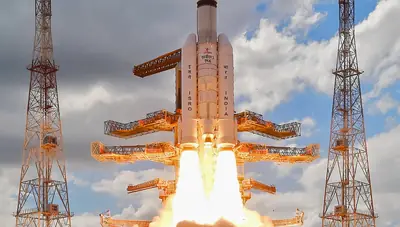
- 24 Oct 2026NVS-03 launch on 30 October: can ISRO’s new satellite bring NavIC back to life?
- 23 Oct 2026Nasha Mukt Bharat Abhiyaan reaches 35 crore people: demand reduction and the 2029 drug-free goal
 Next topic · 3.2 →Chemistry: Rare earths, polymers and nanomaterials
Syllabus: GS-III · Science and Technology- developments and their applications and effects in every…