
Chapter 10 · Topic 10.2 · Prelims + Mains2 of 3
Cyber Security: Cryptography and identity
Key points
- Public key cryptography, digital signatures, PKI.
- Biometrics; Aadhaar APIs; cyber hygiene.
1 PYQ 2008–2017
Prelims box: facts and traps
| Mains 2013 · official paper wording | Mains · GS Paper III · Q16 · 10 marks |
|---|---|
| (a) What is a digital signature? What does its authentication mean? Give various salient built-in features of a | |
| digital signature. (100 words) (b) How does the 3D printing technology work? List out the advantages and | |
| disadvantages of the technology. (100 words) | |
| Verbatim from the UPSC paper. | . |
- The IT Act provides for the Controller of Certifying Authorities (CCA) to license and regulate Certifying Authorities (CAs).
- Public Key Infrastructure (PKI) is the trust chain behind this.
- The Controller of Certifying Authorities (CCA), set up under section 17 of the IT Act on 1 November 2000 within the IT ministry, operates the Root Certifying Authority of India.
- Trap (UPSC Prelims 2018): all the statements are correct.
- Trap (UPSC Prelims 2014): all the statements are correct.
Encryption, digital signatures and PKI
Encryption scrambles data so only someone with the right key can read it. Public key (asymmetric) cryptography uses a pair of keys made by a mathematical algorithm: a private key kept secret and a public key shared with all (CCA).
CCA explains that digital signatures are created and verified with public key cryptography; the IT Act, 2000 gives legal sanctity to digital signatures based on asymmetric cryptosystems, so they are accepted at par with handwritten signatures and digitally signed documents at par with paper (CCA). Per UPSC’s key, a digital signature is an electronic method of signing an electronic document and ensuring that the original content is unchanged; the other two statements describe a digital certificate rather than the signature (Prelims 2019: answer (c), 3 only). Mains 2013 asked: What is a digital signature · official paper wording, and what does its authentication mean?
Consider the following statements : A digital signature is 1. an electronic record that identifies the certifying authority issuing it 2. used to serve as a proof of identity of an individual to access information or server on Internet 3. an electronic method of signing an electronic document and ensuring that the original content is unchanged Which of the statements given above is/are correct?
- 1 only
- 2 and 3 only
- 3 only
- 1, 2 and 3
Show answer
Answer: (c) · UPSC official key
| Mains 2013 · official paper wording | Mains · GS Paper III · Q16 · 10 marks |
|---|---|
| (a) What is a digital signature? What does its authentication mean? Give various salient built-in features of a | |
| digital signature. (100 words) (b) How does the 3D printing technology work? List out the advantages and | |
| disadvantages of the technology. (100 words) | |
| Verbatim from the UPSC paper. |
Public Key Infrastructure (PKI) is the trust chain behind this. The IT Act provides for the Controller of Certifying Authorities (CCA) to license and regulate Certifying Authorities (CAs); the CCA certifies the CAs’ public keys through the Root Certifying Authority of India, and the CAs issue Digital Signature Certificates to users (CCA). So in India the term is used in the context of Digital security infrastructure (Prelims 2020: answer (a)).
In India, the term “Public Key Infrastructure” is used in the context of
- Digital security infrastructure
- Food security infrastructure
- Health care and education infrastructure
- Telecommunication and transportation infrastructure
Show answer
Answer: (a) · UPSC official key
India’s PKI trust chain.
Biometrics and Aadhaar authentication
Biometrics identify people by unique body features. UPSC’s key says that, in addition to fingerprints, iris scanning, retinal scanning and voice recognition can all be used in the biometric identification of a person (Prelims 2014: answer (d), 1, 2 and 3).
In addition to fingerprint scanning, which of the following can be used in the biometric identification of a person? 1. Iris scanning 2. Retinal scanning 3. Voice recognition Select the correct answer using the code given below.
- 1 only
- 2 and 3 only
- 1 and 3 only
- 1, 2 and 3
Show answer
Answer: (d) · UPSC official key
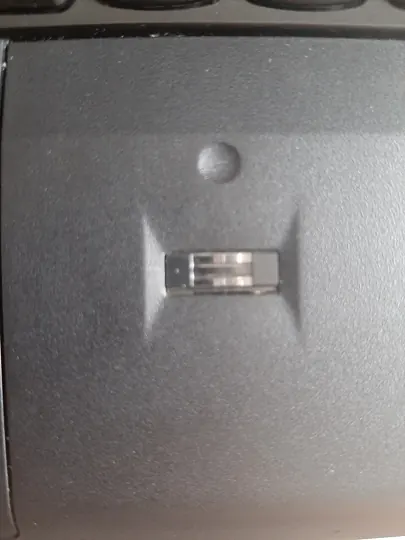
Aadhaar provides open Application Programming Interfaces (APIs), which let other software and devices plug into its authentication. Per UPSC’s key both statements hold: it can be integrated into any electronic device, and Online authentication using iris is possible (Prelims 2018: answer (c)).
The identity platform ‘Aadhaar’ provides open “Application Programming Interfaces (APIs)”. What does it imply ? 1. It can be integrated into any electronic device. 2. Online authentication using iris is possible. Select the correct answer using the code given below :
- 1 only
- 2 only
- Both 1 and 2
- Neither 1 nor 2
Show answer
Answer: (c) · UPSC official key
Cyber hygiene for users: strong, unique passwords and two-factor authentication; software updates; care with links and attachments (phishing); backups against ransomware; and reporting fraud quickly on the 1930 helpline or the national cyber crime portal, cybercrime.gov.in (helpline: PIB, 2025).
Mains box: analysis and answer points
- Encryption scrambles data so only someone with the right key can read it.
- Public key (asymmetric) cryptography uses a pair of keys made by a mathematical algorithm: a private key kept secret and a public key shared with all (CCA).
- Likely next angle: CCA heads PKI
Practice
Practice MCQs (8)
When a website stores user passwords securely, it 'salts' them before hashing. Salting means
Answer (a) & explanation
A salt is a random value, unique to each account, that is combined with the password before it is passed through a one-way hash function; both the salt and the resulting hash are stored. If two users choose the same password, their stored hashes still differ, and an attacker who steals the database cannot use a ready-made 'rainbow table' of common passwords and their hashes but must attack every password separately. NIST SP 800-63B requires passwords to be salted and hashed with a suitable password-hashing scheme. Encryption that can be reversed is the wrong tool, because sites should never be able to recover a password; they verify it by hashing the entered value again and comparing.
In India's Public Key Infrastructure, the Root Certifying Authority of India (RCAI), which sits at the top of the trust hierarchy and certifies the public keys of licensed Certifying Authorities, is operated by
Answer (b) & explanation
The Controller of Certifying Authorities (CCA), set up under section 17 of the IT Act on 1 November 2000 within the IT ministry, operates the Root Certifying Authority of India. Section 18(b) gives the Controller the function of 'certifying public keys of the Certifying Authorities'; the RCAI's own root certificate is self-signed and forms the top of India's PKI. Licensed CAs (for example eMudhra and IDRBT's CA for the banking sector) then issue Digital Signature Certificates to individuals and organisations. The CCA also lays down standards for CAs, supervises them and empanels eSign service providers. CERT-In handles incident response, RBI regulates banking and IDRBT, a banking technology institute, is itself one of the licensed CAs, not the root.
With reference to electronic authentication under the Information Technology Act, 2000, consider the following statements:
1. A subscriber may authenticate an electronic record by affixing a digital signature, which uses an asymmetric crypto system and a hash function.
2. Any person can verify an electronic record so authenticated by using the public key of the subscriber.
3. After the 2008 amendment, a subscriber may also use other reliable electronic signature or authentication techniques specified in the Second Schedule of the Act.
Which of the statements given above is/are correct?
Answer (d) & explanation
All three statements are correct. Section 3 of the IT Act says authentication of an electronic record 'shall be effected by the use of asymmetric crypto system and hash function', and section 3(3) adds that 'any person by the use of a public key of the subscriber can verify the electronic record'; the private and public keys form a unique functioning key pair. The Act also defines the hash function as one that always gives the same result for the same input and makes it computationally infeasible to reconstruct the record or to find two records with the same result. The IT (Amendment) Act 2008 inserted section 3A (in force from 27 October 2009), which made the law technology-neutral by allowing any reliable 'electronic signature' technique notified in the Second Schedule, alongside digital signatures.
Anita wants to send a confidential file to Bharat and also wants Bharat to be sure that the file really came from her. Both use public-key cryptography. Consider the following statements:
1. To keep the file confidential, Anita should encrypt it with Bharat's public key.
2. To sign the file, Anita should use her own public key.
3. Bharat can verify Anita's signature by using Anita's public key.
Which of the statements given above is/are correct?
Answer (b) & explanation
Statements 1 and 3 are correct. Two different goals need two different keys. For confidentiality, the sender locks the data with the recipient's public key; only the recipient's private key can unlock it, so even Anita cannot decrypt the file once it is encrypted. For authenticity, the sender signs with her own private key, which only she holds, and anyone can verify with her public key; this is exactly how section 3 of the IT Act describes verification 'by the use of a public key of the subscriber'. Statement 2 is wrong: a signature made with a public key would prove nothing, because the public key is known to everyone. In practice, the file is encrypted with a random symmetric key, and only that key is wrapped with Bharat's public key.
When a browser opens a website over HTTPS (using the TLS protocol), public-key cryptography is mainly used to
Answer (a) & explanation
In TLS (the current version is TLS 1.3, RFC 8446), the handshake does two jobs with public-key cryptography. First, the server proves its identity by presenting a certificate signed by a trusted Certifying Authority and by signing handshake data with its private key. Second, the two sides run a key exchange (typically elliptic-curve Diffie-Hellman) to derive shared secret keys. From then on, the actual traffic is protected by a fast symmetric authenticated cipher such as AES-GCM. TLS does not compress pages for speed, and it does not hide the user's IP address from the site; anonymity needs other tools such as Tor, and even a VPN only shifts trust to the VPN operator.
Consider the following statements about encryption:
1. In symmetric-key encryption, such as the Advanced Encryption Standard (AES), the same secret key is used both to encrypt and to decrypt the data.
2. In asymmetric (public-key) encryption, data encrypted with a person's public key can be decrypted only with that person's matching private key.
3. Asymmetric algorithms are much faster than symmetric ones, which is why they are preferred for encrypting large volumes of data.
Which of the statements given above is/are correct?
Answer (c) & explanation
Statements 1 and 2 are correct. Symmetric ciphers use one shared secret key; AES, standardised by NIST in FIPS 197 (2001), is the best-known example and works on 128-bit blocks with 128, 192 or 256-bit keys. Asymmetric cryptography, introduced publicly by Diffie and Hellman in 1976 and made practical by RSA, uses a mathematically linked key pair: what one key locks, only the other can unlock, so the public key can be shared openly. Statement 3 reverses the truth. Public-key operations are far slower, so real systems such as HTTPS use a hybrid design: public-key methods authenticate the parties and agree a session key, and a fast symmetric cipher then encrypts the bulk data.
Consider the following statements about digital certificates:
1. A digital certificate binds a public key to the identity of its holder and is itself digitally signed by the Certifying Authority that issues it.
2. Under the Information Technology Act, 2000, one of the functions of the Controller of Certifying Authorities is to certify the public keys of the Certifying Authorities.
3. A certificate includes the holder's private key so that a recipient can check the holder's signature.
Which of the statements given above is/are correct?
Answer (a) & explanation
Statements 1 and 2 are correct. A digital certificate (in practice an X.509 certificate) contains the holder's name or domain, the holder's public key, a validity period, the issuer's name and the issuer's signature over all this data. Anyone who trusts the issuer can check that signature and so trust that the key belongs to the named holder. In India, section 18(b) of the IT Act lists 'certifying public keys of the Certifying Authorities' among the Controller's functions, which the CCA performs through the Root Certifying Authority of India. Statement 3 is wrong and dangerous: the private key never goes into a certificate. It stays secret with the holder (on a USB token, smart card or secure hardware), and a signature is checked with the public key.
Consider the following statements about websites that use HTTPS:
1. The padlock icon shows that the connection is encrypted and that the site presented a valid certificate for its domain name, but it does not prove that the website is honest.
2. A certificate has a fixed validity period and can be revoked by the issuing authority before it expires, for example if the private key is compromised.
3. Browsers automatically trust self-signed certificates, because the website owner has signed them personally.
Which of the statements given above is/are correct?
Answer (c) & explanation
Statements 1 and 2 are correct. A valid certificate proves control of a domain name, not good intent. The FBI's public service announcement of 10 June 2019 warned that phishers increasingly obtain free certificates so that fake sites show HTTPS and the padlock, and told users not to trust a site just because of them. Certificates carry 'not before' and 'not after' dates, and a CA can revoke a certificate early, publishing it in a certificate revocation list (CRL) or through online status checks, if the key is stolen or the details are wrong. Statement 3 is false: a self-signed certificate is signed by its own key, so it guarantees integrity but not authenticity (NIST); browsers show a warning unless the user or an organisation installs it as trusted.
0 / 0 correct
Prelims PYQs on this topic (1)
In India, it is legally mandatory for which of the following to report on cyber security incidents ?
- 1. Service providers
- 2. Data centres
- 3. Body corporate
Select the correct answer using the code given below :
Answer (d) & explanation
All three must report cyber incidents (d). Under Section 70B of the IT Act, 2000 and the CERT-In Rules, 2013, service providers (1), data centres (2), body corporates (3) and intermediaries must report cyber security incidents to CERT-In (the Indian Computer Emergency Response Team, under MeitY). CERT-In's April 2022 directions set a six-hour reporting deadline. They also require logs to be kept for 180 days, and VPN providers must store user details for five years.
Critical sectors are protected by NCIIPC under Section 70A. Notice the related laws: the Digital Personal Data Protection Act, 2023 and its 2025 Rules, which add a duty to report data breaches to the Data Protection Board.
Answer as per the official UPSC answer key.
Write an answer
In 150 words, explain the significance of Cyber Security with one recent example.
Flashcards (5)
Cryptography behind digital signatures?
Public key (asymmetric).
Law giving digital signatures legal validity?
IT Act, 2000.
Who licenses Certifying Authorities?
Controller of Certifying Authorities (CCA).
Biometrics besides fingerprints (UPSC
2014)? Iris, retina, voice.
Can Aadhaar authenticate with iris?
Yes.
In the news
- 24 Oct 2026Panel to review pharma marketing code: UCPMP 2024 and why a voluntary code is not enough
- 24 Oct 2026NVS-03 launch on 30 October: can ISRO’s new satellite bring NavIC back to life?
- 23 Oct 2026Nasha Mukt Bharat Abhiyaan reaches 35 crore people: demand reduction and the 2029 drug-free goal
- 23 Oct 2026Carbon capture: how India can make its ₹20,000 crore CCUS push count, in three phases
 Next topic · 10.3 →Cyber Security: Data protection: the DPDP Act and the IT Rules
Syllabus: GS-III · Science and Technology- developments and their applications and effects in every…