
Pressure Groups in India: Meaning, Types, Methods, Difference from Political Parties and Role in Democracy (UPSC Notes)
UPSC has already asked about this. Read the story with these questions in mind.
- Mains 2026 · GS2To what extent do pressure groups, social movements and corporate lobbies deepen pluralistic democracy in India by representing excluded interests? Analyse whether the growing…See model answer →
- Mains 2025 · GS2What are environmental pressure groups? Discuss their role in raising awareness, influencing policies and advocating for environmental protection in India.See model answer →
Types
| Type | Examples |
|---|---|
| Business | FICCI, CII, ASSOCHAM, NASSCOM |
| Labour | AITUC, INTUC, CITU, BMS |
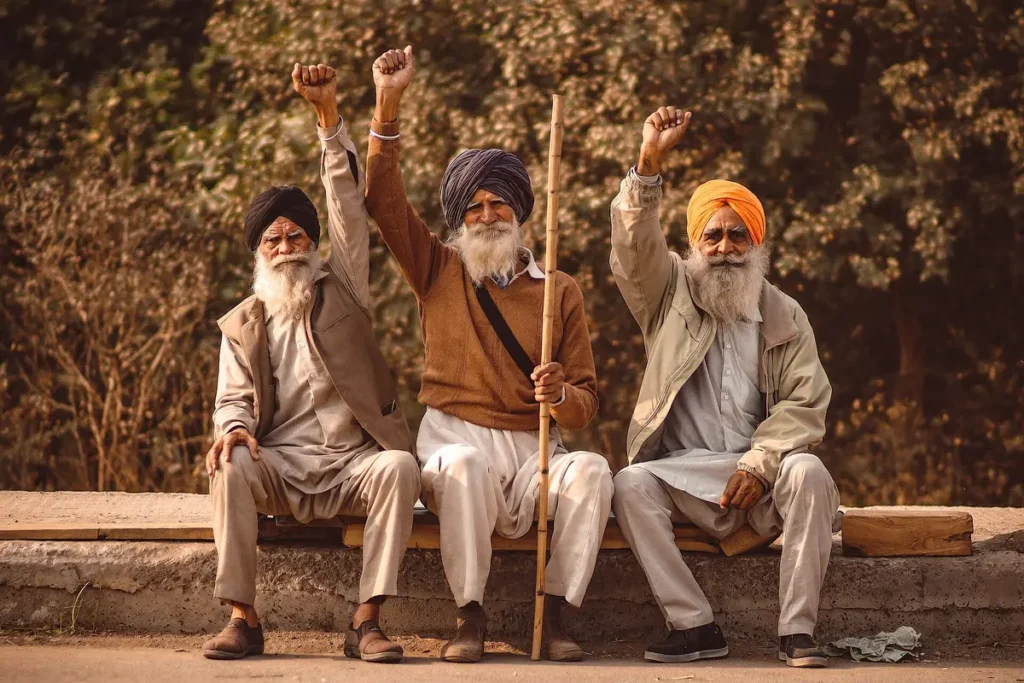
| Farmers | Bharatiya Kisan Union, All India Kisan Sabha, Samyukt Kisan Morcha (2020-21 protests) |
| Professional | Indian Medical Association, Bar Council, teachers’ associations |
| Students | ABVP, NSUI, SFI |
| Issue and anomic groups | Narmada Bachao Andolan, Chipko, India Against Corruption; spontaneous protests |
| Religious, caste, linguistic | Caste associations, linguistic bodies |
Political scientist Gabriel Almond’s classification (institutional, associational, non-associational, anomic) is often cited.
Methods
Lobbying ministers and MPs, submitting memoranda to parliamentary committees, public campaigns and media, litigation (PILs), strikes, dharnas and rallies, and funding parties. NASSCOM’s steady lobbying on IT policy and the farmer unions’ 2020-21 protest, which led to repeal of the three farm laws, show the range.
Pressure groups vs parties
- Parties seek power; pressure groups seek influence.
- Parties take positions on all issues; groups focus on narrow interests.
- Parties are accountable to voters; groups to members.
- Many groups are linked to parties (trade union wings, student wings).
Role in democracy
Positive: carry citizens’ views between elections, bring expertise to policy, protect minority interests, and keep governments alert. Negative: powerful groups can capture policy for narrow benefit, groups of the poor are weaker, some use violence or blockades, and lobbying in India lacks a disclosure law. The Mains line: pressure groups strengthen democracy when they are transparent and plural.
Pressure Groups: UPSC angle
For UPSC CSE
Mains GS-II: role of pressure groups and formal and informal associations in the polity; NGOs, SHGs and civil society (related syllabus lines).
Pressure Groups UPSC PYQs (Prelims)
Questions UPSC has actually asked, from the official papers. Pick an option to check yourself.
No Prelims question in the Battle IAS bank is directly on this topic yet.
Mains PYQs on this topic
Questions from the official UPSC Mains papers (2023-2026 in the Battle IAS Mains bank), newest first. Each links to a model answer.
- UPSC Mains 2026 · GS Paper II · Q15 · 15 marks
To what extent do pressure groups, social movements and corporate lobbies deepen pluralistic democracy in India by representing excluded interests? Analyse whether the growing convergence of corporate wealth and political power poses a threat to the autonomy of formal democratic institutions.
- UPSC Mains 2025 · GS Paper II · Q15 · 15 marks
What are environmental pressure groups? Discuss their role in raising awareness, influencing policies and advocating for environmental protection in India.
Quick quiz
Which of these is a business pressure group?
Federation of Indian Chambers of Commerce and Industry.Answer (b)
The main difference between a pressure group and a party is that a pressure group
It seeks influence, not office.Answer (b)
Spontaneous, unorganised protests are termed
Almond’s classification.Answer (c)
FAQs
Is lobbying legal in India?
There is no specific law regulating or registering lobbying; it happens informally.
Are NGOs pressure groups?
Some act as pressure groups through advocacy, but NGOs also deliver services.
Give an example of a successful pressure group campaign.
The farmer unions’ 2020-21 protests that led to repeal of the three farm laws in November 2021.
What are anomic groups?
Spontaneous groups that form suddenly in response to an event, often through protests or riots.
Spotted an error? Tell us. We correct within 48 hours.
Image: Original: Ravan Khosa Derivative work: Aristeas, Wikimedia Commons, CC BY-SA 4.0
How to use this in Mains
If asked: UPSC Mains 2026, GS-II: To what extent do pressure groups, social movements and corporate lobbies deepen pluralistic democracy in India by representing excluded interests? Analyse whether the growing convergence of corporate wealth and political power poses a threat to the autonomy of formal democratic institutions.
Quote: “Parties seek power; pressure groups seek influence.”
Use it: A crisp distinction for your intro.
In the news

Supreme Court: no prior approval under Section 17A needed to probe a bribe demand
In a judgment of 16 October 2026, a Supreme Court Bench of Justices S.V.N. Bhatti and N.V. Anjaria held that investigating a bribe demand by a public servant does not need prior approval under Section 17A of the Prevention of Corruption Act. Asking for a bribe, the court said, is not part of discharging official duties.
19 Oct 2026
CCPA acts against online sale of explosives: 3,940 sellers delisted from seven platforms
The Central Consumer Protection Authority (CCPA) said on 19 October 2026 that 3,940 sellers of regulated explosives such as ammonium nitrate, picric acid and PETN have been delisted from seven online platforms after its action. It has fined Dial4Trade and ExportersIndia ₹10 lakh per order, and other cases are under hearing or investigation.
19 Oct 2026
India to host 61st CIML meeting on legal metrology in New Delhi, 26–28 October
India will host the 61st meeting of the International Committee of Legal Metrology (CIML) for the first time, in New Delhi from 26 to 28 October 2026. The Department of Consumer Affairs is organising it with the International Organization of Legal Metrology (OIML), and more than 100 delegates are expected, PIB said on 19 October.
19 Oct 2026
NMC withdraws MSMER-2023: medical colleges lose the fixed penalty rulebook, annual disclosure stays
The National Medical Commission (NMC) has de-notified the Maintenance of Standards of Medical Education Regulations, 2023 (MSMER-2023) by a notification dated 14 October 2026, published in the Gazette on 16 October. Its fixed penalties, including seat cuts and fines of up to ₹5 lakh for false records, go with it. The Annual Disclosure Report stays.
19 Oct 2026