
Subsidiary Alliance (1798): Wellesley’s Terms, the States that Signed, Effects, and Comparison with the Doctrine of Lapse (UPSC Notes + PYQs)
UPSC has already asked about this. Read the story with these questions in mind.
The terms
- A British army stationed in the State, maintained by the ruler, often through ceding territory.
- A British Resident at the court.
- No alliances or wars without British consent.
- No Europeans other than the British in service.
- In return, the Company protected the ruler from enemies and from internal revolt.
Who signed, and how
| State | Year | Note |
|---|---|---|
| Hyderabad | 1798 (revised 1800) | First; French-trained troops disbanded |
| Mysore | 1799 | Imposed on the restored Wodeyars after Tipu died at Seringapatam |
| Tanjore, Awadh | 1799, 1801 | Awadh ceded half its territory (Rohilkhand and the Doab) |
| Peshwa | 1802 (Treaty of Bassein) | Led to the Second Anglo-Maratha War |
| Bhonsle, Scindia | 1803 | After defeats at Assaye, Laswari |
Why it suited the Company, and what it did to the States
The Company got an army paid by Indian money, stationed at strategic points, while rulers carried the blame for misrule. Rulers lost the will to govern well because the British guaranteed their thrones; soldiers of disbanded armies lost livelihoods and turned to banditry (one root of the Pindari problem); heavy subsidies pushed States into debt, which later became a reason for annexation.
Subsidiary Alliance vs Doctrine of Lapse
Wellesley protected and controlled; Dalhousie (1848-56) annexed. Under the Doctrine of Lapse, a dependent State without a natural heir passed to the Company: Satara (1848), Jhansi and Nagpur (1854) and others. Awadh was annexed in 1856 on grounds of misgovernance. Both fed the anger of 1857.
Subsidiary Alliance: UPSC angle
For UPSC CSE
Prelims: which statement does not apply to the system (a 2018 question), order of States, Treaty of Bassein. Mains GS-I: methods of British expansion.
Subsidiary Alliance UPSC PYQs (Prelims)
Questions UPSC has actually asked, from the official papers. Pick an option to check yourself.
(Same table as the question above.)
With reference to the above table, the following assumptions have been made :
– 1. Nowadays, prosperity of an already high performing State cannot be sustained without making further large investments in its telecom infrastructure.
– 2. Nowadays, a very high Tele-density is the most essential condition for promoting the business and economic growth in a State.
Which of the above assumptions is/are valid?
Under the Subsidiary Alliance (from 1798), an Indian ruler paid for a British force kept in his state, often by handing over territory. He could not employ other Europeans, which shut out the French under Napoleon, and he gave up his foreign relations. Raising a fixed income was not its purpose. Answer as per the official UPSC key · Battle IAS PYQ bankAnswer (d) & why
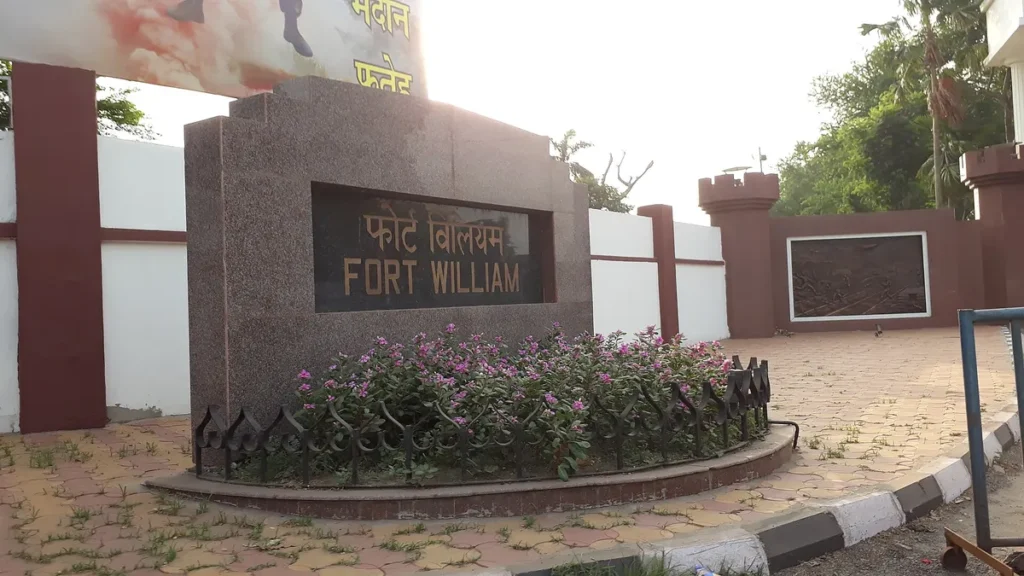
Wellesley established the Fort William College at Calcutta because
Wellesley set up Fort William College in 1800 to train young Company civil servants in Indian languages, law and history. The Directors disliked the cost, and set up Haileybury in England in 1806. William Carey did teach there, but that was a result, not the reason. Answer as per the official UPSC key · Battle IAS PYQ bankAnswer (d) & why
Mains PYQs on this topic
No UPSC Mains question from 2023-2026 is directly on this topic. Older papers (2013-2022) will be added as the Mains bank grows.
Quick quiz
The first Indian State to accept the Subsidiary Alliance was
1798.Answer (c)
The Treaty of Bassein (1802) was signed with
Peshwa Baji Rao II.Answer (b)
Satara and Jhansi were annexed under
Dalhousie.Answer (b)
FAQs
Who introduced the Subsidiary Alliance?
Lord Wellesley, Governor-General 1798-1805, building on earlier practice by Dupleix and Clive.
Did the system annex States directly?
No. It controlled them indirectly, but debts and cessions often prepared later annexation.
Which ruler refused the alliance and fought?
Tipu Sultan, killed in 1799; Holkar resisted until 1805.
How is it different from the Doctrine of Lapse?
The first kept rulers as dependants; the second annexed States lacking natural heirs.
Spotted an error? Tell us. We correct within 48 hours.
Image: Pinakpani, Wikimedia Commons, CC BY-SA 4.0
How to use this in Mains
If asked: How did the Subsidiary Alliance help the British expand their control in India? (GS-I)
Quote: “The Company got an army paid by Indian money, stationed at strategic points, while rulers carried the blame for misrule.”
Use it: Perfect one-line analysis for your body.
In the news
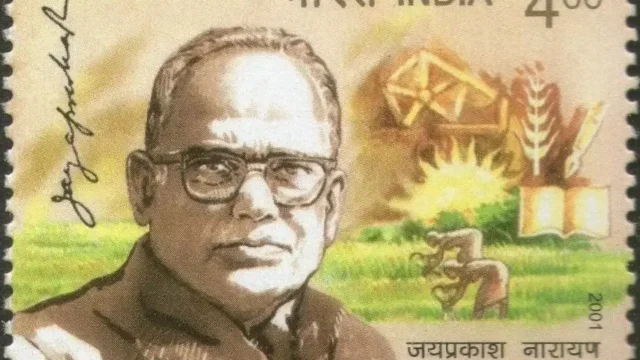
Birth anniversaries: Jayaprakash Narayan and Nanaji Deshmukh
11 October is the birth anniversary of Loknayak Jayaprakash Narayan and Nanaji Deshmukh, both Bharat Ratna awardees. The Prime Minister recalled JP's voice during the Emergency and his concern for good governance, and Nanaji's work in rural development and community participation. Treat this as a personality note for Prelims.
11 Oct 2026
ASI and Denmark museum to search for 1619 Danish shipwreck Oresund off Karaikal
The Archaeological Survey of India's Underwater Archaeology Wing and the National Museum of Denmark (Njord Centre, Copenhagen) signed an MoU to locate and document the Danish ship Oresund, wrecked off Karaikal, Puducherry, in 1619 CE. It is described as the first Danish ship known to have reached India.
15 Jun 2026
Veer Bal Diwas and the Rashtriya Bal Puraskar
The PM announced the day on 9 January 2022 and the first Veer Bal Diwas was held on 26 December 2022 [PMO].
26 Dec 2025
Stamp on Emperor Perumbidugu Mutharaiyar II
Questions on lesser-known regional dynasties are common in Prelims. Stamps and anniversaries often bring them into the news.
14 Dec 2025