
UPSC Mains 2025 GS3 Q11: model answer
Explain how the Fiscal Health Index (FHI) can be used as a tool for assessing the fiscal performance of states in India. In what way would it encourage the states to adopt prudent and sustainable fiscal policies ?
What the question wants
What FHI measures and how ranking can nudge States towards prudence.
How to structure it
Intro: NITI Aayog FHI 2025. Body: (1) Structure; (2) As an assessment tool; (3) How it encourages prudence; (4) Limits. Conclusion: Used with fiscal responsibility laws and Finance Commission incentives.
- 1(1) Structure
- 2(2) As an assessment tool
- 3(3) How it encourages prudence
- 4(4) Limits
Model answer
States account for most of India's general government spending. NITI Aayog released the first Fiscal Health Index in January 2025, ranking 18 major States for 2022-23.
| Sub-index | What it captures |
|---|---|
| Quality of expenditure | Capital and development spending share |
| Revenue mobilisation | Own tax and non-tax effort |
| Fiscal prudence | Fiscal and revenue deficits |
| Debt index | Debt-GSDP, interest burden |
| Debt sustainability | Debt growth vs GSDP growth |
Structure
A composite index of five sub-indices:
- Quality of expenditure (capital spending share, development spending).
- Revenue mobilisation (own tax and non-tax revenue).
- Fiscal prudence (fiscal and revenue deficits).
- Debt index (debt to GSDP, interest burden).
- Debt sustainability (debt growth compared with GSDP growth).
Odisha topped the index, followed by Chhattisgarh and Goa; Punjab was at the bottom.
As an assessment tool
- Gives a single comparable score instead of scattered indicators.
- Shows each State its weak area: Punjab's debt, others' low capital spending.
- Tracks change over years and flags early stress before a crisis.
- Covers off-budget borrowing and guarantees when data are included.
How it encourages prudence
- Competitive federalism: public ranking creates peer and political pressure.
- Credit markets: better scores can lower borrowing costs in State development loans.
- Can be linked to incentives, like extra borrowing room for reforms, as done in the 15th Finance Commission period.
- Pushes shift from freebies and revenue spending to capital investment.
- Encourages own-revenue efforts such as property tax and mining royalty.
Limits
- Data lags and quality of State accounts.
- Ignores structural differences: hill States, special category, natural disasters.
- Risk of States cutting welfare to score well.
Used with fiscal responsibility laws and Finance Commission incentives, the FHI can become a mirror States consult every year.
Keywords, cases and data to drop in
NITI Aayog FHI 2025 five sub-indices Odisha top competitive federalism capital expenditure debt sustainability
Where most answers lose marks
- Not naming the sub-indices.
- No limits.
Fresh examples from current affairs
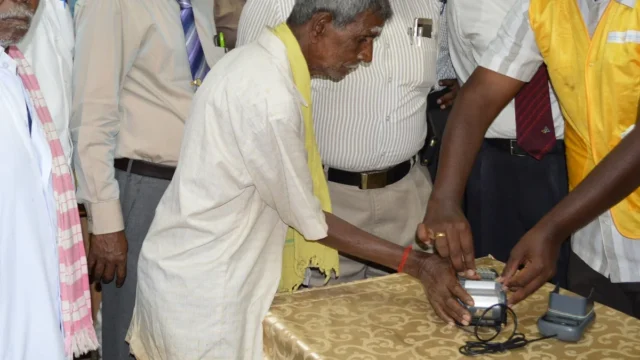
Financial inclusion saturation campaign in 2.70 lakh panchayats and ULBs from 21 October
The Department of Financial Services will run a nationwide campaign from 21 October to 31 December 2026 to saturate financial inclusion schemes in 2.70 lakh gram panchayats and urban local bodies. Bank camps will enrol people in PMJJBY, PMSBY and APY, open Jan Dhan accounts, finish re-KYC and nominations, and spread awareness on digital frauds and unclaimed deposits.
UPSC angle: Prelims: scheme parameters of PMJJBY, PMSBY, APY, PMJDY. · Mains GS-III: inclusive growth and financial inclusion.
20 Oct 2026
IDBI Bank strategic sale: Fairfax arm wins 60.72% stake for ₹52,878 crore
On 14 October 2026 the Cabinet Committee on Economic Affairs approved 10955230 Canada Inc., a Fairfax Financial Holdings entity, as strategic buyer of 60.72% of IDBI Bank for about Rs. 52,878 crore. The Government sells 30.48% and LIC 30.24%. The winning bid of Rs. 81 a share beat the Rs. 75.99 benchmark.
UPSC angle: Prelims: stake split, residual holdings, PCA dates, valuation methods. · Mains GS-III: disinvestment, bank privatisation, FDI in financial services.
14 Oct 2026
RBI tightens forex derivative rules and opens a dollar window for oil companies
On 10 October 2026 RBI issued two circulars to curb speculation in the rupee: cancelled INR forex derivatives cannot be rebooked, the no-proof hedging limit falls from USD 100 million to USD 5 million, and banks must keep a 20% cash reserve on large dollar-buying hedges. RBI also opened a dollar window for three public sector oil companies.
UPSC angle: Prelims: FERR, USD 5 mn, OMC window, FEMA. · Mains GS-III: exchange rate management, external sector.
10 Oct 2026
H2 FY27 borrowing: ₹7.86 lakh crore, including ₹15,000 crore sovereign green bonds
On 25 September 2026 the Government, in consultation with the RBI, said it will borrow ₹7,86,000 crore through dated securities in the second half of 2026-27, using 23 weekly auctions. This includes ₹15,000 crore of Sovereign Green Bonds. Full-year dated borrowing is now put at ₹15,99,506 crore, below the Budget Estimate.
UPSC angle: Prelims: who manages government borrowing; what Sovereign Green Bonds fund. · Mains: Borrowing below BE: what it implies for fiscal deficit and bond yields.
25 Sep 2026Learn the concept
Question text as printed in the official UPSC question paper: https://www.upsc.gov.in/sites/default/files/GENERAL-STUDIES-PAPER-III-QP-CSM-25-010925.pdf The model answer is original Battle IAS work; use it to learn structure, not to memorise.