
UPSC Mains 2024 GS1 Q6: model answer
What is the phenomenon of ‘cloudbursts’? Explain.
What the question wants
Define cloudburst, explain how it happens and its effects, with examples.
How to structure it
Intro: IMD definition. Body: (1) How it happens; (2) Where; (3) Impacts; (4) Mitigation. Conclusion: Warming air holds more moisture, so such extreme bursts may become more frequent.
- 1(1) How it happens
- 2(2) Where
- 3(3) Impacts
- 4(4) Mitigation
Model answer
The India Meteorological Department calls a cloudburst any rainfall of 100 mm or more in an hour over a small area of roughly 20–30 sq km.
How it happens
- Warm, moist monsoon air is pushed up steep mountain slopes (orographic lift).
- It cools fast and forms tall cumulonimbus clouds.
- Strong upward currents hold rain drops in the cloud; when they weaken, the accumulated water falls at once.
- Meeting of monsoon winds with western disturbances can intensify it.
Where: mostly the Himalaya (Uttarakhand, Himachal, J&K, Ladakh), sometimes the Western Ghats and even cities (Mumbai, 2005).
Impacts: flash floods, landslides, debris flows; Kedarnath (2013), Leh (2010) and Himachal (2023) saw heavy losses.
Mitigation: Doppler radars, nowcasting, regulating construction on river banks and slopes, early warning to villages.
Warming air holds more moisture, so such extreme bursts may become more frequent.
Keywords, cases and data to drop in
100 mm/hour orographic lift cumulonimbus flash floods Kedarnath 2013
Where most answers lose marks
- Calling any heavy rain a cloudburst.
Fresh examples from current affairs
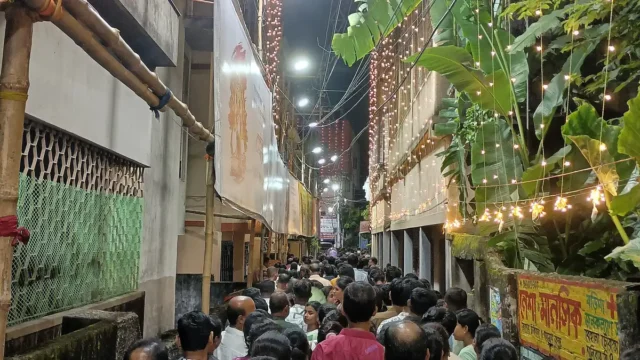
Chorbagan pandal stampede in Kolkata kills 19: what went wrong and how crowds should be managed
Nineteen people were killed and about 25 injured in a stampede at the Chorbagan Sarbojanin Durga Puja pandal in north Kolkata on the evening of 17 October 2026, during Saptami. According to police and the FIR, sudden heavy rain, weak crowd control and an announcement that the pandal could collapse set off the panic. Seven people have been arrested, and West Bengal has set up a six-member SIT.
UPSC angle: Prelims: NDMA, BNSS 163, BNS 105. · Mains GS-III: crowd management and disaster governance.
17 Oct 2026
IITM Pune holds first consultation of the Climate Science into Services for India Forum
The Indian Institute of Tropical Meteorology (IITM), Pune, under the Ministry of Earth Sciences, held the first stakeholder consultation of the Climate Science into Services for India Forum (CSSIF) on 17 October 2026. More than 150 participants from over 80 institutions, including RBI, NDRF, NIDM and State climate cells, discussed what climate information each sector needs. Speakers stressed the need for a national Climate Services Information System (CSIS).
UPSC angle: Prelims: IITM, GFCS, INCOIS, NAPCC. · Mains GS-III: climate adaptation and services.
17 Oct 2026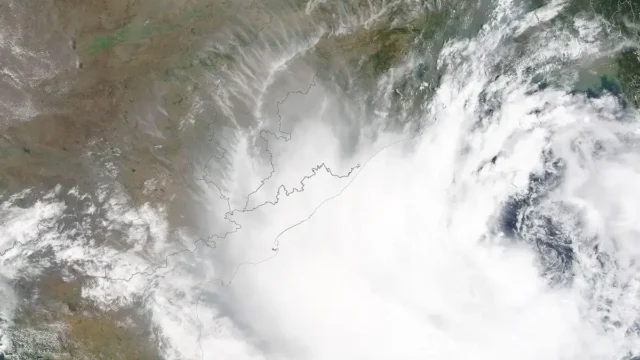
IMD launches a map-based Decision Support System for cyclone and marine warnings
On 12 October 2026 the India Meteorological Department dedicated a Cyclone Warning and Marine Weather Services Decision Support System to the nation. The WebGIS platform shows cyclone track, intensity, winds, rainfall, storm surge and district-wise warnings on one map for disaster managers and the public.
UPSC angle: Prelims: IMD, cone of uncertainty, storm surge. · Mains GS-III: early warning and disaster preparedness.
13 Oct 2026
India offers flood relief to Nepal; PM speaks to Nepal PM
On 26 August 2026 Prime Minister Narendra Modi spoke to Nepal's Prime Minister Balendra Shah and conveyed condolences on the loss of lives in floods in Nepal. He said India is ready to provide all possible humanitarian assistance, and that Indian teams are coordinating closely with Nepalese authorities on rescue and relief.
UPSC angle: Mains: India–Nepal water and flood cooperation.
26 Aug 2026Learn the concept
Question text as printed in the official UPSC question paper: https://www.upsc.gov.in/sites/default/files/QP_CSM_2024_GenStud_I_03102024.pdf The model answer is original Battle IAS work; use it to learn structure, not to memorise.