
UPSC Mains 2024 GS2 Q6: model answer
Public charitable trusts have the potential to make India’s development more inclusive as they relate to certain vital public issues. Comment.
What the question wants
Role of public charitable trusts in inclusive development, examples, and concerns.
How to structure it
Intro: Public charitable trusts hold property for public purposes such as relief of poverty. Body: (1) Contribution to inclusive development (health, education, livelihoods and rural development); (2) Concerns; (3) Reforms. Conclusion: Well-regulated trusts can extend the reach of the State and bring compassion to development.
- 1(1) Contribution to inclusive development (health, education, livelihoods and rural development)
- 2(2) Concerns
- 3(3) Reforms
Model answer
Public charitable trusts hold property for public purposes such as relief of poverty, education, medical relief and environment. They are regulated by State laws like the Maharashtra Public Trusts Act, 1950 and get tax benefits under the Income Tax Act.
Contribution to inclusive development
- Health: Tata Trusts' cancer care network; trust hospitals offer subsidised care.
- Education: Azim Premji Foundation's work with government schools; university endowments.
- Livelihoods and rural development: trusts work with SHGs, water conservation.
- Disaster relief and support during COVID-19.
- They can take risks on new ideas that governments later scale up.
Concerns
- Misuse for tax evasion or money laundering.
- Concentration in cities and certain States.
- Poor transparency in some trusts; complex registration.
- Limits on foreign funding under FCRA.
Reforms: online registration and disclosure, outcome reporting, partnerships with government programmes.
Well-regulated trusts can extend the reach of the State and bring compassion to development.
Keywords, cases and data to drop in
public trusts philanthropy Tata Trusts Azim Premji Foundation transparency
Where most answers lose marks
- No examples.
Fresh examples from current affairs
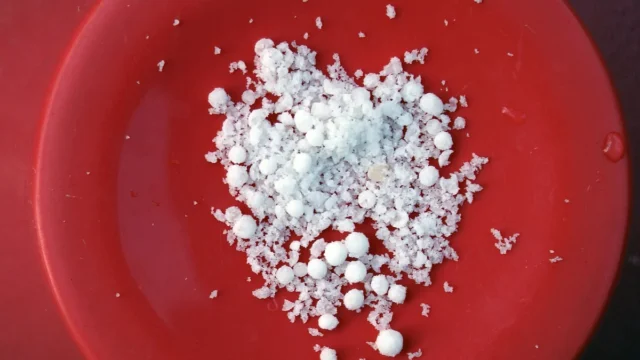
CCPA acts against online sale of explosives: 3,940 sellers delisted from seven platforms
The Central Consumer Protection Authority (CCPA) said on 19 October 2026 that 3,940 sellers of regulated explosives such as ammonium nitrate, picric acid and PETN have been delisted from seven online platforms after its action. It has fined Dial4Trade and ExportersIndia ₹10 lakh per order, and other cases are under hearing or investigation.
UPSC angle: Prelims: CCPA, PESO, CPA 2019 sections, helpline 1915. · Mains GS-II/III: platform liability and security.
19 Oct 2026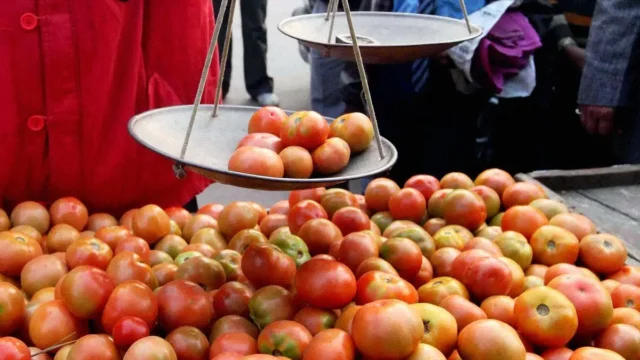
India to host 61st CIML meeting on legal metrology in New Delhi, 26–28 October
India will host the 61st meeting of the International Committee of Legal Metrology (CIML) for the first time, in New Delhi from 26 to 28 October 2026. The Department of Consumer Affairs is organising it with the International Organization of Legal Metrology (OIML), and more than 100 delegates are expected, PIB said on 19 October.
UPSC angle: Prelims: OIML, CIML, Legal Metrology Act 2009, Union List Entry 50. · Mains GS-III: standards and trade.
19 Oct 2026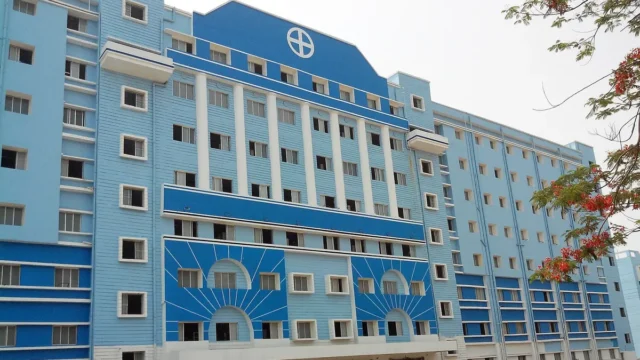
NMC withdraws MSMER-2023: medical colleges lose the fixed penalty rulebook, annual disclosure stays
The National Medical Commission (NMC) has de-notified the Maintenance of Standards of Medical Education Regulations, 2023 (MSMER-2023) by a notification dated 14 October 2026, published in the Gazette on 16 October. Its fixed penalties, including seat cuts and fines of up to ₹5 lakh for false records, go with it. The Annual Disclosure Report stays.
UPSC angle: Prelims: NMC Act 2019, autonomous boards, Concurrent List Entry 25. · Mains GS-II: regulation of medical education.
19 Oct 2026
Supreme Court: no prior approval under Section 17A needed to probe a bribe demand
In a judgment of 16 October 2026, a Supreme Court Bench of Justices S.V.N. Bhatti and N.V. Anjaria held that investigating a bribe demand by a public servant does not need prior approval under Section 17A of the Prevention of Corruption Act. Asking for a bribe, the court said, is not part of discharging official duties.
UPSC angle: Prelims: Sections 7, 7A, 17A and 19 of the PC Act. · Mains GS-II/GS-IV: honest officers versus accountability.
19 Oct 2026Learn the concept
Question text as printed in the official UPSC question paper: https://www.upsc.gov.in/sites/default/files/QP_CSM_2024_GenStud_II_03102024.pdf The model answer is original Battle IAS work; use it to learn structure, not to memorise.