
UPSC Mains 2024 GS2 Q18: model answer
e-governance is not just about the routine application of digital technology in service delivery process. It is as much about multifarious interactions for ensuring transparency and accountability. In this context evaluate the role of the ‘Interactive Service Model’ of e-governance.
What the question wants
Explain the Interactive Service Model, its uses for transparency and accountability, and limits.
How to structure it
Intro: models of e-governance. Body: (1) Features; (2) Indian examples; (3) Role in transparency and accountability; (4) Limits; (5) Way forward. Conclusion: The interactive model turns e-governance from a delivery tool into a conversation.
- 1(1) Features
- 2(2) Indian examples
- 3(3) Role in transparency and accountability
- 4(4) Limits
- 5(5)
Model answer
E-governance models are often classified as broadcasting, critical flow, comparative analysis, e-advocacy and interactive service. The interactive service model allows two-way communication between government and citizens, making them participants rather than passive receivers.
Features
- Citizens can apply, pay, complain and give feedback online.
- Government can consult, respond and track performance.
- Covers G2C, G2B and G2G interactions.
Indian examples
- CPGRAMS for grievance redress, with tracking and feedback.
- MyGov for public consultation on policies and draft laws.
- Income tax e-filing with faceless assessment.
- UMANG app integrating many services.
- e-Courts services for case status.
- Government e-Marketplace for transparent procurement.
Role in transparency and accountability
- Digital trails reduce discretion and corruption.
- Time-stamped applications make delays visible.
- Citizen feedback ranks departments and officials.
- Policy consultation improves legitimacy.
- Real-time dashboards allow monitoring by the public and higher authorities.
Limits
- Digital divide: rural, elderly, and women users have less access.
- Responses can be mechanical; grievances 'disposed of' without being solved.
- Data privacy and cyber security concerns.
- Low capacity at local offices to handle online inputs.
Way forward: assisted access through Common Service Centres, regional languages, quality checks on grievance replies, and the DPDP Act's safeguards.
The interactive model turns e-governance from a delivery tool into a conversation. Its value lies in how seriously government listens.
Keywords, cases and data to drop in
models of e-governance two-way interaction CPGRAMS MyGov faceless assessment digital divide
Where most answers lose marks
- Not explaining what the model is.
Fresh examples from current affairs
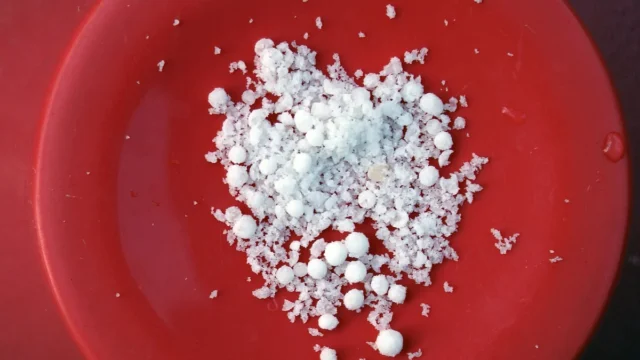
CCPA acts against online sale of explosives: 3,940 sellers delisted from seven platforms
The Central Consumer Protection Authority (CCPA) said on 19 October 2026 that 3,940 sellers of regulated explosives such as ammonium nitrate, picric acid and PETN have been delisted from seven online platforms after its action. It has fined Dial4Trade and ExportersIndia ₹10 lakh per order, and other cases are under hearing or investigation.
UPSC angle: Prelims: CCPA, PESO, CPA 2019 sections, helpline 1915. · Mains GS-II/III: platform liability and security.
19 Oct 2026
India to host 61st CIML meeting on legal metrology in New Delhi, 26–28 October
India will host the 61st meeting of the International Committee of Legal Metrology (CIML) for the first time, in New Delhi from 26 to 28 October 2026. The Department of Consumer Affairs is organising it with the International Organization of Legal Metrology (OIML), and more than 100 delegates are expected, PIB said on 19 October.
UPSC angle: Prelims: OIML, CIML, Legal Metrology Act 2009, Union List Entry 50. · Mains GS-III: standards and trade.
19 Oct 2026
NMC withdraws MSMER-2023: medical colleges lose the fixed penalty rulebook, annual disclosure stays
The National Medical Commission (NMC) has de-notified the Maintenance of Standards of Medical Education Regulations, 2023 (MSMER-2023) by a notification dated 14 October 2026, published in the Gazette on 16 October. Its fixed penalties, including seat cuts and fines of up to ₹5 lakh for false records, go with it. The Annual Disclosure Report stays.
UPSC angle: Prelims: NMC Act 2019, autonomous boards, Concurrent List Entry 25. · Mains GS-II: regulation of medical education.
19 Oct 2026
Supreme Court: no prior approval under Section 17A needed to probe a bribe demand
In a judgment of 16 October 2026, a Supreme Court Bench of Justices S.V.N. Bhatti and N.V. Anjaria held that investigating a bribe demand by a public servant does not need prior approval under Section 17A of the Prevention of Corruption Act. Asking for a bribe, the court said, is not part of discharging official duties.
UPSC angle: Prelims: Sections 7, 7A, 17A and 19 of the PC Act. · Mains GS-II/GS-IV: honest officers versus accountability.
19 Oct 2026Learn the concept
Question text as printed in the official UPSC question paper: https://www.upsc.gov.in/sites/default/files/QP_CSM_2024_GenStud_II_03102024.pdf The model answer is original Battle IAS work; use it to learn structure, not to memorise.