
UPSC Mains 2023 GS2 Q1: model answer
“Constitutionally guaranteed judicial independence is a prerequisite of democracy.” Comment.
What the question wants
Why judicial independence is essential for democracy, the constitutional guarantees, and current concerns.
How to structure it
Intro: judiciary as guardian of the Constitution and rights. Body: (1) Why a prerequisite: rule of law, protection of rights, check on majority, federal umpire, free elections; (2) Constitutional guarantees: security of tenure (Art. 124(4)), salaries charged on the Consolidated Fund, Art. 50, contempt powers, collegium (Second and Third Judges cases), basic structure; (3) Concerns: appointments delays, post-retirement jobs, pendency. Conclusion: independence with accountability.
- 1(1) Why a prerequisite: rule of law, protection of rights, check on majority, federal umpire, free elections
- 2(2) Constitutional guarantees: security of tenure (Art. 124(4)), salaries charged on the Consolidated Fund, Art. 50, contempt powers, collegium (Second and Third Judges cases), basic structure
- 3(3) Concerns: appointments delays, post-retirement jobs, pendency
Model answer
Democracy rests on the rule of law, and only an independent judiciary can enforce it against the powerful. The Supreme Court has held judicial independence to be part of the basic structure (S.P. Gupta, 1981; NJAC case, 2015).
Why it is a prerequisite
- Protects fundamental rights against majoritarian excess.
- Keeps the executive and legislature within constitutional limits through judicial review.
- Acts as a neutral umpire in Centre-State disputes.
- Safeguards free elections and institutions.
Constitutional safeguards
- Removal only by Parliament through a special majority for proved misbehaviour or incapacity (Art. 124(4)).
- Salaries charged on the Consolidated Fund; cannot be cut to their disadvantage.
- Bar on practice after retirement; Art. 50 separates judiciary from executive.
- Collegium system after the Second (1993) and Third (1998) Judges cases.
Concerns: delays in appointments, post-retirement posts and opaque collegium working.
Independence must be paired with transparency and accountability so that citizens trust the courts.
Keywords, cases and data to drop in
basic structure Art. 124(4) Art. 50 collegium NJAC case
Where most answers lose marks
- Only listing provisions.
- No mention of accountability.
Fresh examples from current affairs

Supreme Court: no prior approval under Section 17A needed to probe a bribe demand
In a judgment of 16 October 2026, a Supreme Court Bench of Justices S.V.N. Bhatti and N.V. Anjaria held that investigating a bribe demand by a public servant does not need prior approval under Section 17A of the Prevention of Corruption Act. Asking for a bribe, the court said, is not part of discharging official duties.
UPSC angle: Prelims: Sections 7, 7A, 17A and 19 of the PC Act. · Mains GS-II/GS-IV: honest officers versus accountability.
19 Oct 2026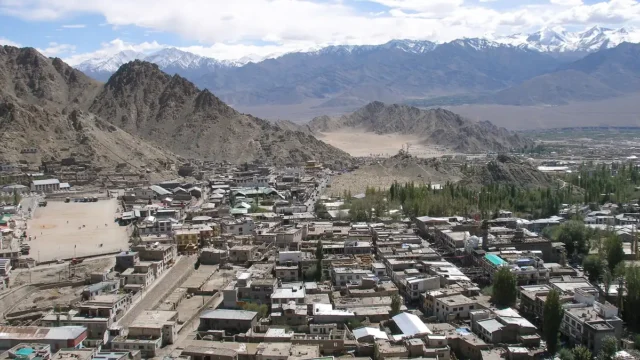
CJI Surya Kant inaugurates the first permanent High Court bench in Leh
On 18 October 2026 Chief Justice of India Surya Kant inaugurated a permanent bench of the High Court of Jammu and Kashmir and Ladakh in Leh. Until now, a person in Ladakh who wanted to file a writ petition had to travel to Srinagar or Jammu, across high passes and harsh winters. The bench was made possible by a regulation that the President promulgated on 27 August and that came into force on 5 September. It is a simple idea with a big effect: bring the court to the people.
UPSC angle: Prelims: Arts. 214, 231, 241, 226, 39A; common High Court. · Mains GS-II: access to justice, judicial infrastructure.
18 Oct 2026
Three High Court Chief Justices appointed as Supreme Court judges
On 5 October 2026 the President appointed three High Court Chief Justices as judges of the Supreme Court: Justice Sunita Agarwal (Gujarat), Justice Devendra Kumar Upadhyaya (Delhi) and Justice Aparesh Kumar Singh (Telangana). The first two have Allahabad as their parent High Court and the third Jharkhand.
UPSC angle: Prelims: Article 124. · Mains GS-II: judicial appointments.
5 Oct 2026
President at NGT climate conference: community-based adaptation rooted in traditional knowledge
On 20 September 2026 President Droupadi Murmu spoke at the valedictory session of the International Conference on "The Future of Environment and Climate Dynamics", organised by the National Green Tribunal in New Delhi. She called for people-centric, community-based climate adaptation rooted in traditional knowledge, and for afforestation that restores whole ecosystems.
UPSC angle: Mains: Role of traditional knowledge in climate adaptation.
20 Sep 2026Learn the concept
Question text as printed in the official UPSC question paper: https://www.upsc.gov.in/sites/default/files/QP-CSM-23-GENERAL-STUDIES-PAPER-II-180923.pdf The model answer is original Battle IAS work; use it to learn structure, not to memorise.