
CRISPR-Cas9 Gene Editing: How It Works, Uses in Medicine and Agriculture, Genome-Edited Crops in India, Regulation and Ethical Questions (UPSC Notes + PYQs)
UPSC has already asked about this. Read the story with these questions in mind.
Where CRISPR came from
CRISPR stands for Clustered Regularly Interspaced Short Palindromic Repeats, odd repeating stretches of DNA first noticed in bacteria in 1987. Scientists later found that the spaces between the repeats held bits of viral DNA: bacteria keep a “memory” of past infections. When the same virus returns, the bacterium makes an RNA copy of the stored piece, which guides a Cas protein to cut the invading virus’s DNA. In 2012 Emmanuelle Charpentier and Jennifer Doudna showed this system could be programmed to cut any chosen DNA sequence in a test tube. In 2013 groups led by Feng Zhang and George Church used it in human and mouse cells. Charpentier and Doudna received the Nobel Prize in Chemistry in 2020.
How it works
The tool has two parts. A guide RNA of about 20 letters matches the target DNA sequence. The Cas9 enzyme binds the guide RNA, scans the DNA, and when it finds the match next to a short signal called a PAM, cuts both strands. The cell then repairs the cut. Its quick but error-prone repair often adds or deletes a few letters, disabling the gene, which is useful to switch off a harmful gene. If a DNA template is supplied, the cell can copy it in, correcting or inserting a sequence.
Newer versions avoid cutting both strands. Base editing (2016) changes a single DNA letter, such as C to T, and prime editing (2019) writes small edits using a “search and replace” approach, with fewer unwanted changes. Other Cas enzymes, such as Cas12 and Cas13, are used in cheap diagnostic tests; India’s FELUDA COVID-19 test, developed at CSIR-IGIB, used a Cas9 variant.
- 1Guide RNA designed to match target DNA
- 2Cas9 and guide RNA find the site
- 3Cas9 cuts both DNA strands
- 4Cell repairs: gene disabled or corrected
CRISPR vs older genetic engineering
| Point | Traditional GM (transgenic) | Genome editing (CRISPR) |
|---|---|---|
| What changes | A gene from another species is inserted (Bt gene in cotton) | The organism’s own genes are edited |
| Foreign DNA in final product | Yes | Often none (SDN-1, SDN-2) |
| Precision | Insertion site random | Targeted |
| Cost and time | High, years | Lower, faster |
| Rule in India | GEAC approval under 1989 Rules | SDN-1 and SDN-2 exempted (2022) |
Uses in medicine
- Sickle cell disease and beta-thalassaemia: Casgevy, which edits a patient’s own blood stem cells to switch on fetal haemoglobin, became the first approved CRISPR therapy, in the UK in November 2023 and the US in December 2023. India, with a large burden of sickle cell disease in tribal belts, launched the National Sickle Cell Anaemia Elimination Mission in 2023, and Indian labs are developing cheaper gene therapies.
- Cancer: edited immune cells (CAR-T) to attack tumours; India approved its own CAR-T therapy in 2023.
- Personalised editing: in 2025 doctors in the US treated an infant with a custom base-editing therapy for a rare liver disorder.
- Diagnostics and research models of disease.
The main hurdle is cost: approved therapies cost millions of dollars per patient abroad, far beyond most Indians.
Uses in agriculture
Editing can make crops tolerant of drought, salt and disease, or improve nutrition, without adding foreign genes. In May 2025, ICAR released India’s first two genome-edited rice varieties: DRR Dhan 100 (Kamala), based on Samba Mahsuri, which gives higher yield and matures about 20 days earlier, and Pusa DST Rice 1, based on MTU 1010, tolerant of salinity and alkalinity. Work is under way on mustard, banana, tomato and millets. Elsewhere, edited crops such as a high-GABA tomato in Japan and non-browning mushrooms in the US have reached markets.
Regulation in India
Genetically modified organisms are regulated under the Rules of 1989 made under the Environment (Protection) Act, with the Genetic Engineering Appraisal Committee (GEAC) approving release. In March 2022 the Environment Ministry exempted genome-edited plants of the SDN-1 and SDN-2 types, which carry no foreign DNA, from these rules; the Department of Biotechnology issued guidelines in May 2022 for their review by institutional biosafety committees. SDN-3 editing, which inserts larger foreign sequences, is still treated like GM. For human uses, ICMR’s National Guidelines for Gene Therapy Product Development and Clinical Trials (2019) apply, and editing of human embryos for reproduction is not allowed.
| Type | What is done | Rule in India |
|---|---|---|
| SDN-1 | Small changes without a template | Exempt from GM rules (2022) |
| SDN-2 | Small changes using a short template | Exempt from GM rules (2022) |
| SDN-3 | Larger insertions of foreign DNA | Regulated like GM by GEAC |
Ethics and risks
- Germline editing: in 2018 Chinese scientist He Jiankui announced the birth of twins whose embryos he had edited, causing global outrage; he was jailed. Edits to eggs, sperm or embryos pass to future generations, and most countries forbid it.
- Off-target effects: edits at the wrong place could cause harm, such as cancer.
- Equity: costly therapies could widen the gap between rich and poor.
- Designer babies and enhancement rather than cure.
- Biosecurity: misuse to create harmful organisms.
- Gene drives that spread edits through wild populations, proposed against malaria mosquitoes, could have unknown ecological effects.
- Patents and control by a few firms.
Way forward for India
Fund cheaper indigenous therapies for sickle cell disease and thalassaemia, build regulatory capacity with clear timelines, keep the distinction between edited and transgenic crops science-based while testing for safety, protect farmers’ access to seed, and keep a strict ban on heritable human editing while supporting research.
Gene editing and the bioeconomy
The BioE3 policy of 2024 (Biotechnology for Economy, Environment and Employment) lists precision biotherapeutics and climate-resilient agriculture among its focus areas, both of which rely on genome editing. India’s bioeconomy was estimated at about USD 165 billion in 2024, and the Government aims for USD 300 billion by 2030. Biofoundries and biomanufacturing hubs under BioE3 are meant to turn laboratory edits into products, from enzymes to cell therapies. Indian institutions active in genome editing include CSIR-IGIB in Delhi, which developed a smaller and more precise Cas9 variant from Francisella novicida, ICAR institutes for crops, and the National Institute of Plant Genome Research. A strong public research base keeps costs low and reduces dependence on foreign patents, many of which are still contested between US universities. For students, the practical point is simple: genome editing is now a tool of Indian public agriculture and medicine, not only a topic in foreign journals, and questions are likely to ask how it differs from older GM technology and how it is regulated.
PYQ trend
Prelims 2019 asked what Cas9 is. Expect questions on genome-edited crops and SDN categories, and Mains GS-III questions on biotechnology in health and farming.
CRISPR: UPSC angle
For UPSC CSE
Prelims: terms, uses, regulation. Mains GS-III: biotechnology and its applications, ethics of science.
CRISPR UPSC PYQs (Prelims)
Questions UPSC has actually asked, from the official papers. Pick an option to check yourself.
What is Cas9 protein that is often mentioned in news?
Cas9 is a bacterial enzyme that a guide RNA leads to a matching DNA sequence, where it cuts both strands. This is the CRISPR-Cas9 “molecular scissors” used to edit genes, which won Charpentier and Doudna the 2020 Chemistry Nobel. India’s FELUDA COVID test used a related Cas protein. Answer as per the official UPSC key · Battle IAS PYQ bankAnswer (a) & why
Mains PYQs on this topic
No UPSC Mains question from 2023-2026 is directly on this topic. Older papers (2013-2022) will be added as the Mains bank grows.
Quick quiz
Cas9 protein is best described as
Cas9 cuts DNA at a site set by a guide RNA.Answer (b)
Which genome-edited plants are exempt from India’s GM rules?
Since March 2022, SDN-1 and SDN-2 plants without foreign DNA are exempt.Answer (a)
DRR Dhan 100 (Kamala) is
Released by ICAR in May 2025.Answer (b)
FAQs
What is CRISPR?
A gene-editing technology based on a bacterial defence system, using a guide RNA and the Cas9 enzyme to cut DNA at a chosen place.
Is a genome-edited crop the same as a GM crop?
Not always. SDN-1 and SDN-2 edits change the plant’s own genes without foreign DNA, and India treats them differently from transgenic GM crops.
Who discovered CRISPR gene editing?
Emmanuelle Charpentier and Jennifer Doudna showed in 2012 that it could be programmed; they won the 2020 Nobel Prize in Chemistry.
Is human embryo editing allowed in India?
No. Editing for reproduction is not permitted; gene therapy research follows ICMR guidelines.
What diseases can CRISPR treat now?
Approved therapies treat sickle cell disease and beta-thalassaemia; trials cover cancers, eye and liver diseases.
Spotted an error? Tell us. We correct within 48 hours.
Image: Crisprbiotech, Wikimedia Commons, CC BY-SA 4.0
How to use this in Mains
If asked: Discuss the potential and ethical concerns of CRISPR-based gene editing. (GS-III)
Quote: “Editing can make crops tolerant of drought, salt and disease, or improve nutrition, without adding foreign genes.”
Use it: Your agriculture point; contrast it with GM regulation in the next line.
In the news
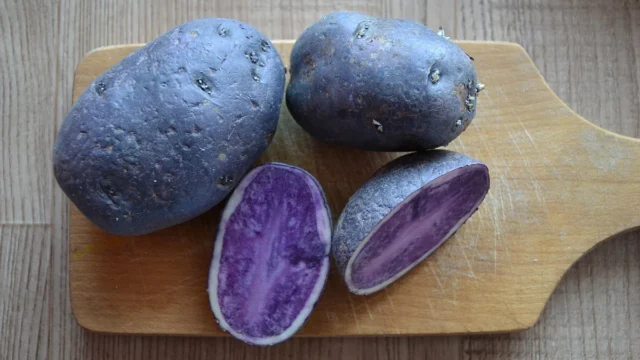
Kufri Jamunia: ICAR-CPRI’s purple potato to fight hidden hunger
A PIB backgrounder of 18 October 2026 puts the spotlight on Kufri Jamunia, a purple-fleshed potato bred by ICAR’s Central Potato Research Institute and released in 2024. It has nearly twice the Vitamin C of a common potato and several times more zinc and iron, along with antioxidants called anthocyanins. The idea is clever: instead of asking people to change what they eat, make the food they already eat more nutritious. That is biofortification.
18 Oct 2026
First commercial bio-based PLA plastic under BioE3: Balrampur Chini Mills pilot
On 24 September 2026 the Department of Biotechnology launched the commercial use of bio-based biodegradable plastic made of Polylactic Acid (PLA) under the BioE3 framework. A ₹75 crore BIRAC grant supports a 100 TPA pilot R&D facility for PLA and co-polymers by Balrampur Chini Mills at Kumbhi, Uttar Pradesh.
24 Sep 2026
7th National Formulary of India launched; new Biovigilance Programme approved
On 21 September 2026 the Health Ministry launched the 7th edition of the National Formulary of India, with 653 drugs, and announced that the Government has approved a Biovigilance Programme of India. Under it, the Indian Pharmacopoeia Commission will monitor adverse events linked to medicines and biological products used in organ and tissue transplantation.
21 Sep 2026
Health Ministry advisory: stem cell therapy only for approved indications; autism use only in trials
On 16 September 2026 the Health Ministry told States and UTs that stem cell therapy may be given as standard care only for conditions on the Ministry's approved list. For autism, any stem cell use must stay inside approved clinical trials. The advisory follows a Supreme Court judgment of 30 January 2026 in Yash Charitable Trust v. Union of India.
17 Sep 2026