
Agrivoltaics: Centre plans a scheme to push solar panels above farms; 5 GW seen in 3–4 years
Next story · 20 OctAditya-L1’s VELC produces Doppler velocity images of the solar corona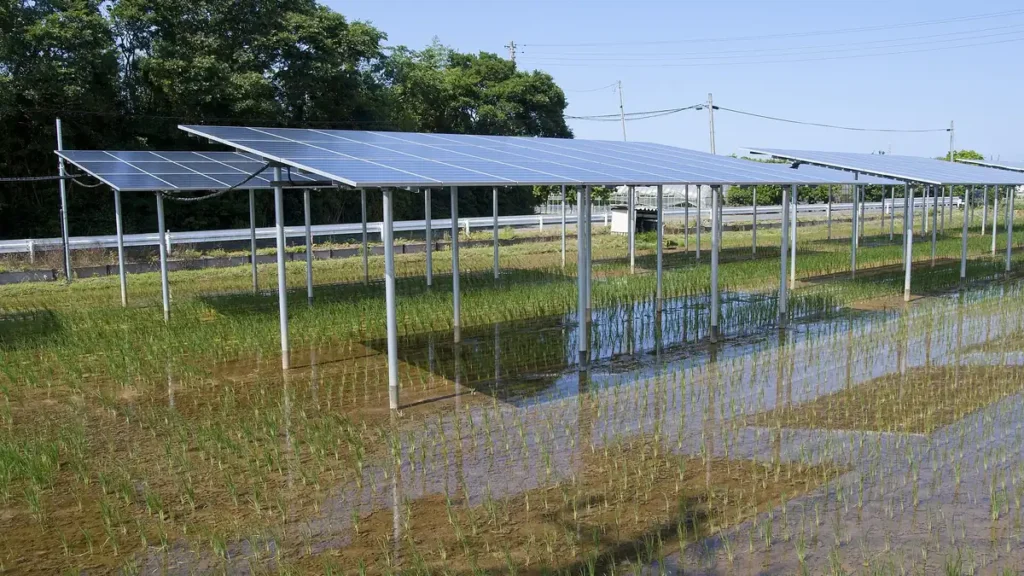
MNRE Secretary Santosh Kumar Sarangi said on 19 October 2026 that the Centre is planning a central sector scheme to help States adopt agrivoltaics, either standalone or within PM-KUSUM 2.0. He expects capacity to cross 5 GW in three to four years if States notify feed-in tariffs. India hosts the 7th Agrivoltaics World Conference in New Delhi from 21 to 23 October.
- Target view
- 5 GW+ in 3–4 years
- Potential
- 1–2 TW
- Extra cost
- About 25%
- Conference
- 21–23 Oct, Delhi
Agrivoltaics push: what happened?
A farmer usually has to choose: grow crops, or lease land for a solar park. Agrivoltaics says, why not both? Panels go up on tall frames, and spinach or flowers grow in their shade below.
- 19 Oct 2026: MNRE said a central sector scheme is planned, standalone or under PM-KUSUM 2.0 (HT, The Hindu).
- Growth depends on States quickly notifying feed-in tariffs for agrivoltaic power.
- IARI-assisted pilots show leafy vegetables, fruits and flowers suit the shade; sugarcane, wheat and rice do not (HT).
- Odisha, Maharashtra and Madhya Pradesh have run their own pilots; over 40 pilots exist nationally (HT).
What is agrivoltaics?
- Solar panels are raised on structures above working farmland.
- Farming stays the primary land use; power is a second harvest.
- Shade can cut water loss and heat stress for some crops.
- Raised panels cost about 25% more than ground-mounted ones (HT).
How does agrivoltaics compare with PM-KUSUM ground-mounted solar?
| Point | Agrivoltaics | Ground-mounted (PM-KUSUM A) |
|---|---|---|
| Land use | Crops continue below panels | Land given over to panels |
| Height | Elevated structures | Low mounting |
| Cost | About 25% higher | Lower |
| Best crops | Leafy vegetables, fruits, flowers | Barren or fallow land preferred |
Which constitutional and legal provisions apply?
- Electricity: Concurrent List Entry 38; States set tariffs through regulators.
- Electricity Act, 2003, Section 62: tariff determination by commissions.
- Agriculture and land: State List Entries 14 and 18.
- Article 48: organise agriculture on modern and scientific lines.
How does an agrivoltaic farm earn twice?
One field, two harvests
- Panels raised on tall frames
- Shade-tolerant crops grown below
- Power sold at State feed-in tariff
- Farmer or FPO earns steady income
- Crop income continues alongside
Why does this matter?
| Angle | What to note |
|---|---|
| Energy transition | Adds solar without taking farmland away. |
| Farm incomes | Stable power revenue for farmers and FPOs. |
| Water | Shade can reduce evaporation. |
| Federalism | States must notify tariffs; Centre gives support. |
What are the challenges?
- Higher capital cost than ground-mounted solar.
- Not suitable for major staples like wheat, rice and sugarcane.
- Small, fragmented landholdings complicate projects.
- Without State feed-in tariffs, investors stay away.
What should be done next?
- Launch the central scheme with clear viability support.
- States should notify feed-in tariffs early.
- Use FPOs and cooperatives to pool small farms.
- Publish crop metrics from IARI pilots for each region.
What can Prelims ask on agrivoltaics?
- Agrivoltaics: farming and solar power on the same land.
- PM-KUSUM components: A (small solar plants), B (standalone pumps), C (solarising grid pumps).
- 7th Agrivoltaics World Conference: Bharat Mandapam, 21–23 Oct 2026.
- Supported by the Indo-German Cooperation on AgriVoltaics project.
- Estimated potential in India: 1–2 terawatts.
How to write about agrivoltaics in Mains
Practice question (10 marks, 150 words): Agrivoltaics can reconcile India’s solar ambitions with food security. Examine. (GS-III)
- Intro: MNRE scheme plan; 5 GW in 3–4 years.
- Benefits: dual land use, farm income, water saving.
- Limits: 25% extra cost, crop suitability, small farms.
- Policy: feed-in tariffs, PM-KUSUM 2.0, FPOs.
- Conclusion: grow both crops and power.
Image: Solar panels above paddy fields under ‘solar sharing’ in Kamisu, Japan. Σ64, Wikimedia Commons, CC BY 3.0
How to use this in Mains
If asked: Discuss the potential of decentralised solar energy to raise farm incomes. (GS-III)
Quote: “Once they (the states) are ready with feed-in tariffs. It would provide certainty to the farmer-producers organisations and cooperatives to make the investment decision.”
Use it: Use it to show why State action decides success; add FPO-led models.
If asked: Land-use conflicts may slow India’s renewable energy expansion. Suggest solutions. (GS-III)
Quote: “It is difficult to estimate but it should be upwards of 5-gigawatts in the next 3-4 years. It depends on state’s enthusiasm, ability to quickly notify a feed-in tariff.”
Use it: Quote it, add the 1–2 TW potential to argue for dual-use land; then list cost and crop limits.
Exam angle
Prelims: agrivoltaics, PM-KUSUM components, feed-in tariffs. · Mains GS-III: energy transition and food security.
Practice MCQs
Original practice questions (not PYQs).
Agrivoltaics refers to
Answer (b) & explanation
Panels are raised over working farmland so crops and power are produced together.
Consider the following statements:
1. Early Indian pilots suggest leafy vegetables and flowers suit agrivoltaics.
2. Wheat and rice are found most suitable for agrivoltaics.
3. Elevated panels cost about 25% more than ground-mounted panels.
How many of the statements given above are correct?
Answer (b) & explanation
Statements 1 and 3 are correct. MNRE said sugarcane, wheat and rice are not so feasible (HT).
Which component of PM-KUSUM supports standalone solar agriculture pumps?
Answer (b) & explanation
Component B is for standalone solar pumps; A for small solar plants; C for solarising grid-connected pumps.
Questions students ask about this
What is agrivoltaics?
Growing crops and producing solar power on the same land, with panels raised above the crops.
What is the Centre planning?
A central sector scheme, standalone or within PM-KUSUM 2.0, to help States adopt it.
Which crops suit it?
Pilots show leafy vegetables, fruits and flowers do well; staples like wheat and rice do not.
What is the role of States?
They must notify feed-in tariffs so farmers and FPOs can invest.
Keep studying
Go deeper
facts from cited sources only; faculty review pending