
UPSC Mains 2013 GS Paper 1 Q1: model answer
Though not very useful from the point of view of a connected political history of South India, the Sangam literature portrays the social and economic conditions of its time with remarkable vividness. Comment.
What the question wants
Accept the limit (weak connected political history), then show how vividly Sangam texts reveal society and economy.
How to structure it
Comment: give your view with evidence. Two parts are built into the statement: concede the first, prove the second.
- Why it is weak as political history
- Social conditions
- Economic conditions
- Your verdict
How to think it through
Think of Sangam poems as a family album, not a government gazette. They tell you who loved whom, who led which cattle raid, what pepper fetched at Muziris, but not a neat list of kings with dates. So concede the political gap in two lines and spend the rest on life: the five tinai landscapes, chiefs and bards, ports and Roman gold. Keep the verdict balanced: a weak chronicle, a brilliant mirror.
Model answer
A single Sangam poem in the Akananuru speaks of Yavana ships arriving at Muziris with gold and leaving with pepper. The corpus (roughly 3rd century BCE to 3rd century CE) includes the Ettuthokai and Pattuppattu, with the Tolkappiyam as grammar.
Why it is weak as political history
- Poems praise Chera, Chola and Pandya kings and chiefs, but give no continuous chronology or regnal dates.
- Heroic exaggeration and bardic patronage colour the accounts.
Social conditions
- The tinai concept links five landscapes (kurinji, mullai, marutam, neytal, palai) with livelihoods and with poems of love (akam) and war (puram).
- Hero stones, bards (panar) and gift-giving show the values of chiefdom society.
- Women poets such as Avvaiyar had a literary voice, though widows faced harsh austerities.
Economic conditions
- Wet-rice farming in the Kaveri delta, pastoralism, fishing and salt-making.
- Overseas trade through Muziris, Puhar and Korkai; poems describe Yavana ships bringing gold for pepper, which Roman coin hoards and the Arikamedu excavations confirm.
How historians use it
- Cross-checked with Ashokan Rock Edict II (which names Cholas, Pandyas, Keralaputras and Satiyaputras) and the Hathigumpha inscription of Kharavela, it gives a rough political frame.
Conclusion
Sangam literature cannot give a connected political narrative, but read with archaeology it is among the richest sources for everyday life in early South India: a mirror of society rather than a record of states.
Draw: A five-petal flower of the five tinai, each with its landscape and occupation.
Keywords, cases and data to drop in
Tinai, akam–puram, Muziris, Arikamedu, Yavanas, Avvaiyar, hero stones.
Where most answers lose marks
- Writing only about the three dynasties. The question tells you politics is the weak part.
Related Mains PYQs
- How will you explain that medieval Indian temple sculptures represent the social life of those days? UPSC 2022 · GS-I
- Discuss the main contributions of Gupta period and Chola period to Indian heritage and culture. UPSC 2022 · GS-I
- Discuss the significance of the lion and bull figures in Indian mythology, art, and architecture. UPSC 2022 · GS-I
- Evaluate the nature of the Bhakti literature and its contribution to Indian culture. UPSC 2021 · GS-I
Fresh examples from current affairs
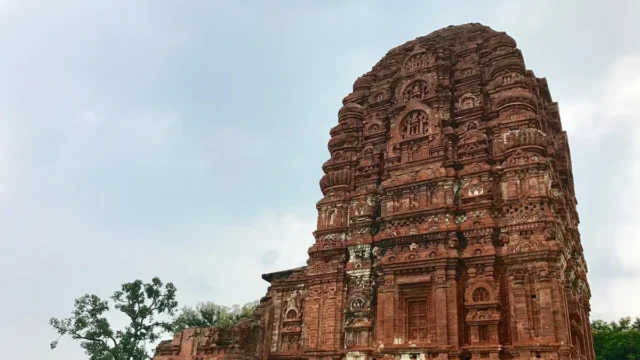
Sirpur in Chhattisgarh enters UNESCO’s Tentative List of World Heritage sites
Sirpur, an archaeological site in Chhattisgarh’s Mahasamund district with Hindu, Buddhist and Jain remains from the 5th to the 12th century CE, has been added to UNESCO’s Tentative List. The ASI now has about a year to prepare a nomination dossier proving its Outstanding Universal Value. Sirpur was once the capital of Dakshina Kosala.
UPSC angle: Prelims: Sirpur location, Lakshmana Temple, dynasties, UNESCO process. · Mains GS-I: heritage conservation and composite culture.
20 Oct 2026
PM inaugurates five Ladakh projects: Nimmu–Padum–Darcha road, Leh terminal, Hanu hydro
On 15 October 2026 the Prime Minister inaugurated, by video conference, five projects worth about ₹3,350 crore in Ladakh: a new passenger terminal at Leh's Kushok Bakula Rimpochee Airport, the 298-km Nimmu–Padum–Darcha road built by BRO, the 9 MW Hanu small hydro project with a 66 kV line, India's first Petroglyph Conservation Park at Sindhu Ghat, and 40 water bodies under Project Him Sarovar.
UPSC angle: Prelims: Shinkun La, Zanskar, Nimmu–Padum–Darcha road, BRO, petroglyphs, Him Sarovar. · Mains GS-III: border infrastructure and security; GS-I: heritage conservation.
15 Oct 2026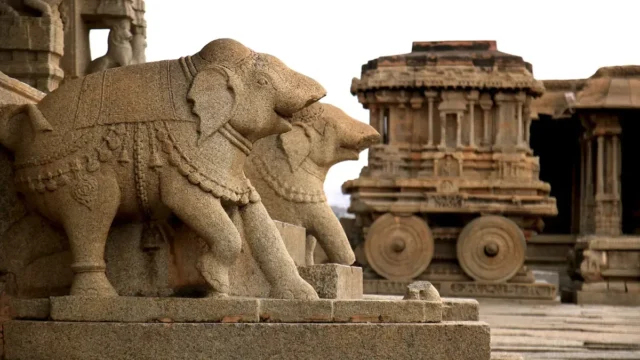
HAL, NCF and ASI sign MoA for Hampi, Taj Mahal and Bekal Fort
On 13 October 2026 HAL, the National Culture Fund and ASI signed an MoA for conservation and visitor works at Hampi, the Taj Mahal and Bekal Fort. HAL has approved about ₹23.60 crore in CSR support over three years; NCF facilitates the projects and ASI supervises them technically.
UPSC angle: Prelims: ASI, NCF, Hampi (UNESCO), Taj Mahal, Bekal Fort. · Mains GS-I: heritage conservation and corporate CSR.
14 Oct 2026
Centres of Excellence approved for five newer classical languages
On 3 October 2026 the Ministry of Education approved five Centres of Excellence for Classical Assamese, Bengali, Marathi, Pali and Prakrit, hosted by Tezpur University, Visva-Bharati, Deccan College Pune, Central University of Odisha and Central University of Gujarat. These five got classical status in October 2024, taking India's total to 11 classical languages.
UPSC angle: Prelims: match language with CoE institution; list of classical languages.
3 Oct 2026Learn the concept
Question text as printed in the official UPSC Civil Services (Main) question paper. The model answer is original Battle IAS work; use it to learn structure, not to memorise.
Want every PYQ in one place? See the Battle IAS PYQ Book.