
UPSC Mains 2022 GS Paper 1 Q13: model answer
Discuss the significance of the lion and bull figures in Indian mythology, art, and architecture.
What the question wants
Discuss the significance of lion and bull figures in Indian mythology, art and architecture.
How to structure it
Discuss both animals across all three domains.
- Early art
- The lion
- The bull
- Continuity today
How to think it through
This looks easy until you start writing. Use a grid: lion means power, sovereignty and the Buddha's voice; bull means fertility, strength, dharma and Shiva's Nandi. Then trace both from Harappan seals to Ashokan capitals to temples. Bonus: the lion capital sits on every currency note in your wallet. Finally, a question you can check by looking in your pocket.
Model answer
Lions and bulls appear in Indian art from the Harappan seals to the national emblem, carrying layered meanings.
Early art
- Harappan seals show the humped bull (zebu), suggesting strength and fertility.
- Ashokan pillars: the Sarnath lion capital, adopted as the State Emblem in 1950, and the Rampurva bull capital, now at Rashtrapati Bhavan.
The lion
- Mythology: the mount of Durga; Vishnu's Narasimha avatar; the Buddha as Shakyasimha, whose teaching is the 'lion's roar'.
- Art and architecture: Pallava lion pillars at Mahabalipuram and Kanchi; yali figures on South Indian temples; the simhasana or lion throne.
The bull
- Mythology: Nandi, Shiva's mount and devotee; the emblem of Rishabhanatha, the first Jain tirthankara; dharma pictured as a bull in the Puranas.
- Art and architecture: monolithic Nandis at Lepakshi, Thanjavur and Chamundi Hill, Mysuru; Nandi mandapas facing the sanctum.
In Buddhism and Jainism
- The Sarnath capital has four lions facing the cardinal directions and a bull, elephant, horse and lion on the abacus, symbolising the Buddha's life.
- The lion is the emblem of Mahavira.
Political symbols
- The lion symbolised royal authority on Gupta coins (lion-slayer type of Chandragupta II).
- Mughal and Rajput paintings show kings hunting lions, the hunt itself a display of sovereignty.
- The bull Nandi stands guard at temple entrances from Khajuraho to Thanjavur, a reminder that devotion begins at the threshold.
Modern use
- The lion emblem appears on currency and passports; the new Parliament's bronze emblem (2022) sparked debate on its expression.
The verdict
The lion stands for sovereignty and spiritual power, the bull for fertility, strength and dharma. Their journey from seals to the State Emblem shows the continuity of Indian symbolism.
Draw: 2×3 grid: lion and bull × mythology, art, architecture.
Keywords, cases and data to drop in
Harappan zebu seal, Sarnath lion capital, Rampurva bull, Nandi, Narasimha, Shakyasimha, yali, Rishabhanatha.
Where most answers lose marks
- Writing only about the State Emblem.
Related Mains PYQs
- How will you explain that medieval Indian temple sculptures represent the social life of those days? UPSC 2022 · GS-I
- Discuss the main contributions of Gupta period and Chola period to Indian heritage and culture. UPSC 2022 · GS-I
- Evaluate the nature of the Bhakti literature and its contribution to Indian culture. UPSC 2021 · GS-I
- The rock-cut architecture represents one of the most important sources of our knowledge of early Indian art and history. Discuss. UPSC 2020 · GS-I
Fresh examples from current affairs
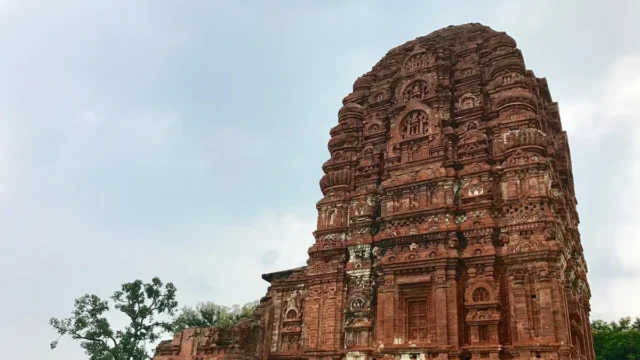
Sirpur in Chhattisgarh enters UNESCO’s Tentative List of World Heritage sites
Sirpur, an archaeological site in Chhattisgarh’s Mahasamund district with Hindu, Buddhist and Jain remains from the 5th to the 12th century CE, has been added to UNESCO’s Tentative List. The ASI now has about a year to prepare a nomination dossier proving its Outstanding Universal Value. Sirpur was once the capital of Dakshina Kosala.
UPSC angle: Prelims: Sirpur location, Lakshmana Temple, dynasties, UNESCO process. · Mains GS-I: heritage conservation and composite culture.
20 Oct 2026
PM inaugurates five Ladakh projects: Nimmu–Padum–Darcha road, Leh terminal, Hanu hydro
On 15 October 2026 the Prime Minister inaugurated, by video conference, five projects worth about ₹3,350 crore in Ladakh: a new passenger terminal at Leh's Kushok Bakula Rimpochee Airport, the 298-km Nimmu–Padum–Darcha road built by BRO, the 9 MW Hanu small hydro project with a 66 kV line, India's first Petroglyph Conservation Park at Sindhu Ghat, and 40 water bodies under Project Him Sarovar.
UPSC angle: Prelims: Shinkun La, Zanskar, Nimmu–Padum–Darcha road, BRO, petroglyphs, Him Sarovar. · Mains GS-III: border infrastructure and security; GS-I: heritage conservation.
15 Oct 2026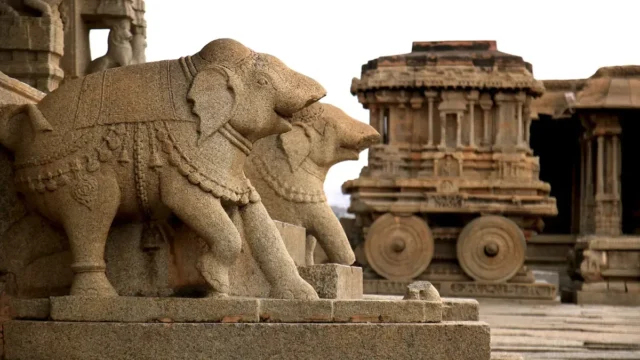
HAL, NCF and ASI sign MoA for Hampi, Taj Mahal and Bekal Fort
On 13 October 2026 HAL, the National Culture Fund and ASI signed an MoA for conservation and visitor works at Hampi, the Taj Mahal and Bekal Fort. HAL has approved about ₹23.60 crore in CSR support over three years; NCF facilitates the projects and ASI supervises them technically.
UPSC angle: Prelims: ASI, NCF, Hampi (UNESCO), Taj Mahal, Bekal Fort. · Mains GS-I: heritage conservation and corporate CSR.
14 Oct 2026
Centres of Excellence approved for five newer classical languages
On 3 October 2026 the Ministry of Education approved five Centres of Excellence for Classical Assamese, Bengali, Marathi, Pali and Prakrit, hosted by Tezpur University, Visva-Bharati, Deccan College Pune, Central University of Odisha and Central University of Gujarat. These five got classical status in October 2024, taking India's total to 11 classical languages.
UPSC angle: Prelims: match language with CoE institution; list of classical languages.
3 Oct 2026Learn the concept
Question text as printed in the official UPSC Civil Services (Main) question paper. The model answer is original Battle IAS work; use it to learn structure, not to memorise.
Want every PYQ in one place? See the Battle IAS PYQ Book.