
UPSC Mains 2015 GS Paper 1 Q4: model answer
Mahatma Gandhi and Dr. B. R. Ambedkar, despite having divergent approaches and strategies, had a common goal of amelioration of the downtrodden. Elucidate.
What the question wants
Elucidate how Gandhi and Ambedkar differed in approach but shared the goal of uplifting the downtrodden.
How to structure it
Elucidate: explain differences in approach and the common goal, with examples.
- Gandhi's approach
- Ambedkar's approach
- Points of conflict (Poona Pact)
- The common goal
How to think it through
These two disagreed loudly, and both were right about something. Gandhi wanted to change the hearts of caste Hindus from within; Ambedkar wanted to change the laws and structures that kept Dalits down. The Poona Pact (1932) is the moment where the two paths collided and then found a compromise. Respect both.
Model answer
Mahatma Gandhi and Dr B.R. Ambedkar differed sharply on how to end caste oppression, but both sought dignity for the downtrodden.
Gandhi's approach
- Untouchability as a moral sin of Hindu society; reform through change of heart among caste Hindus.
- Called the untouchables 'Harijans'; founded the Harijan Sevak Sangh (1932) and the weekly Harijan; temple-entry campaigns.
- Initially defended varna as a division of duties, though he opposed untouchability.
Ambedkar's approach
- Caste as a system of social and economic exploitation; called for its 'annihilation' (Annihilation of Caste, 1936).
- Political rights and legal safeguards: separate electorates at the Round Table Conferences, education, organisation (Bahishkrit Hitakarini Sabha, 1924), the Mahad Satyagraha (1927).
- Later embraced Buddhism (1956).
Points of conflict
- The Communal Award (1932) gave separate electorates; Gandhi fasted; the Poona Pact (1932) gave reserved seats in joint electorates instead.
The common goal
- Both sought an end to untouchability and the uplift of the oppressed classes; Ambedkar's constitutional work (Article 17) completed what both wanted.
- Gandhi supported Ambedkar's inclusion in the first cabinet and the Constituent Assembly, a sign of mutual respect despite their sharp and public differences.
Conclusion
Gandhi worked on the conscience of the oppressor; Ambedkar on the rights of the oppressed. Their paths complemented each other in building a more just society.
Draw: Two arrows converging on one target: 'dignity of the downtrodden'.
Keywords, cases and data to drop in
Harijan Sevak Sangh 1932, Mahad Satyagraha 1927, Communal Award, Poona Pact 1932, Annihilation of Caste, Article 17.
Where most answers lose marks
- Picking a side. The question asks for the common goal.
Related Mains PYQs
- Why did the armies of the British East India Company - mostly comprising of Indian soldiers - win consistently against the more… UPSC 2022 · GS-I
- Why was there a sudden spurt in famines in colonial India since the mid-eighteenth century? Give reasons. UPSC 2022 · GS-I
- Bring out the constructive programmes of Mahatma Gandhi during Non-Cooperation Movement and Civil Disobedience Movement. UPSC 2021 · GS-I
- Trace the rise and growth of socio-religious reform movements with special reference to Young Bengal and Brahmo Samaj. UPSC 2021 · GS-I
Fresh examples from current affairs
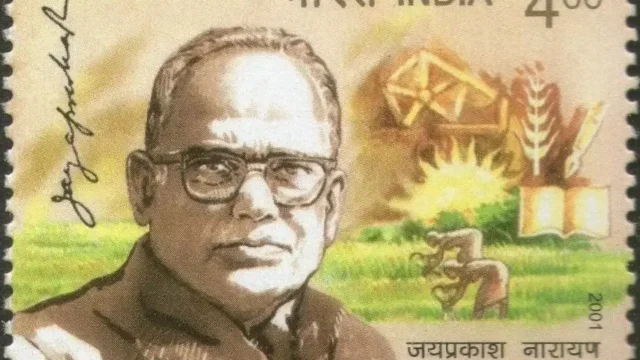
Birth anniversaries: Jayaprakash Narayan and Nanaji Deshmukh
11 October is the birth anniversary of Loknayak Jayaprakash Narayan and Nanaji Deshmukh, both Bharat Ratna awardees. The Prime Minister recalled JP's voice during the Emergency and his concern for good governance, and Nanaji's work in rural development and community participation. Treat this as a personality note for Prelims.
UPSC angle: Prelims: personalities, Bharat Ratna years. · Mains: limited; GS-IV examples of public service.
11 Oct 2026
ASI and Denmark museum to search for 1619 Danish shipwreck Oresund off Karaikal
The Archaeological Survey of India's Underwater Archaeology Wing and the National Museum of Denmark (Njord Centre, Copenhagen) signed an MoU to locate and document the Danish ship Oresund, wrecked off Karaikal, Puducherry, in 1619 CE. It is described as the first Danish ship known to have reached India.
UPSC angle: Prelims: Danish settlements in India.
15 Jun 2026
Veer Bal Diwas and the Rashtriya Bal Puraskar
The PM announced the day on 9 January 2022 and the first Veer Bal Diwas was held on 26 December 2022 [PMO].
UPSC angle: Prelims: Sikh history.
26 Dec 2025
Stamp on Emperor Perumbidugu Mutharaiyar II
Questions on lesser-known regional dynasties are common in Prelims. Stamps and anniversaries often bring them into the news.
UPSC angle: Prelims: early medieval Tamil dynasties.
14 Dec 2025Learn the concept
Question text as printed in the official UPSC Civil Services (Main) question paper. The model answer is original Battle IAS work; use it to learn structure, not to memorise.
Want every PYQ in one place? See the Battle IAS PYQ Book.