
UPSC Mains 2017 GS Paper 1 Q13: model answer
Highlight the importance of the new objectives that got added to the vision of Indian independence since the twenties of the last century.
What the question wants
Highlight the new social and economic objectives that were added to the idea of independence from the 1920s.
How to structure it
Highlight: name the new objectives clearly, with the resolutions and movements that added them.
- From political freedom to purna swaraj
- Economic and social justice
- Secularism, rights and federalism
- Conclusion
How to think it through
Before the 1920s, 'freedom' mostly meant political self-rule. From the 1920s it got upgrades: purna swaraj, fundamental rights, socialism, equality of women and depressed classes, secularism, and a welfare state. The Karachi Resolution (1931) is the most important document; quote it and the question is half answered.
Model answer
On 26 January 1930, Congress committees across India read a pledge declaring that British rule had ruined India 'economically, politically, culturally and spiritually'. From the 1920s, independence came to mean a change in Indian society, not just a change of rulers.
Complete independence
- The Lahore Congress (1929) declared purna swaraj as the goal; 26 January 1930 was observed as Independence Day.
Rights and democracy
- The Nehru Report (1928) proposed fundamental rights and adult franchise.
- The Karachi Resolution (1931) on fundamental rights and economic policy: free speech, equality, universal adult franchise, free primary education.
Economic and social justice
- Karachi also promised protection for workers, reduction of rent and revenue, and state control of key industries.
- Socialist ideas spread through Nehru, Bose and the Congress Socialist Party (1934); the National Planning Committee (1938).
- Abolition of untouchability, equality for women and the depressed classes; peasant and worker movements.
Secularism and pluralism
- Equality of religions and protection of minorities' culture and language.
Industrialisation and planning
- The National Planning Committee (1938) under Nehru prepared plans for industrialisation, later reflected in the Five-Year Plans.
Foreign policy
- The Congress set up a Foreign Department (1928) and opposed fascism and imperialism, laying the roots of India's later policy of non-alignment.
Importance
- The new objectives widened the movement's appeal to workers, peasants, women and minorities.
- The Karachi Resolution's rights became the basis of Part III, and its economic programme influenced the Directive Principles.
These objectives turned the freedom struggle into a programme for a democratic, secular and socially just India, and many of them were written into the Constitution.
Keywords, cases and data to drop in
Nehru Report 1928, Lahore 1929, purna swaraj, Karachi Resolution 1931, CSP 1934, National Planning Committee 1938.
Where most answers lose marks
- Writing a narrative of movements with no 'objectives'.
Related Mains PYQs
- Why did the armies of the British East India Company - mostly comprising of Indian soldiers - win consistently against the more… UPSC 2022 · GS-I
- Why was there a sudden spurt in famines in colonial India since the mid-eighteenth century? Give reasons. UPSC 2022 · GS-I
- Bring out the constructive programmes of Mahatma Gandhi during Non-Cooperation Movement and Civil Disobedience Movement. UPSC 2021 · GS-I
- Trace the rise and growth of socio-religious reform movements with special reference to Young Bengal and Brahmo Samaj. UPSC 2021 · GS-I
Fresh examples from current affairs
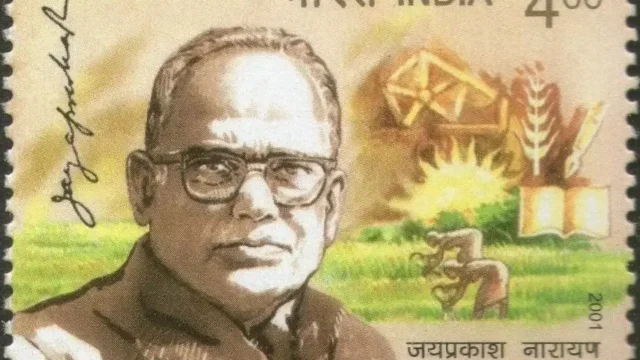
Birth anniversaries: Jayaprakash Narayan and Nanaji Deshmukh
11 October is the birth anniversary of Loknayak Jayaprakash Narayan and Nanaji Deshmukh, both Bharat Ratna awardees. The Prime Minister recalled JP's voice during the Emergency and his concern for good governance, and Nanaji's work in rural development and community participation. Treat this as a personality note for Prelims.
UPSC angle: Prelims: personalities, Bharat Ratna years. · Mains: limited; GS-IV examples of public service.
11 Oct 2026
ASI and Denmark museum to search for 1619 Danish shipwreck Oresund off Karaikal
The Archaeological Survey of India's Underwater Archaeology Wing and the National Museum of Denmark (Njord Centre, Copenhagen) signed an MoU to locate and document the Danish ship Oresund, wrecked off Karaikal, Puducherry, in 1619 CE. It is described as the first Danish ship known to have reached India.
UPSC angle: Prelims: Danish settlements in India.
15 Jun 2026
Veer Bal Diwas and the Rashtriya Bal Puraskar
The PM announced the day on 9 January 2022 and the first Veer Bal Diwas was held on 26 December 2022 [PMO].
UPSC angle: Prelims: Sikh history.
26 Dec 2025
Stamp on Emperor Perumbidugu Mutharaiyar II
Questions on lesser-known regional dynasties are common in Prelims. Stamps and anniversaries often bring them into the news.
UPSC angle: Prelims: early medieval Tamil dynasties.
14 Dec 2025Learn the concept
Question text as printed in the official UPSC Civil Services (Main) question paper. The model answer is original Battle IAS work; use it to learn structure, not to memorise.
Want every PYQ in one place? See the Battle IAS PYQ Book.