
UPSC Mains 2018 GS Paper 1 Q11: model answer
The Bhakti movement received a remarkable re-orientation with the advent of Sri Chaitanya Mahaprabhu. Discuss.
What the question wants
Explain how Chaitanya re-oriented Bhakti in theology, practice and social reach.
How to structure it
Discuss: what was new with Chaitanya compared with earlier Bhakti.
- Bhakti before him
- His teachings
- Methods (sankirtan)
- Social and cultural impact
How to think it through
'Re-orientation' is the key word, so you need a before and an after. Before: Jayadeva, Vidyapati, Chandidas. After: ecstatic devotion to Krishna and Radha, sung in the streets. Chaitanya made Bhakti mass, musical and joyful. Imagine a sankirtan procession in Nabadwip; that's your picture.
Model answer
In the early 16th century, crowds following a young scholar through the streets of Nabadwip, singing Krishna's name to drums and cymbals, startled both priests and the qazi. That young man, Sri Chaitanya Mahaprabhu (1486–1534), gave Bhakti a new emotional and popular form.
Before him
- In eastern India, Jayadeva's Gita Govinda and the poems of Vidyapati and Chandidas had celebrated the love of Radha and Krishna.
The re-orientation
- Gaudiya Vaishnavism: Krishna as the supreme God and Radha's love as the model of devotion.
- Nama-sankirtan: congregational singing and dancing in public, making devotion collective.
- Ecstatic love (prema bhakti) placed above ritual and learning.
- Openness across castes; Haridas, a disciple of Muslim birth, was among his close followers.
Impact
- Spread to Puri, to Vrindavan through the Six Goswamis, and to Manipur's Vaishnava culture.
- Bengali literature (Chaitanya Charitamrita) and kirtan music flourished.
- Carried worldwide in the 20th century by ISKCON.
Social significance
- By drawing devotees from all castes into kirtan, he made worship a shared public act.
- He gave Bengali a devotional idiom, and Vaishnava padavali poetry grew in his wake.
- His travels to Puri connected the Bengal and Odisha traditions; Jagannath worship still bears his imprint.
Limits
- Later Gaudiya Vaishnavism developed its own hierarchy of Goswamis and ritual practices.
- His movement did not aim at abolishing caste in society, and Brahmin leadership of the sect continued after him.
- Even so, Manipur's Raas Leela and Bengal's kirtan traditions show how deep the re-orientation went.
The verdict
Chaitanya turned Bhakti into a joyful, collective and inclusive movement that shaped the religion, literature and music of eastern India.
Keywords, cases and data to drop in
Gaudiya Vaishnavism, namasankirtan, prema bhakti, Six Goswamis, Chaitanya Charitamrita.
Where most answers lose marks
- A biography of Chaitanya without the before and after.
Related Mains PYQs
- How will you explain that medieval Indian temple sculptures represent the social life of those days? UPSC 2022 · GS-I
- Discuss the main contributions of Gupta period and Chola period to Indian heritage and culture. UPSC 2022 · GS-I
- Discuss the significance of the lion and bull figures in Indian mythology, art, and architecture. UPSC 2022 · GS-I
- Evaluate the nature of the Bhakti literature and its contribution to Indian culture. UPSC 2021 · GS-I
Fresh examples from current affairs
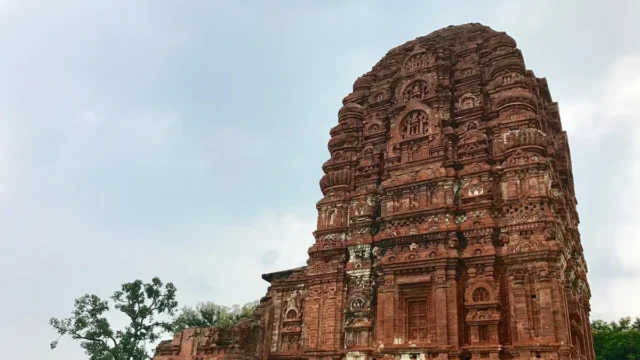
Sirpur in Chhattisgarh enters UNESCO’s Tentative List of World Heritage sites
Sirpur, an archaeological site in Chhattisgarh’s Mahasamund district with Hindu, Buddhist and Jain remains from the 5th to the 12th century CE, has been added to UNESCO’s Tentative List. The ASI now has about a year to prepare a nomination dossier proving its Outstanding Universal Value. Sirpur was once the capital of Dakshina Kosala.
UPSC angle: Prelims: Sirpur location, Lakshmana Temple, dynasties, UNESCO process. · Mains GS-I: heritage conservation and composite culture.
20 Oct 2026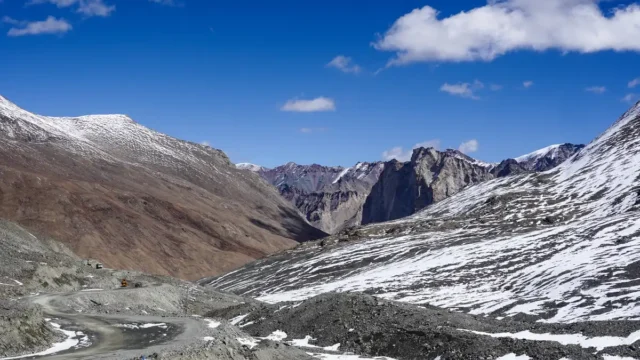
PM inaugurates five Ladakh projects: Nimmu–Padum–Darcha road, Leh terminal, Hanu hydro
On 15 October 2026 the Prime Minister inaugurated, by video conference, five projects worth about ₹3,350 crore in Ladakh: a new passenger terminal at Leh's Kushok Bakula Rimpochee Airport, the 298-km Nimmu–Padum–Darcha road built by BRO, the 9 MW Hanu small hydro project with a 66 kV line, India's first Petroglyph Conservation Park at Sindhu Ghat, and 40 water bodies under Project Him Sarovar.
UPSC angle: Prelims: Shinkun La, Zanskar, Nimmu–Padum–Darcha road, BRO, petroglyphs, Him Sarovar. · Mains GS-III: border infrastructure and security; GS-I: heritage conservation.
15 Oct 2026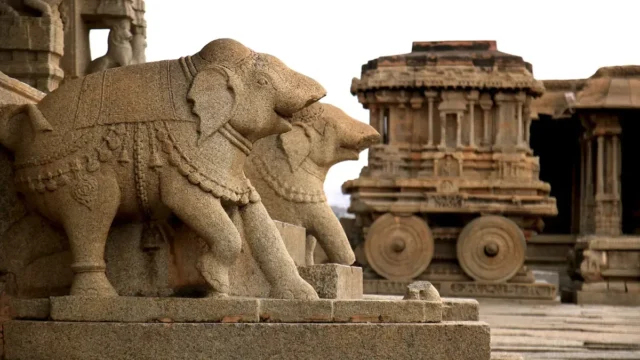
HAL, NCF and ASI sign MoA for Hampi, Taj Mahal and Bekal Fort
On 13 October 2026 HAL, the National Culture Fund and ASI signed an MoA for conservation and visitor works at Hampi, the Taj Mahal and Bekal Fort. HAL has approved about ₹23.60 crore in CSR support over three years; NCF facilitates the projects and ASI supervises them technically.
UPSC angle: Prelims: ASI, NCF, Hampi (UNESCO), Taj Mahal, Bekal Fort. · Mains GS-I: heritage conservation and corporate CSR.
14 Oct 2026
Centres of Excellence approved for five newer classical languages
On 3 October 2026 the Ministry of Education approved five Centres of Excellence for Classical Assamese, Bengali, Marathi, Pali and Prakrit, hosted by Tezpur University, Visva-Bharati, Deccan College Pune, Central University of Odisha and Central University of Gujarat. These five got classical status in October 2024, taking India's total to 11 classical languages.
UPSC angle: Prelims: match language with CoE institution; list of classical languages.
3 Oct 2026Learn the concept
Question text as printed in the official UPSC Civil Services (Main) question paper. The model answer is original Battle IAS work; use it to learn structure, not to memorise.
Want every PYQ in one place? See the Battle IAS PYQ Book.