
UPSC Mains 2013 GS Paper 2 Q4: model answer
'The Supreme Court of India keeps a check on arbitrary power of the Parliament in amending the Constitution.' Discuss critically.
What the question wants
Critically discuss how far the Supreme Court restrains Parliament's power to amend the Constitution.
How to structure it
Discuss critically: trace the cases, show the check at work, then weigh criticism.
- Article 368
- The case trail
- How the check works
- Criticism
- Balance
How to think it through
The story runs like a tennis match: Shankari Prasad (Parliament wins), Golaknath (Court wins), the 24th Amendment (Parliament hits back), Kesavananda (draw, with the Court keeping the final say). Use that rhythm.
Model answer
Parliament has amended the Constitution over a hundred times since 1950, yet a few amendments, such as parts of the 39th and 42nd, were struck down. That gap is the Supreme Court's check.
The power
Article 368 lets Parliament amend by special majority, with state ratification for federal provisions.
The case trail
- Shankari Prasad (1951) and Sajjan Singh (1965): Parliament could amend even Fundamental Rights.
- Golaknath (1967): Parliament could not take away Fundamental Rights.
- 24th Amendment (1971): restored Parliament's power.
- Kesavananda Bharati (1973): Parliament can amend any part, but not the basic structure.
- Indira Gandhi v Raj Narain (1975): struck down the clause placing the PM's election beyond courts.
- Minerva Mills (1980): struck down parts of the 42nd Amendment; limited amending power is itself basic structure.
- I.R. Coelho (2007): Ninth Schedule laws after 1973 can be reviewed.
- NJAC (2015): the 99th Amendment was struck down to protect judicial independence.
How the check works
Judicial review of amendments keeps democracy, federalism, secularism, rule of law and independent courts out of a passing majority's reach.
Criticism
- 'Basic structure' is undefined, so judges decide its contents.
- It places unelected judges above elected representatives.
- The NJAC verdict was seen as judges protecting their own appointments.
Balance
The check is real but used sparingly, which shows restraint. It works as an emergency brake, not a steering wheel.
Draw: Timeline 1951–2015 with arrows showing power moving between Parliament and the Court.
Keywords, cases and data to drop in
Article 368, Golaknath, Kesavananda, basic structure, Minerva Mills, Coelho, NJAC 2015, judicial review.
Where most answers lose marks
- Only listing cases without the 'critically' part.
Related Mains PYQs
- Examine whether the constitutional office of the Lok Sabha Speaker has become vulnerable to partisan politics under the current anti-defection regime. What… UPSC 2026 · GS-II
- Indian Constitution has conferred the amending power on the ordinary legislative institutions with a few procedural hurdles. In view of this statement,… UPSC 2025 · GS-II
- “The growth of cabinet system has practically resulted in the marginalisation of the parliamentary supremacy.” Elucidate. UPSC 2024 · GS-II
- Compare and contrast the British and Indian approaches to Parliamentary sovereignty. UPSC 2023 · GS-II
Fresh examples from current affairs
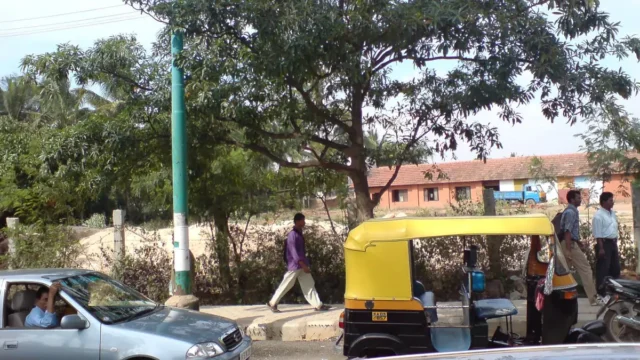
Vehicle data sold for ₹5: Centre orders CERT-In audit of VAHAN, SARATHI and e-Challan portals
The Ministry of Road Transport and Highways has asked CERT-In, India’s cyber-security agency, for a forensic audit of its VAHAN, SARATHI, e-Challan and pollution-certificate portals. A security firm found that owners’ names, addresses and phone numbers were being sold through apps and a Telegram channel for as little as ₹5. On the same day, The Hindu reported a separate leak of film certification records. For you, this connects cyber security, the right to privacy and the Digital Personal Data Protection Act, 2023.
UPSC angle: Prelims: CERT-In, Section 70B IT Act, VAHAN/SARATHI, Puttaswamy, DPDP Act 2023, GDPR. · Mains GS-III: cyber security and data protection.
25 Oct 2026
Census 2027: can private teachers be made enumerators? The Census Rules amendment and Article 23
Census 2027 needs over 30 lakh enumerators, the people who go door to door counting everyone. This month the Centre amended the Census Rules, 1990 to name teachers of private schools and staff of banks and companies as possible enumerators. But two High Courts had already stopped governments from forcing private-school teachers into Census duty. For you, it raises a classic exam question: can a rule make private citizens do public work, and what do the Census Act and Article 23 allow?
UPSC angle: Prelims: Entry 69 Union List, Census Act 1948, Article 23, Committee on Subordinate Legislation. · Mains GS-II: delegated legislation; federal administration of the Census.
25 Oct 2026
Cauvery panel tells Karnataka to release 3,000 cusecs to Tamil Nadu: Article 262 and the inter-State water dispute
The Cauvery Water Regulation Committee has told Karnataka to ensure 3,000 cusecs of water a day at Biligundlu for 15 days, and the Cauvery Water Management Authority has endorsed it. Tamil Nadu wanted almost five times more, including a claimed backlog. Karnataka says a weak monsoon has left its four Cauvery reservoirs 55% short and most of its taluks in drought. For you, this is a live case study of Article 262, water tribunals and how a dry year turns sharing into a crisis.
UPSC angle: Prelims: Cauvery source and tributaries, Article 262, ISWD Act 1956, CWMA. · Mains GS-II: inter-State water disputes; cooperative federalism.
25 Oct 2026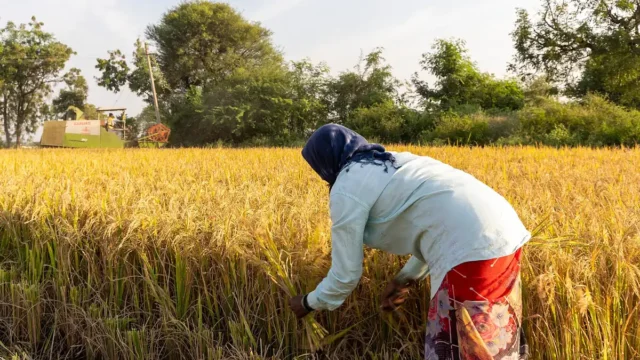
11 crore Farmer IDs created five months early under the Digital Agriculture Mission and Agri Stack
The Centre is building a digital register of farmers, so that each farmer has one verified identity for all schemes. Under the Digital Agriculture Mission, 11 crore Farmer IDs were created by the night of 23 October, five months before the March 2027 deadline. With this ID, farmers need not submit the same papers again and again for loans, crop insurance or relief. For you, this links Agri Stack, the Kisan Credit Card, PMFBY and land-record reform.
UPSC angle: Prelims: Digital Agriculture Mission, Agri Stack, KCC, PMFBY, DILRMP. · Mains GS-III: technology in agriculture; DBT.
25 Oct 2026Learn the concept
Question text as printed in the official UPSC Civil Services (Main) question paper. The model answer is original Battle IAS work; use it to learn structure, not to memorise.
Want every PYQ in one place? See the Battle IAS PYQ Book.