
UPSC Mains 2014 GS Paper 3 Q12: model answer
In a globalized world, Intellectual Property Rights assume significance and are a source of litigation. Broadly distinguish between the terms—Copyrights, Patents, and Trade Secrets.
What the question wants
Explain why IPR matters in a globalised world and distinguish copyrights, patents and trade secrets.
How to structure it
Why IPR matters, then three-way distinction.
- Importance and litigation
- Copyright
- Patent
- Trade secret
- Indian examples
How to think it through
Globalisation: knowledge economy, cross-border trade, TRIPS. Litigation: Novartis, Bt cotton, Ericsson–Micromax SEPs, basmati. Copyright: expression, automatic, life + 60 years in India, Copyright Act 1957. Patent: invention new, inventive, industrial use; 20 years; disclosure; Patents Act 1970. Trade secret: confidential info with value; no registration; protected by contract; Coca-Cola formula; India has no specific law.
Model answer
The formula of Coca-Cola has never been patented. Had it been, it would have become public after 20 years. Instead it has stayed a trade secret for over a century. That one example shows that different kinds of knowledge are protected in different ways.
Why IPR matters today
- Value now lies in ideas, brands and data, not only factories.
- TRIPS made IPR a trade obligation for WTO members.
- Disputes are common: Novartis (Glivec), Ericsson v Micromax over mobile standards, the basmati and turmeric patent battles.
Copyright
- Protects the expression of an idea: books, music, films, software code.
- Automatic; registration is optional.
- Lasts for the author's life plus 60 years in India (Copyright Act, 1957).
Patent
- Protects an invention that is new, inventive and industrially useful.
- Must be applied for and granted; full details become public.
- Lasts 20 years (Patents Act, 1970).
Trade secret
- Any confidential business information with commercial value: recipes, processes, client lists.
- No registration; protected by contracts and confidentiality.
- Lasts as long as it stays secret, but there is no protection once it leaks or is reverse-engineered.
- Protects things that cannot be patented, like a customer list.
- India has no separate law; courts use contract law and equity.
In short
- Copyright: expression. Patent: invention, disclosed. Trade secret: information, hidden.
Choosing the right shield is now a business decision as much as a legal one.
Draw: A three-column table: subject, registration, term, disclosure.
Keywords, cases and data to drop in
TRIPS, Copyright Act 1957, life + 60 years, Patents Act 1970, 20 years, novelty, inventive step, industrial application, trade secret, Coca-Cola, Ericsson v Micromax, basmati, turmeric.
Where most answers lose marks
- Giving definitions without a clear comparison.
Related Mains PYQs
- What is the basic principle behind vaccine development? How do vaccines work? What approaches were adopted by the Indian vaccine manufacturers to… UPSC 2022 · GS-III
- The increase in life expectancy in the country has led to newer health challenges in the community. What are those challenges and… UPSC 2022 · GS-III
- Each year a large amount of plant material, cellulose, is deposited on the surface of Planet Earth. What are the natural processes… UPSC 2022 · GS-III
- Launched on 25th December, 2021, James Webb Space Telescope has been much in the news since then. What are its unique features… UPSC 2022 · GS-III
Fresh examples from current affairs

DRDO’s indigenous AIP for Kalvari-class submarines reaches the Setting to Work Phase-2 stage
Diesel-electric submarines must come up often to run their engines and charge batteries, which can give away their position. Air Independent Propulsion (AIP) lets them stay underwater much longer. The DRDO’s Naval Materials Research Laboratory has built India’s own AIP, and its energy module began the Setting to Work Phase-2 activity at Larsen and Toubro’s Hazira yard on 24 October. For you, it links fuel cells, the Kalvari class and defence self-reliance.
UPSC angle: Prelims: AIP, fuel cells, Kalvari class, Project-75. · Mains GS-III: defence indigenisation; maritime security.
25 Oct 2026
Panel to review pharma marketing code: UCPMP 2024 and why a voluntary code is not enough
The Department of Pharmaceuticals has set up a committee under Dr. M. Srinivas, Member, NITI Aayog, to review how drug companies market medicines and to suggest ways to curb unethical practices, PIB said on 23 October 2026. Former Union Health Secretary Preeti Sudan and Dr. Naresh Trehan of Medanta are members, and the report is due within two months of its first meeting. The core issue: the Uniform Code for Pharmaceutical Marketing Practices is still voluntary.
UPSC angle: Prelims: UCPMP, Department of Pharmaceuticals, NITI Aayog. · Mains GS-II: health governance, regulation and ethics.
24 Oct 2026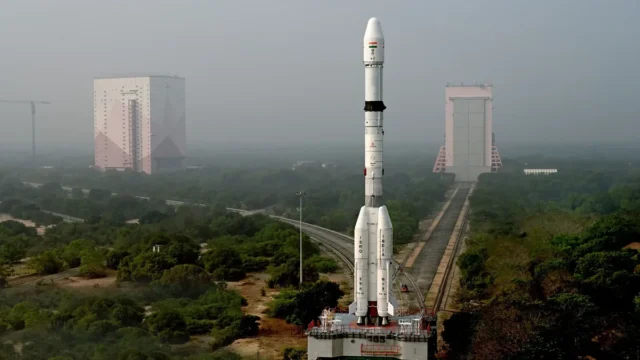
NVS-03 launch on 30 October: can ISRO’s new satellite bring NavIC back to life?
ISRO will launch NVS-03, its third new-generation navigation satellite, on 30 October 2026, The Indian Express reported on 24 October. NavIC, India’s own GPS-like system, has not been able to give location data because only three satellites work, while positioning needs at least four. If NVS-03 works, NavIC can offer positioning again. It is a lesson in why strategic technology needs both satellites and users.
UPSC angle: Prelims: NavIC/IRNSS, coverage, signals, global GNSS. · Mains GS-III: indigenisation of technology, space programme.
24 Oct 2026
Nasha Mukt Bharat Abhiyaan reaches 35 crore people: demand reduction and the 2029 drug-free goal
The Ministry of Social Justice and Empowerment said on 22 October 2026 that the Nasha Mukt Bharat Abhiyaan has reached over 35 crore people, including 13.94 crore youth and 10.86 crore women, and more than 32 lakh educational institutions. Launched on 15 August 2020 in 272 vulnerable districts, it now runs across the country. It is the demand side of a twin strategy, while police and the NCB attack supply, with the Home Minister’s target of uprooting the drug trade by 31 December 2029.
UPSC angle: Prelims: NMBA, NAPDDR, Article 47, NDPS Act, helpline 14446. · Mains GS-II/III: drug abuse, demand and supply reduction.
23 Oct 2026Learn the concept
Question text as printed in the official UPSC Civil Services (Main) question paper. The model answer is original Battle IAS work; use it to learn structure, not to memorise.
Want every PYQ in one place? See the Battle IAS PYQ Book.