
UPSC Mains 2015 GS Paper 3 Q2: model answer
Livestock rearing has a big potential for providing non-farm employment and income in rural areas. Discuss, suggesting suitable measures to promote this sector in India.
What the question wants
Discuss livestock's potential for rural non-farm employment and income, and suggest measures to promote the sector.
How to structure it
Potential, then measures.
- Scale of the sector
- Employment and income
- Constraints
- Measures
- Conclusion
How to think it through
Livestock gives about 30% of agricultural gross value added and grows faster than crops. It is the landless family's bank account and insurance. India leads in milk. Constraints: low yield per animal, feed and fodder shortage, disease, weak markets. Measures: breed improvement, vaccination, fodder, cooperatives on the Amul model.
Model answer
A buffalo in a landless household's yard is a savings account that gives interest twice a day. Livestock now contributes about 30% of agricultural gross value added and grows faster than crops, and India is the world's largest milk producer.
Potential for employment and income
- Inclusive: small, marginal and landless families own most of the livestock; women do most of the work.
- Steady cash flow from milk, eggs and meat, unlike a crop paid once a season.
- Insurance: animals are sold in drought years to smooth income.
- Allied jobs: dairy processing, feed, veterinary care, leather and transport.
Constraints
- Low productivity per animal; indigenous breeds poorly improved.
- Feed and fodder shortfalls and shrinking common grazing land.
- Disease: foot-and-mouth and lumpy skin disease cost heavily.
- Markets: much of the milk is sold informally at low prices.
- Stray cattle: unproductive animals add costs and damage crops, as farmers in Uttar Pradesh know well.
Measures to promote the sector
- Rashtriya Gokul Mission for indigenous breeds and sex-sorted semen.
- National Animal Disease Control Programme: mass vaccination against FMD and brucellosis.
- Fodder banks and use of wasteland for pasture.
- Animal Husbandry Infrastructure Development Fund for processing and chilling.
- KCC for livestock farmers and cattle insurance.
- Cooperatives on the Amul model, and veterinary services at the doorstep.
Operation Flood showed that a cooperative and a chilling centre can do more for rural income than a factory.
Draw: A circle diagram: crop residue → fodder → animal → dung manure → field.
Keywords, cases and data to drop in
30% of agri GVA, Operation Flood, Amul model, Rashtriya Gokul Mission, NADCP, AHIDF, fodder banks, KCC for animal husbandry.
Where most answers lose marks
- Listing schemes without showing why livestock is pro-poor. Make the landless household the centre.
Related Mains PYQs
- Discuss the different types of subsidies and supports provided by the Government of India to agricultural sector. Examine the related issues pertaining… UPSC 2026 · GS-III
- Elucidate the importance of buffer stocks for stabilizing agricultural prices in India. What are the challenges associated with the storage of buffer… UPSC 2024 · GS-III
- What are the direct and indirect subsidies provided to farm sector in India? Discuss the issues raised by the World Trade Organization… UPSC 2023 · GS-III
- What are the major challenges of Public Distribution System (PDS) in India? How can it be made effective and transparent? UPSC 2022 · GS-III
Fresh examples from current affairs
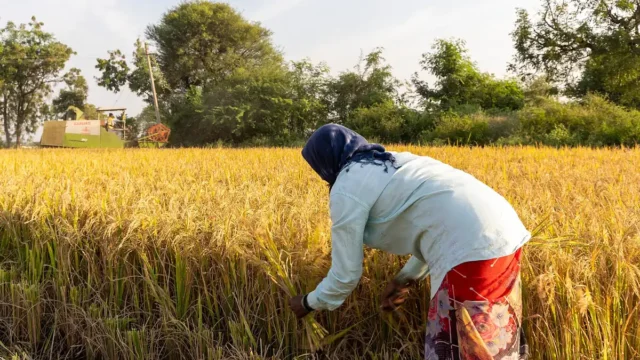
11 crore Farmer IDs created five months early under the Digital Agriculture Mission and Agri Stack
The Centre is building a digital register of farmers, so that each farmer has one verified identity for all schemes. Under the Digital Agriculture Mission, 11 crore Farmer IDs were created by the night of 23 October, five months before the March 2027 deadline. With this ID, farmers need not submit the same papers again and again for loans, crop insurance or relief. For you, this links Agri Stack, the Kisan Credit Card, PMFBY and land-record reform.
UPSC angle: Prelims: Digital Agriculture Mission, Agri Stack, KCC, PMFBY, DILRMP. · Mains GS-III: technology in agriculture; DBT.
25 Oct 2026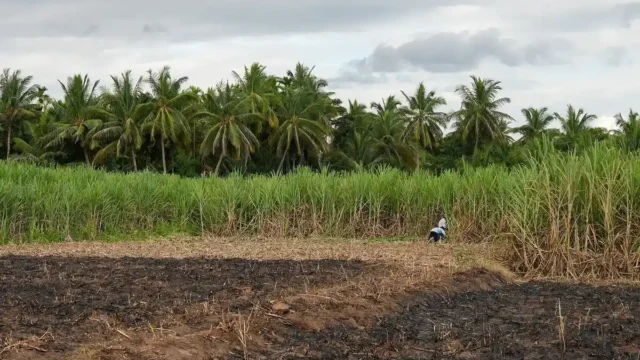
Ramesh Chand committee to examine sugarcane farmers’ and sugar sector issues
On 14 October 2026 the Centre set up a committee under Prof. Ramesh Chand, former NITI Aayog Member, on issues raised by sugarcane farmers. It will examine returns to cane growers, the ex-mill Minimum Selling Price of sugar, how sugar recovery is tested, weighment at mills, and deductions on mechanically harvested cane.
UPSC angle: Prelims: chair, terms of reference, ex-mill MSP of sugar. · Mains GS-III: cane pricing, sugar sector economics, farm incomes.
14 Oct 2026
Cotton Corporation of India showcases procurement reforms: digital slot booking, traceability, Kasturi Cotton
The Textiles Ministry, through the Cotton Corporation of India, held a reform showcase in Hyderabad on 6 October 2026 under Reform Utsav 2026. It covered the Kapas Kisan digital platform for registration, slot booking and Aadhaar-enabled payments, traceability and the Kasturi Cotton Bharat brand, and the High-Density Planting System to lift yields.
UPSC angle: Prelims: CCI, Kasturi. · Mains GS-III: MSP procurement, textiles.
4 Oct 2026
Rabi MSP 2027-28: safflower gets the biggest hike, wheat ₹2,610
On 30 September 2026 the CCEA approved Minimum Support Prices for Rabi crops for marketing season 2027-28. Wheat MSP is ₹2,610 a quintal, up ₹25. Safflower got the largest increase, ₹675, followed by rapeseed and mustard at ₹413. Expected margins over cost range from 50 per cent for safflower to 106 per cent for wheat.
UPSC angle: Prelims: which crops are Rabi mandated crops; cost concept used. · Mains: Is MSP-led diversification towards pulses/oilseeds working?
30 Sep 2026Learn the concept
Question text as printed in the official UPSC Civil Services (Main) question paper. The model answer is original Battle IAS work; use it to learn structure, not to memorise.
Want every PYQ in one place? See the Battle IAS PYQ Book.