
UPSC Mains 2018 GS Paper 3 Q15: model answer
Why is there so much activity in the field of biotechnology in our country? How has this activity benefitted the field of biopharma?
What the question wants
Explain why biotechnology activity has grown so much in India and how it has benefited biopharma.
How to structure it
Drivers, then biopharma benefits.
- Size of the bioeconomy
- Drivers
- Benefits to biopharma
- Challenges
- Way forward
How to think it through
Bioeconomy ~$165 billion (2024), target $300 billion by 2030. Drivers: skilled scientists at low cost, generic pharma base, government support (DBT 1986, BIRAC 2012, National Biopharma Mission 2017 with World Bank, BioE3 2024), startups (over 10,000), vaccines demand, CRAMS, regulatory reforms, global supply chains. Biopharma benefits: biosimilars (Biocon), vaccines (Serum Institute world's largest by doses), Covaxin, ZyCoV-D DNA vaccine, Hepatitis B low-cost (Shantha), rotavirus (Rotavac), insulin, monoclonals, CDMO exports. Challenges: regulation, R&D funding, IP, clinical trials, biosafety.
Model answer
Shantha Biotechnics of Hyderabad brought down the price of the hepatitis B vaccine in the 1990s from several hundred rupees a dose to about ₹50. Today the Serum Institute of India is the world's largest vaccine maker by doses. India's biotech story is about making advanced medicine cheap.
Why so much activity
- Talent: a large pool of scientists and engineers at lower cost.
- Pharma base: India's generics industry already had process skills and global approvals.
- Government support: the Department of Biotechnology (1986), BIRAC (2012), the National Biopharma Mission (2017) and the BioE3 policy (2024).
- Startups: more than 10,000 biotech startups now.
- Global demand for vaccines, biosimilars and contract research.
- COVID-19 showed the world what Indian vaccine makers could do at scale, and investment followed.
- Agri and industrial biotech also grew: Bt cotton, enzymes and biofuels.
- The bioeconomy is estimated at about $165 billion (2024), with a target of $300 billion by 2030.
How it has benefited biopharma
- Vaccines: Rotavac, Covishield and Covaxin, and ZyCoV-D, the world's first DNA vaccine for humans.
- Biosimilars: Biocon's insulin and cancer antibodies sold globally.
- Lower prices for patients at home and in Africa.
- UNICEF and Gavi supply: a large share of the world's childhood vaccines come from Indian makers.
- Contract manufacturing and research exports.
- New platforms: mRNA (Gemcovac), cell and gene therapy, such as India's first CAR-T therapy (NexCAR19, 2023).
Challenges
- Low R&D spending and risk capital.
- Slow regulation and clinical trial approvals.
- Dependence on imported equipment and reagents.
- IP and biosafety rules that lag behind new platforms such as gene editing.
- Price control pressures that cut margins for research.
Way forward
- Biomanufacturing hubs under BioE3, faster regulators, and university–industry links.
India's biotech rise is a story of affordability; the next chapter must be one of original discovery.
Draw: A tree: roots (talent, policy, pharma base), trunk (biotech), branches (vaccines, biosimilars, cell therapy).
Keywords, cases and data to drop in
DBT 1986, BIRAC 2012, National Biopharma Mission 2017, BioE3 2024, bioeconomy $165 billion, Serum Institute, Shantha, Rotavac, ZyCoV-D, Biocon biosimilars, NexCAR19, CDMO.
Where most answers lose marks
- Writing only about agriculture biotech. The question asks about biopharma.
Related Mains PYQs
- What is the basic principle behind vaccine development? How do vaccines work? What approaches were adopted by the Indian vaccine manufacturers to… UPSC 2022 · GS-III
- The increase in life expectancy in the country has led to newer health challenges in the community. What are those challenges and… UPSC 2022 · GS-III
- Each year a large amount of plant material, cellulose, is deposited on the surface of Planet Earth. What are the natural processes… UPSC 2022 · GS-III
- Launched on 25th December, 2021, James Webb Space Telescope has been much in the news since then. What are its unique features… UPSC 2022 · GS-III
Fresh examples from current affairs

DRDO’s indigenous AIP for Kalvari-class submarines reaches the Setting to Work Phase-2 stage
Diesel-electric submarines must come up often to run their engines and charge batteries, which can give away their position. Air Independent Propulsion (AIP) lets them stay underwater much longer. The DRDO’s Naval Materials Research Laboratory has built India’s own AIP, and its energy module began the Setting to Work Phase-2 activity at Larsen and Toubro’s Hazira yard on 24 October. For you, it links fuel cells, the Kalvari class and defence self-reliance.
UPSC angle: Prelims: AIP, fuel cells, Kalvari class, Project-75. · Mains GS-III: defence indigenisation; maritime security.
25 Oct 2026
Panel to review pharma marketing code: UCPMP 2024 and why a voluntary code is not enough
The Department of Pharmaceuticals has set up a committee under Dr. M. Srinivas, Member, NITI Aayog, to review how drug companies market medicines and to suggest ways to curb unethical practices, PIB said on 23 October 2026. Former Union Health Secretary Preeti Sudan and Dr. Naresh Trehan of Medanta are members, and the report is due within two months of its first meeting. The core issue: the Uniform Code for Pharmaceutical Marketing Practices is still voluntary.
UPSC angle: Prelims: UCPMP, Department of Pharmaceuticals, NITI Aayog. · Mains GS-II: health governance, regulation and ethics.
24 Oct 2026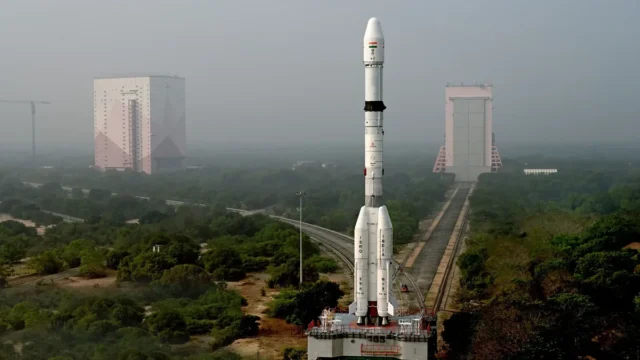
NVS-03 launch on 30 October: can ISRO’s new satellite bring NavIC back to life?
ISRO will launch NVS-03, its third new-generation navigation satellite, on 30 October 2026, The Indian Express reported on 24 October. NavIC, India’s own GPS-like system, has not been able to give location data because only three satellites work, while positioning needs at least four. If NVS-03 works, NavIC can offer positioning again. It is a lesson in why strategic technology needs both satellites and users.
UPSC angle: Prelims: NavIC/IRNSS, coverage, signals, global GNSS. · Mains GS-III: indigenisation of technology, space programme.
24 Oct 2026
Nasha Mukt Bharat Abhiyaan reaches 35 crore people: demand reduction and the 2029 drug-free goal
The Ministry of Social Justice and Empowerment said on 22 October 2026 that the Nasha Mukt Bharat Abhiyaan has reached over 35 crore people, including 13.94 crore youth and 10.86 crore women, and more than 32 lakh educational institutions. Launched on 15 August 2020 in 272 vulnerable districts, it now runs across the country. It is the demand side of a twin strategy, while police and the NCB attack supply, with the Home Minister’s target of uprooting the drug trade by 31 December 2029.
UPSC angle: Prelims: NMBA, NAPDDR, Article 47, NDPS Act, helpline 14446. · Mains GS-II/III: drug abuse, demand and supply reduction.
23 Oct 2026Learn the concept
Question text as printed in the official UPSC Civil Services (Main) question paper. The model answer is original Battle IAS work; use it to learn structure, not to memorise.
Want every PYQ in one place? See the Battle IAS PYQ Book.