
UPSC Mains 2019 GS Paper 3 Q7: model answer
Coastal sand mining, whether legal or illegal, poses one of the biggest threats to our environment. Analyze the impact of sand mining along the Indian coasts, citing specific examples.
What the question wants
Analyse how coastal sand mining, legal or illegal, harms India's coasts, with specific examples.
How to structure it
Why it happens, impacts, examples, controls.
- The demand for sand
- Impacts
- Indian examples
- Controls
How to think it through
Sand for construction; beach sand minerals (ilmenite, rutile, garnet, monazite) in TN, Kerala, AP, Odisha. Impacts: erosion, loss of beaches, saltwater intrusion, turtle nesting (Olive Ridley), mangroves, fisheries, livelihoods, radiation (monazite), tsunami buffer loss. Examples: Alappad, Kollam (Kerala) — 'Save Alappad' 2019, village shrunk; Tirunelveli–Thoothukudi garnet mining (Gagandeep Singh Bedi committee 2013); Ratnagiri. Controls: CRZ 2019, Sustainable Sand Mining Management Guidelines 2016 and Enforcement and Monitoring Guidelines 2020, atomic minerals rules, drones, district survey reports.
Model answer
Alappad, a narrow village in Kollam, Kerala, is said to have lost most of its land area over decades of beach sand mining for minerals. In 2019 its residents launched the 'Save Alappad' campaign. Their village is a warning for India's whole coastline.
Impacts of coastal sand mining
- Coastal erosion: removing sand starves beaches, and the sea moves inland.
- Saltwater intrusion into wells and farmland.
- Loss of natural defences against storms and tsunamis.
- Habitat destruction: Olive Ridley turtle nesting beaches, mangroves and dunes.
- Fisheries and livelihoods suffer as beaches and estuaries change.
- Radiation risk from monazite in some mineral sands.
Specific examples
- Alappad, Kerala: mineral sand mining and severe erosion.
- Tirunelveli and Thoothukudi, Tamil Nadu: illegal garnet mining exposed by the Gagandeep Singh Bedi committee (2013).
- Konkan coast and estuaries in Karnataka: illegal sand dredging for construction.
Controls
- CRZ Notification, 2019.
- Sustainable Sand Mining Guidelines (2016) and enforcement guidelines (2020) with drones and tracking.
- Atomic minerals rules for monazite, and district survey reports before leases.
Beaches are not free sand; they are the coast's first line of defence.
Draw: A beach profile before and after mining, with the sea line moving inland.
Keywords, cases and data to drop in
Alappad, Save Alappad 2019, ilmenite, garnet, monazite, Gagandeep Singh Bedi committee, Olive Ridley, saltwater intrusion, CRZ 2019, SSMG 2016, EMGSM 2020.
Where most answers lose marks
- Writing about river sand only. The question is about the coast.
Related Mains PYQs
- Discuss in detail photochemical smog emphasizing its formation, effects, and mitigation. Explain the 1999 Gothenburg Protocol. UPSC 2022 · GS-III
- Discuss global warming and mention its effects on the global climate. Explain the control measures to bring down the level of greenhouse… UPSC 2022 · GS-III
- Explain the purpose of the Green Grid Initiative launched at World Leaders Summit of the COP26 UN Climate Change Conference in Glasgow… UPSC 2021 · GS-III
- Describe the key points of the revised Global Air Quality Guidelines (AQGs) recently released by the World Health Organisation (WHO). How are… UPSC 2021 · GS-III
Fresh examples from current affairs
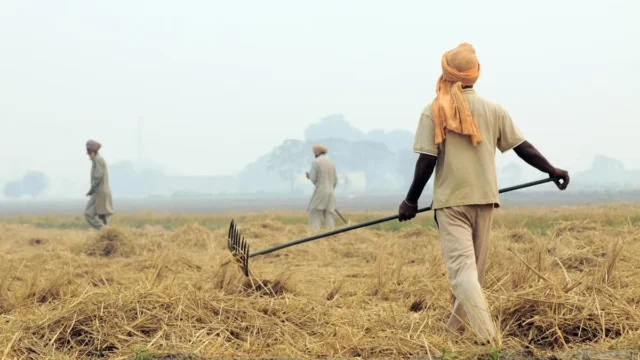
Punjab farm fires: why Tarn Taran and Amritsar account for 72% of stubble burning so far
Punjab recorded 574 farm fires between September 15 and October 24, and 414 of them, or 72%, were in just two Majha districts, Tarn Taran and Amritsar. Farmers there harvest short-duration paddy early and hurry to sow green peas or potatoes before wheat. For you, this connects stubble burning, cropping patterns and the CAQM.
UPSC angle: Prelims: CAQM, zero tillage, crop residue management, Majha-Doaba-Malwa. · Mains GS-III: air pollution, cropping patterns and farm practices.
26 Oct 2026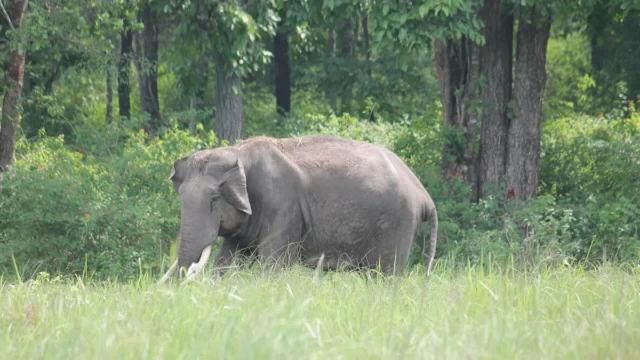
Keralam raises wildlife-attack compensation by 25%: death payout now ₹17.5 lakh
The Keralam government on Sunday raised compensation for deaths and permanent disabilities caused by wildlife attacks by 25%, along with more medical help for the injured. The payout for a death goes up from ₹14 lakh to ₹17.5 lakh. For you, this connects human-wildlife conflict, the Wild Life (Protection) Act, 1972 and State relief schemes.
UPSC angle: Prelims: WPA 1972 schedules, Section 11, protection outside protected areas. · Mains GS-III: human-wildlife conflict and conservation.
26 Oct 2026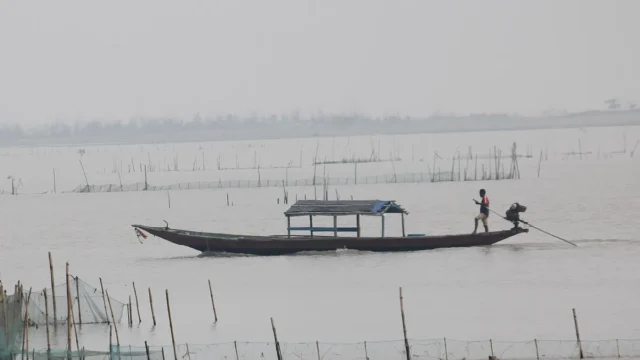
India’s Ramsar sites reach 103: first in Asia, third in the world
India now has 103 wetlands of international importance under the Ramsar Convention, up from 26 in 2014 and covering over 13.87 lakh hectares in 28 States and Union Territories. That puts India first in Asia and third in the world. For you, this connects the 1971 Convention, the Montreux Record and the Wetlands Rules, 2017.
UPSC angle: Prelims: Ramsar Convention, criteria, Montreux Record, India's sites and rank. · Mains GS-III: conservation and wetland management.
26 Oct 2026
Bleached corals revived in the lab: two studies on algae transfer and heat-tolerant symbionts
Between 2023 and 2025, about 80% of the world’s coral reefs, including India’s around Lakshadweep, faced extreme heat stress in the fourth global mass bleaching event. Now two lab studies show that bleached corals can recover, either by touching healthy corals of the same genetic stock or by receiving a lab-made heat-tolerant algae. Scientists call it a foundation for future recovery work, not a cure. For you, it is the right time to revise coral biology, India’s reefs and the threats they face.
UPSC angle: Prelims: zooxanthellae, Cnidaria, Indian reef sites, Biorock. · Mains GS-I/III: global warming and coral ecosystems.
25 Oct 2026Learn the concept
Question text as printed in the official UPSC Civil Services (Main) question paper. The model answer is original Battle IAS work; use it to learn structure, not to memorise.
Want every PYQ in one place? See the Battle IAS PYQ Book.