
UPSC Mains 2022 GS Paper 3 Q14: model answer
UpdatedWhat is Integrated Farming System? How is it helpful to small and marginal farmers in India?
What the question wants
Define the Integrated Farming System and explain how it helps small and marginal farmers.
How to structure it
Definition, components, benefits.
- Meaning
- Components
- Economic benefits
- Ecological benefits
- Social benefits
- Constraints and support
How to think it through
IFS combines enterprises so that outputs of one become inputs for another. Components chosen to suit agroclimatic zone and farm size: crops, dairy, goats, poultry, fish, horticulture, mushrooms, bees, agroforestry, biogas. Benefits to small farmers: higher and steadier income, lower costs, risk cover, family labour use, nutrition, soil health. Support: ICAR models, MGNREGA farm ponds, KVKs, credit.
Model answer
Small and marginal farmers hold 86% of India's holdings but operate less than half the area. For a family on one hectare, growing one crop a year is a recipe for debt. The Integrated Farming System (IFS) treats the farm as a single unit where crops, animals and fish feed one another.
Components
- Crops: cereals, pulses, vegetables, fodder.
- Livestock: cows or buffaloes, goats, poultry, ducks.
- Fisheries in a farm pond.
- Horticulture, mushrooms, bee-keeping, agroforestry.
- Biogas and vermicompost units that close the loop.
Economic benefits for small farmers
- Higher income per hectare: ICAR's IIFSR models report several-fold gains over cropping alone.
- Regular cash flow: daily milk and eggs, weekly vegetables, seasonal crops.
- Lower costs: manure replaces part of the fertiliser; fodder comes from the farm.
- Risk spreading across many enterprises.
Ecological benefits
- Recycling of residues and dung; better soil carbon.
- Water harvesting in ponds; fewer pesticides.
Social benefits
- Employment for family members all year; less migration.
- Household nutrition: milk, eggs, fish and vegetables at home.
- Women's income from poultry, goats and mushrooms, often the first money a woman controls herself.
- Resilience: in a drought year the goats and the pond carry the family through.
Evidence
ICAR's on-farm IFS models in Tamil Nadu, Odisha and Bihar show net returns several times higher than rice–wheat alone, with lower fertiliser bills.
Constraints
- Capital for ponds and sheds; skills for many enterprises.
- Markets for small volumes.
- Water: a pond needs land a marginal farmer can barely spare.
- Animal health services far from the village.
Support needed
- Zone-specific models from KVKs; MGNREGA for farm ponds and cattle sheds.
- KCC for allied activities and FPOs to aggregate produce.
- Convergence with the National Livestock Mission and PMMSY.
IFS turns a small farm from a single bet into a balanced portfolio, which is exactly what a small farmer needs.
Draw: A circular diagram: crops → fodder → dairy → dung → biogas/compost → crops; pond in the centre.
Keywords, cases and data to drop in
IFS, 86% small and marginal holdings, ICAR-IIFSR, farm pond, vermicompost, biogas, risk diversification, MGNREGA convergence, KCC for allied sectors, FPOs.
Where most answers lose marks
- Copying the 2019 answer. This question asks specifically about small and marginal farmers.
Related Mains PYQs
- Describe the various Technology Missions initiated in Indian agriculture and examine their role in food security. UPSC 2026 · GS-III
- How Indian agriculture has been transformed from food scarcity to food surplus level? Explain the various government policies implemented for diversification of… UPSC 2026 · GS-III
- Analyze the role of satellite-based technologies in achieving climate-smart agriculture and food security in India. UPSC 2026 · GS-I
- Explain the factors influencing the decision of the farmers on the selection of high value crops in India. UPSC 2025 · GS-III
Fresh examples from current affairs
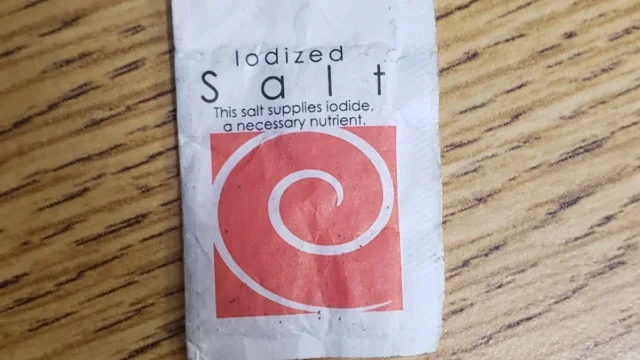
Double fortified salt: a ready answer to anaemia
Anaemia means the blood does not have enough healthy red cells or haemoglobin to carry oxygen, so a person feels tired and weak. Most of it in India comes from too little iron. Double Fortified Salt (DFS), ordinary salt that carries both iodine and iron, is a cheap fix already tested in India. A former Tata Trusts adviser argues it is being used unevenly. Read it for food fortification, Anaemia Mukt Bharat and ICDS.
UPSC angle: Prelims: Anaemia Mukt Bharat, food fortification, +F logo, ICDS, PM POSHAN. · Mains GS-II: malnutrition and welfare delivery.
27 Oct 2026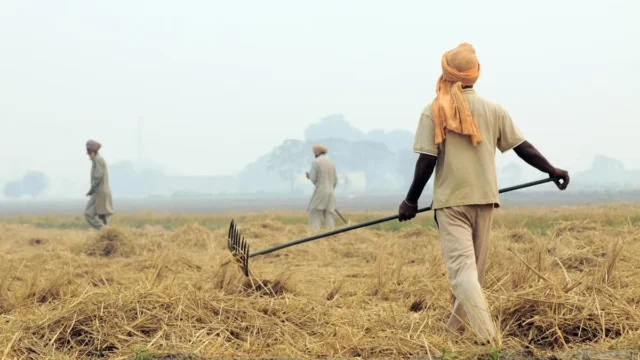
Punjab farm fires: why Tarn Taran and Amritsar account for 72% of stubble burning so far
Punjab recorded 574 farm fires between September 15 and October 24, and 414 of them, or 72%, were in just two Majha districts, Tarn Taran and Amritsar. Farmers there harvest short-duration paddy early and hurry to sow green peas or potatoes before wheat. For you, this connects stubble burning, cropping patterns and the CAQM.
UPSC angle: Prelims: CAQM, zero tillage, crop residue management, Majha-Doaba-Malwa. · Mains GS-III: air pollution, cropping patterns and farm practices.
26 Oct 2026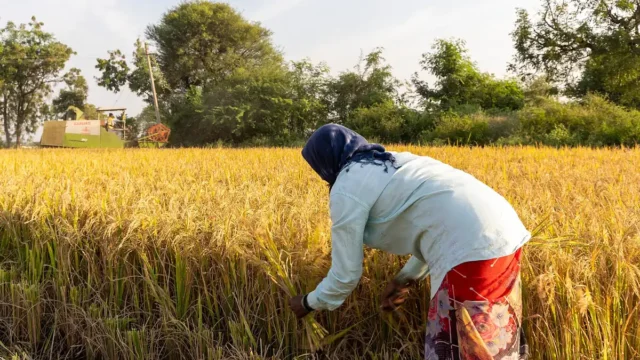
11 crore Farmer IDs created five months early under the Digital Agriculture Mission and Agri Stack
The Centre is building a digital register of farmers, so that each farmer has one verified identity for all schemes. Under the Digital Agriculture Mission, 11 crore Farmer IDs were created by the night of 23 October, five months before the March 2027 deadline. With this ID, farmers need not submit the same papers again and again for loans, crop insurance or relief. For you, this links Agri Stack, the Kisan Credit Card, PMFBY and land-record reform.
UPSC angle: Prelims: Digital Agriculture Mission, Agri Stack, KCC, PMFBY, DILRMP. · Mains GS-III: technology in agriculture; DBT.
25 Oct 2026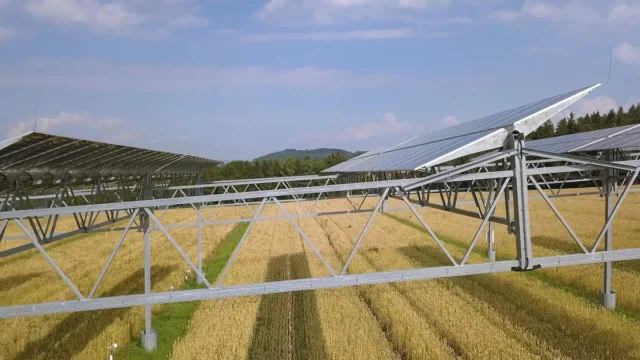
Agrivoltaics World Conference in Delhi: PM-KUSUM’s next phase and the small-farmer test
Opening the 7th Agrivoltaics World Conference at Bharat Mandapam on 21 October 2026, the first in the Global South, Renewable Energy Minister Pralhad Joshi said the next phase of PM-KUSUM will carry one of the world’s most ambitious agrivoltaics programmes. Agriculture Minister Shivraj Singh Chouhan said the policy must work for the 85% of farmers who are small and marginal, with an average holding of just 0.96 hectare.
UPSC angle: Prelims: PM-KUSUM, TERI estimate, capacity numbers. · Mains GS-III: land-energy-food nexus.
22 Oct 2026Learn the concept
Question text as printed in the official UPSC Civil Services (Main) question paper. The model answer is original Battle IAS work; use it to learn structure, not to memorise.
Want every PYQ in one place? See the Battle IAS PYQ Book.