
Six States seek extra power to avoid winter evening shortage
When the sun sets, solar power stops, but people switch on lights, fans and pumps. Six States fear shortages on winter evenings and are buying extra electricity for November and December at ₹8.99 to ₹41.50 a unit, yet most could not get all they wanted. Read it to understand the evening power gap, energy storage and how States buy power.
- States
- Gujarat, Rajasthan, Maharashtra, Madhya Pradesh, Tamil Nadu, Keralam
- Price paid
- ₹8.99 to ₹41.50 a unit
- Evening gap (October)
- 5.8 GW
- Tamil Nadu got
- 377 of 1,000 MW sought
Evening power shortages: what happened?
India has added a lot of solar power, which is great at noon. The trouble starts at 6 pm, when the sun goes down but demand stays high. That gap is now costing States dearly.
- Six States, Gujarat, Rajasthan, Maharashtra, Madhya Pradesh, Tamil Nadu and Keralam (Kerala), are buying extra electricity for November and December.
- They fear evening shortages, when solar power stops and demand stays high.
- They are paying from ₹8.99 to ₹41.50 per unit, and most could not buy all the power they wanted.
- Tamil Nadu paid the highest, up to ₹41.50 a unit, and got only 377 of the 1,000 megawatts (MW) it sought for November.
- The evening shortfall hit 5.8 gigawatts (GW) in October, because of little battery storage, odd weather linked to El Niño and more irrigation demand.
Why are evenings the hardest time for power?
Solar power peaks at midday and falls to zero after sunset. Demand, however, often peaks in the evening. Power experts call this shape of demand minus solar the ‘duck curve’.
To fill the evening gap, grids need power that can be switched on at will: coal, gas, hydro, or stored energy. Battery storage and pumped-storage hydropower can save cheap daytime solar power and release it in the evening.
Pumped-storage hydropower uses spare power to pump water uphill into a reservoir, and releases it through turbines when power is needed. It can store energy for many hours.
States usually buy power through long-term power purchase agreements of up to 25 years. Short-term needs are met through power exchanges, such as the Indian Energy Exchange, or through tenders.
Ways a State buys power
| Route | Time span | Use |
|---|---|---|
| Power purchase agreement | Up to 25 years | Base supply |
| Power exchange | Day-ahead or real-time | Short-term gaps |
| Short-term tender | Weeks or months | Seasonal shortages |
Which laws and Articles apply?
- Electricity Act, 2003: main law for the power sector.
- Central Electricity Regulatory Commission (CERC): regulates power exchanges and inter-State trade.
- Viability gap funding for battery storage (2023): government support to build battery projects.
- Electricity is in the Concurrent List, so both Centre and States make laws.
Why does evening power shortages matter?
| Angle | What to note |
|---|---|
| Reliability | Shortages hurt homes, farms and industries. |
| Cost | Buying at ₹41.50 a unit strains State power companies. |
| Clean energy | More solar needs more storage to be useful at night. |
| Planning | Shows the need for long-term resource planning. |
What are the problems with evening power shortages?
- Very little battery and pumped storage has been built so far.
- State power distribution companies are in debt and cannot pay high prices for long.
- Weather shocks like El Niño make demand harder to predict.
- Planning is often short-term, leading to costly last-minute buying.
What should be done next on evening power shortages?
- Build battery storage and pumped-storage hydro quickly.
- Plan power needs years ahead, season by season.
- Use time-of-day prices so people use more power when solar is plentiful.
- Shift farm pumping to daytime using solar feeders.
What can Prelims ask on evening power shortages?
Prelims probability: Expect a question on pumped-storage hydropower as long-duration energy storage, and on power exchanges regulated by the Central Electricity Regulatory Commission.
- Pumped-storage hydropower = long-duration energy storage.
- Power exchanges (like IEX) are regulated by the CERC.
- Electricity: Concurrent List subject; Electricity Act, 2003.
- Evening shortfall: 5.8 GW in October.
- ‘Duck curve’: demand minus solar power through the day.
How to write about evening power shortages in Mains
Practice question (15 marks, 250 words): India is facing evening power shortages even as its solar capacity grows. Explain the reasons and suggest measures to ensure reliable electricity supply during peak hours.
- Intro: six States buy costly power; 5.8 GW evening gap.
- Reasons: solar drop after sunset, low storage, El Niño weather, irrigation demand.
- Effects: high prices, debt of power companies, shortages.
- Measures: storage, pumped hydro, time-of-day pricing, daytime farm power, planning.
- Conclusion: storage is the bridge from sunshine to evening.
Ready lines for your answer
- The evening shortfall hit 5.8 GW in October.
- Solar lights up the noon; storage must light up the evening.
Quotable data pointTamil Nadu got only 377 of the 1,000 MW it sought for November, at up to ₹41.50 a unit.
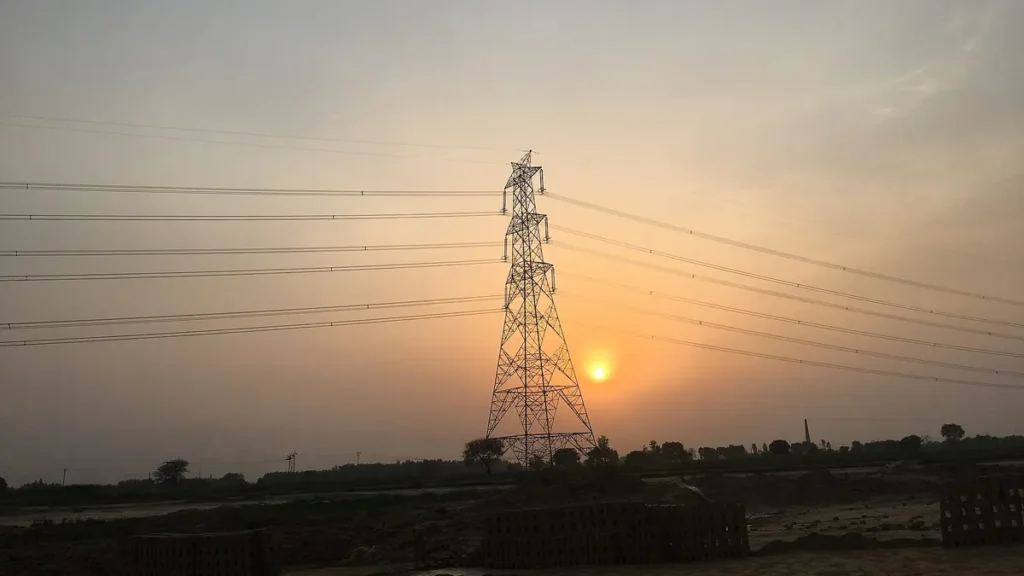
Photo: Rashid Jorvee, CC BY-SA 4.0, via Wikimedia Commons
Exam angle
Prelims: pumped storage, CERC, power exchanges. · Mains GS-III: energy security, renewable integration, infrastructure.
Practice MCQs
Original practice questions (not PYQs).
'Pumped-storage hydropower' is most appropriately discussed in the context of:
Answer (c) & explanation
Spare power pumps water uphill; it is released to make electricity at peak times, so it stores energy for many hours.
Power exchanges in India, such as the Indian Energy Exchange, are regulated by:
Answer (d) & explanation
The Central Electricity Regulatory Commission regulates power exchanges.
Questions students ask about this
Why are States buying extra power?
They fear shortages on winter evenings, when solar power stops but demand stays high.
How much are they paying?
Between ₹8.99 and ₹41.50 per unit; Tamil Nadu paid the highest.
What is pumped-storage hydropower?
A system that pumps water uphill using spare power and releases it through turbines when power is needed, storing energy for hours.
Who regulates power exchanges?
The Central Electricity Regulatory Commission.