
UPSC Mains 2026 GS2 Q15: model answer
To what extent do pressure groups, social movements and corporate lobbies deepen pluralistic democracy in India by representing excluded interests? Analyse whether the growing convergence of corporate wealth and political power poses a threat to the autonomy of formal democratic institutions.
What the question wants
Part 1: how far these non-party actors give voice to excluded groups (examples). Part 2: analyse the threat from the money–power nexus, with evidence and safeguards.
How to structure it
Intro: pluralism. Body: positive role; limits; corporate–political convergence and its risks; safeguards. Conclusion.
- 1Positive role
- 2Limits
- 3Corporate–political convergence and its risks
- 4Safeguards
Model answer
In a pluralist democracy, power is shared among many organised groups, not only parties. In India, pressure groups and movements have often been the voice of those whom parties ignore.
| Actor | Channel | Example |
|---|---|---|
| Pressure groups | Representations, committees | Farm unions on MSP |
| Social movements | Mobilisation, courts | RTI campaign (2005) |
| Corporate lobbies | Consultations, chambers | Industry inputs on data protection rules |
How they deepen democracy
- Social movements: the Mazdoor Kisan Shakti Sangathan's campaign led to the RTI Act, 2005; the right-to-food campaign shaped the NFSA, 2013; Chipko and Narmada Bachao raised ecological and displacement issues.
- Farmer, Dalit, tribal and women's groups brought agrarian distress, atrocities and gender justice to the agenda.
- Trade and industry bodies (CII, FICCI) bring technical inputs into policy, for example on GST and the Insolvency Code.
Limits
- Poorly resourced groups (informal workers, migrants) remain weakly represented.
- Some movements turn into vote banks or get captured by elites.
Corporate wealth and political power: a threat?
- Opaque funding: in Association for Democratic Reforms v Union of India (Feb 2024) the Supreme Court struck down the Electoral Bond Scheme for violating voters' right to information, noting the risk of quid pro quo.
- Policy capture: 'crony capitalism' concerns in licensing, natural resources and regulatory decisions.
- Media concentration and the costs of elections raise barriers for ordinary candidates.
- Revolving doors between regulators and industry.
Safeguards
- Transparent political funding and spending caps for parties; State funding of elections (Indrajit Gupta Committee).
- A regulated lobbying disclosure law, cooling-off periods and stronger regulators (CCI, SEBI).
- Strengthen the Election Commission, the Lokpal and parliamentary committees.
Conclusion: plural voices strengthen Indian democracy; unregulated money weakens it. Transparency is the line between legitimate advocacy and capture.
Keywords, cases and data to drop in
pluralism MKSS and RTI 2005 Right to Food campaign ADR v UoI 2024 electoral bonds crony capitalism Indrajit Gupta Committee lobbying disclosure
Where most answers lose marks
- Writing only about pressure groups and skipping the corporate–political nexus.
- No examples of movements that changed laws.
- Not giving safeguards in an 'analyse whether threat' question.
Fresh examples from current affairs
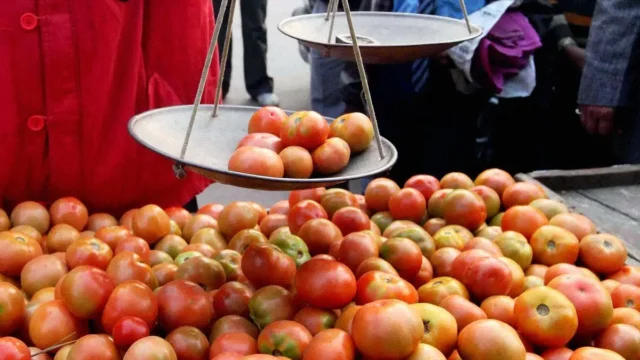
India to host 61st CIML meeting on legal metrology in New Delhi, 26–28 October
India will host the 61st meeting of the International Committee of Legal Metrology (CIML) for the first time, in New Delhi from 26 to 28 October 2026. The Department of Consumer Affairs is organising it with the International Organization of Legal Metrology (OIML), and more than 100 delegates are expected, PIB said on 19 October.
UPSC angle: Prelims: OIML, CIML, Legal Metrology Act 2009, Union List Entry 50. · Mains GS-III: standards and trade.
19 Oct 2026
NMC withdraws MSMER-2023: medical colleges lose the fixed penalty rulebook, annual disclosure stays
The National Medical Commission (NMC) has de-notified the Maintenance of Standards of Medical Education Regulations, 2023 (MSMER-2023) by a notification dated 14 October 2026, published in the Gazette on 16 October. Its fixed penalties, including seat cuts and fines of up to ₹5 lakh for false records, go with it. The Annual Disclosure Report stays.
UPSC angle: Prelims: NMC Act 2019, autonomous boards, Concurrent List Entry 25. · Mains GS-II: regulation of medical education.
19 Oct 2026
Supreme Court: no prior approval under Section 17A needed to probe a bribe demand
In a judgment of 16 October 2026, a Supreme Court Bench of Justices S.V.N. Bhatti and N.V. Anjaria held that investigating a bribe demand by a public servant does not need prior approval under Section 17A of the Prevention of Corruption Act. Asking for a bribe, the court said, is not part of discharging official duties.
UPSC angle: Prelims: Sections 7, 7A, 17A and 19 of the PC Act. · Mains GS-II/GS-IV: honest officers versus accountability.
19 Oct 2026
CCPA acts against online sale of explosives: 3,940 sellers delisted from seven platforms
The Central Consumer Protection Authority (CCPA) said on 19 October 2026 that 3,940 sellers of regulated explosives such as ammonium nitrate, picric acid and PETN have been delisted from seven online platforms after its action. It has fined Dial4Trade and ExportersIndia ₹10 lakh per order, and other cases are under hearing or investigation.
UPSC angle: Prelims: CCPA, PESO, CPA 2019 sections, helpline 1915. · Mains GS-II/III: platform liability and security.
19 Oct 2026Learn the concept
Question text as printed in the official UPSC question paper: https://www.upsc.gov.in/sites/default/files/QP-CSM-26-010926-GENERAL-STUDIES-PAPER%20-%20II.pdf The model answer is original Battle IAS work; use it to learn structure, not to memorise.