
UPSC Mains 2026 GS3 Q2: model answer
Examine the view that financial inclusion is an integral part of social and economic inclusion in a country like India. Also throw light on the usefulness of the R.B.I.'s Financial Inclusion Index.
What the question wants
Test the claim (largely agree, with limits) using Indian evidence, then explain what the FI-Index measures and why it is useful.
How to structure it
Intro: define financial inclusion. Body: links to economic and social inclusion with examples; the limits (access is not usage); FI-Index structure and uses. Conclusion: from accounts to outcomes.
- 1Links to economic and social inclusion with examples
- 2The limits (access is not usage)
- 3FI-Index structure and uses
Model answer
Financial inclusion means affordable access to, and use of, savings, credit, insurance, pensions and payments. With welfare now flowing through bank accounts, it sits near the centre of inclusion.
| Dimension | Weight | What it captures |
|---|---|---|
| Access | 35% | Branches, ATMs, accounts, BCs |
| Usage | 45% | Active accounts, credit, insurance, pensions |
| Quality | 20% | Literacy, consumer protection, service gaps |
Why the view holds
- Economic: formal credit (MUDRA, SHG-bank linkage) frees households from moneylenders.
- Social: Jan Dhan gave many women their first asset; DBT via JAM cut leakages.
- Resilience: PMJJBY, PMSBY, Atal Pension Yojana.
Not sufficient: dormant accounts, thin credit for tenant farmers, digital fraud, and caste or disability exclusion that survive an account.
RBI's FI-Index (2021, 0–100) weighs Access 35%, Usage 45%, Quality 20% across banking, insurance, pensions and post. It stood at 64.2 in March 2024. Weighting usage highest pushes policy beyond account-opening.
The next test is outcomes: first-time credit, claims paid, fraud-proof literacy.
Keywords, cases and data to drop in
PMJDY JAM trinity DBT SHG-bank linkage MUDRA FI-Index 2021 Access 35 / Usage 45 / Quality 20 financial literacy dormant accounts
Where most answers lose marks
- Agreeing fully without showing the gap between access and usage.
- Getting the FI-Index weights or parameters wrong; if unsure, describe the three dimensions without numbers.
- Not linking inclusion to social outcomes such as women's agency.
Same theme in Prelims
Which one of the following statements about Unified Payments Interface (UPI) and Central Bank Digital Currency (Digital Rupee) is not correct ?
Answer (d) & explanation
Statement (d) is not correct (d). Under UPI, money moves between bank accounts; the deposit is a liability of the bank. The Digital Rupee (e₹) is like a currency note in digital form, a direct liability of the RBI, not of users or banks. Option (a) is correct: UPI is a payment system, while the e-rupee is sovereign currency. Option (b) is correct: an e-rupee transfer moves value from wallet to wallet with no separate settlement. Option (c) is correct: e-rupee wallet transactions do not appear in bank statements.
Notice the legal base: the RBI Act was amended in 2022 to let the RBI issue a CBDC. Pilots began that year in wholesale (e₹-W) and retail (e₹-R) forms.
a "not correct" question. Look for the statement that puts the RBI's liability on someone else.
Answer as per the official UPSC answer key.
Consider the following statements about the Non-Banking Financial Companies (NBFCs) in India :
- 1. NBFCs cannot accept demand deposits.
- 2. All the NBFCs operating in India have to be registered with the RBI.
- 3. NBFCs form part of the payment and settlement system and can issue cheque drawn on itself.
- 4. Deposit insurance facility of Deposit Insurance and Credit Guarantee Corporation (DICGC) is not available to the depositors of deposit taking NBFCs.
Which of the statements given above is/are correct ?
Answer (a) & explanation
Statements 1 and 4 are correct (a). The RBI lists how an NBFC differs from a bank. Statement 1 is right: NBFCs cannot accept demand deposits. Statement 4 is right: depositors of NBFCs get no DICGC insurance cover. Statement 3 is wrong: NBFCs are not part of the payment and settlement system and cannot issue cheques drawn on themselves. Statement 2 is wrong: not every NBFC registers with the RBI; insurers report to IRDAI, merchant bankers and brokers to SEBI, and chit funds to State governments. So options (b), (c) and (d) fail.
Notice the current rules: since 2021, the RBI regulates NBFCs through a Scale-Based Regulation in four layers: Base, Middle, Upper and Top. DICGC covers bank deposits up to ₹5 lakh.
"All the NBFCs" in statement 2. Many finance companies have another regulator.
Answer as per the official UPSC answer key.
Which of the following is/are the most significant implication(s) of obtaining Oeko-Tex certification for Eri Silk in the global textile industry ?
- 1. It allows Indian exporters to compete in high-end markets that prioritise chemical-free products.
- 2. It confirms that Eri Silk meets international safety, environmental, and quality standards, enabling its entry into premium eco-conscious markets.
Select the answer using the code given below :
Answer (c) & explanation
Both statements describe the significance (c). Oeko-Tex Standard 100 is an international label showing that a textile has been tested for harmful substances. Statement 1 is right: it lets Indian exporters compete in high-end markets that want chemical-free products. Statement 2 is right: it confirms Eri silk meets international safety, environmental and quality standards, opening premium, eco-conscious markets in Europe and elsewhere. So options (a), (b) and (d) fail.
Notice Eri silk's story: called "peace silk" or ahimsa silk, because the moth is allowed to leave the cocoon before the silk is spun. It is made mainly in Assam and the North-East. India's other silks are mulberry, tasar and muga, the golden silk found only in Assam.
Answer as per the official UPSC answer key.
Fresh examples from current affairs
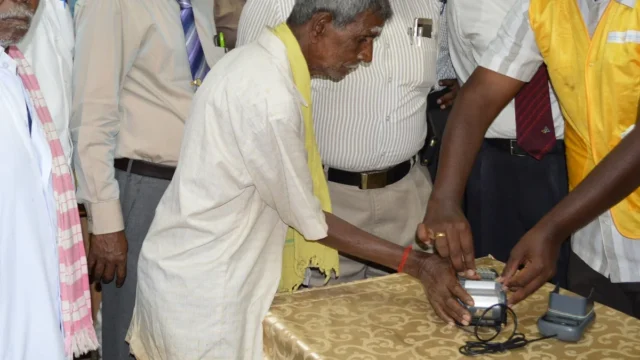
Financial inclusion saturation campaign in 2.70 lakh panchayats and ULBs from 21 October
The Department of Financial Services will run a nationwide campaign from 21 October to 31 December 2026 to saturate financial inclusion schemes in 2.70 lakh gram panchayats and urban local bodies. Bank camps will enrol people in PMJJBY, PMSBY and APY, open Jan Dhan accounts, finish re-KYC and nominations, and spread awareness on digital frauds and unclaimed deposits.
UPSC angle: Prelims: scheme parameters of PMJJBY, PMSBY, APY, PMJDY. · Mains GS-III: inclusive growth and financial inclusion.
20 Oct 2026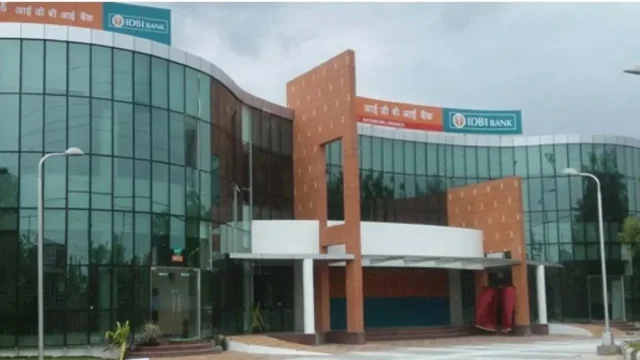
IDBI Bank strategic sale: Fairfax arm wins 60.72% stake for ₹52,878 crore
On 14 October 2026 the Cabinet Committee on Economic Affairs approved 10955230 Canada Inc., a Fairfax Financial Holdings entity, as strategic buyer of 60.72% of IDBI Bank for about Rs. 52,878 crore. The Government sells 30.48% and LIC 30.24%. The winning bid of Rs. 81 a share beat the Rs. 75.99 benchmark.
UPSC angle: Prelims: stake split, residual holdings, PCA dates, valuation methods. · Mains GS-III: disinvestment, bank privatisation, FDI in financial services.
14 Oct 2026
EPFO Amnesty Scheme 2026: deadline 28 December for PF Trust regularisation
EPFO is reminding establishments that the Amnesty Scheme, 2026 for retrospective regularisation of Provident Fund Trust exemption status closes on 28 December 2026. It covers trusts recognised under the Income Tax Act but without a formal exemption order under the EPF Act or the Code on Social Security.
UPSC angle: Prelims: Amnesty dates and legal sections. · Mains GS-III: social security and labour compliance.
13 Oct 2026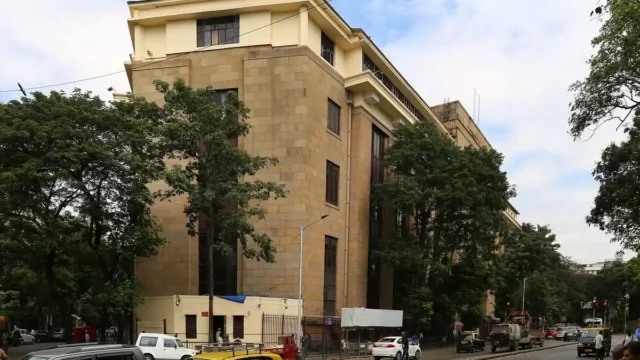
RBI tightens forex derivative rules and opens a dollar window for oil companies
On 10 October 2026 RBI issued two circulars to curb speculation in the rupee: cancelled INR forex derivatives cannot be rebooked, the no-proof hedging limit falls from USD 100 million to USD 5 million, and banks must keep a 20% cash reserve on large dollar-buying hedges. RBI also opened a dollar window for three public sector oil companies.
UPSC angle: Prelims: FERR, USD 5 mn, OMC window, FEMA. · Mains GS-III: exchange rate management, external sector.
10 Oct 2026Learn the concept
Question text as printed in the official UPSC question paper: https://www.upsc.gov.in/sites/default/files/QP-CSM-26-010926-GENERAL-STUDIES-PAPER-III.pdf The model answer is original Battle IAS work; use it to learn structure, not to memorise.