
UPSC Mains 2026 GS3 Q13: model answer
How Indian agriculture has been transformed from food scarcity to food surplus level? Explain the various government policies implemented for diversification of Indian agriculture.
What the question wants
The journey from the 1960s 'ship-to-mouth' years to surplus (causes); then policies for diversification beyond rice-wheat.
How to structure it
Intro: PL-480 imports versus today's output. Body: drivers of transformation; diversification policies; why diversify. Conclusion: from surplus to nutrition and sustainability.
- 1Drivers of transformation
- 2Diversification policies
- 3Why diversify
Model answer
In the mid-1960s India imported wheat under the US PL-480 programme and lived 'ship to mouth'. Today foodgrain output is around 350 million tonnes, the government stocks far more than buffer norms, and India exports rice.
- 1960sPL-480 imports, ship-to-mouth
- 1965APC and FCI set up; MSP
- Late 1960sGreen Revolution in wheat, then rice
- 1970-96Operation Flood
- 2000s onHorticulture overtakes foodgrain output
- 2023International Year of Millets
How the change happened
- Green Revolution (late 1960s): high-yielding wheat and rice seeds, fertiliser and irrigation in Punjab, Haryana and western UP.
- Price and procurement: the Agricultural Prices Commission and the Food Corporation of India (both 1965) gave assured MSP and procurement.
- Irrigation and power: canals, tubewells and subsidised electricity.
- Research and extension: ICAR institutes, agricultural universities and Krishi Vigyan Kendras.
- Allied revolutions: Operation Flood made India the largest milk producer; the Blue Revolution raised fish output.
Why diversification became necessary. Rice-wheat monoculture has drained groundwater in Punjab, degraded soils, and left India short of pulses and edible oils while carrying grain surpluses.
Policies for diversification
- Mission for Integrated Development of Horticulture: fruits and vegetables output now exceeds foodgrains.
- National Mission on Edible Oils (oil palm and oilseeds) and pulses missions, with MSP increases for pulses and oilseeds.
- Crop Diversification Programme under RKVY in the original Green Revolution states.
- Millets: the International Year of Millets (2023) and inclusion of millets in PDS and mid-day meals.
- Allied sectors: Rashtriya Gokul Mission, PM Matsya Sampada Yojana, and the National Beekeeping and Honey Mission.
- Market support: FPOs (10,000 FPO scheme), e-NAM and PM Kisan Sampada for processing.
The next transformation is from calories to nutrition and from surplus to sustainability: less water per kilo, more income per acre.
Keywords, cases and data to drop in
PL-480 Green Revolution HYV seeds APC/CACP and FCI (1965) Operation Flood Blue Revolution MIDH NMEO-Oil Palm Crop Diversification Programme (RKVY) International Year of Millets 2023 10,000 FPOs
Where most answers lose marks
- Describing only the Green Revolution and forgetting diversification policies.
- No mention of why diversification is needed (water, soil, nutrition).
- Inventing exact production figures; round figures are safer.
Same theme in Prelims
Which among the following is/are the objective(s) of the Rainfed Area Development (RAD) initiative under the National Mission for Sustainable Agriculture (NMSA) ?
- 1. Encouraging monoculture in rainfed areas
- 2. Increasing rice cultivation in irrigated regions
- 3. Enhancing productivity and minimising climatic risks through Integrated Farming Systems (IFS)
Select the answer using the code given below :
Answer (d) & explanation
Only objective 3 belongs to RAD (d). Item 3 is right: Rainfed Area Development (RAD), an area-based part of the National Mission for Sustainable Agriculture (NMSA), promotes Integrated Farming Systems. It grows crops along with horticulture, livestock, fishery and agro-forestry, so a farmer in a dry area has more than one income source when the rain fails. Item 1 is wrong: monoculture raises risk. Item 2 is wrong: irrigated rice has nothing to do with a rainfed programme.
Notice why it matters: about half of India's net sown area is rainfed, growing much of its pulses, millets and oilseeds. NMSA is one of the eight missions under the National Action Plan on Climate Change (2008). Related: Per Drop More Crop for micro-irrigation.
statement 2 talks of "irrigated regions" in a scheme named "Rainfed". Read the scheme's own name before the statements.
Answer as per the official UPSC answer key.
Consider the following statements :
Statement I :
Of the two major ethanol producers in the world, i.e., Brazil and the United States of America, the former produces more ethanol than the latter.
Statement II :
Unlike in the United States of America where corn is the principal feedstock for ethanol production, sugarcane is the principal feedstock for ethanol production in Brazil.
Which one of the following is correct in respect of the above statements?
Answer (d) & explanation
Statement I is wrong, Statement II is right (d). Statement II is right: the USA makes ethanol mostly from corn (maize), while Brazil uses sugarcane. Statement I is wrong: it reverses the ranking. The USA is the largest ethanol producer, with over half of world output; Brazil is second. So options (a), (b) and (c) fail.
Notice India's place: now third, using cane juice, molasses, and surplus grains such as rice and maize. India reached 20% ethanol blending in petrol (E20) in 2025, five years ahead of the old target. The Global Biofuels Alliance, launched at India's G20 in 2023, includes the USA and Brazil.
Brazil's ethanol cars are famous, so it "feels" like number one. The USA produces more.
Answer as per the official UPSC answer key.
Consider the following statements about turmeric during the year 2022-23 :
- I. India is the largest producer and exporter of turmeric in the world.
- II. More than 30 varieties of turmeric are grown in India.
- III. Maharashtra, Telangana, Karnataka and Tamil Nadu are major turmeric producing States in India.
Which of the statements given above are correct?
Answer (d) & explanation
All three statements are correct (d). Statement I is right: in 2022-23, India grew over 75% of the world's turmeric and had more than 62% of world trade. Statement II is right: more than 30 varieties are grown in over 20 States. Statement III is right: the major producers are Maharashtra, Telangana, Karnataka and Tamil Nadu. These lines come from the government's note on setting up the National Turmeric Board (2023).
Notice the board, based at Nizamabad in Telangana, which promotes turmeric research, exports and value addition. Turmeric's active compound is curcumin. Famous GI-tagged varieties include Erode turmeric, Lakadong turmeric of Meghalaya and Kandhamal Haladi of Odisha.
Answer as per the official UPSC answer key.
Fresh examples from current affairs
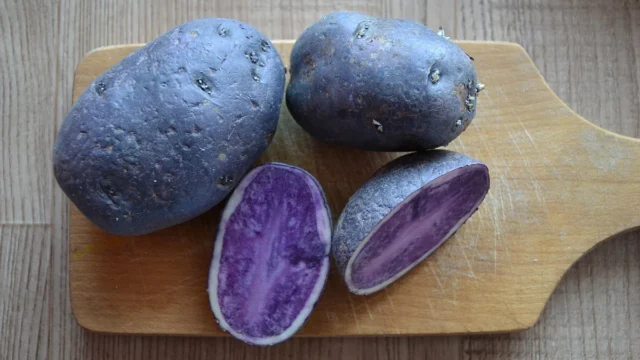
Kufri Jamunia: ICAR-CPRI’s purple potato to fight hidden hunger
A PIB backgrounder of 18 October 2026 puts the spotlight on Kufri Jamunia, a purple-fleshed potato bred by ICAR’s Central Potato Research Institute and released in 2024. It has nearly twice the Vitamin C of a common potato and several times more zinc and iron, along with antioxidants called anthocyanins. The idea is clever: instead of asking people to change what they eat, make the food they already eat more nutritious. That is biofortification.
UPSC angle: Prelims: Kufri Jamunia, CPRI, anthocyanins, biofortification vs fortification. · Mains GS-III: nutrition security; GS-II: hunger.
18 Oct 2026
Oil companies bar sugar-based ethanol for 2026-27; maize incentive cut to ₹2.79 a litre
The oil marketing companies have kept sugar out of India’s ethanol programme for the coming year. The tender issued on 16 October 2026 seeks about 11 billion litres of ethanol for the 2026-27 supply year, but asks for none made from sugarcane juice, sugar syrup or B-heavy molasses, because the Government wants sugar diversion for ethanol cut to zero. Grain must now carry the load, and even the maize incentive has been cut. Read this as a live example of the food-versus-fuel trade-off.
UPSC angle: Prelims: E20, NPB 2018, molasses grades, feedstocks. · Mains GS-III: energy security vs food security; farm incomes.
18 Oct 2026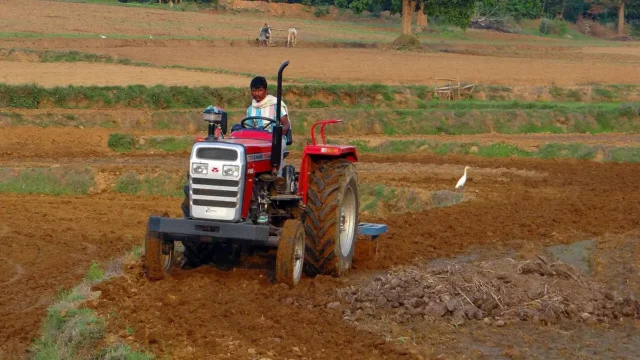
Khet Bachao Abhiyan: Centre reviews 22 October to 30 November farm campaign with States
On 17 October 2026 Union Agriculture Minister Shivraj Singh Chouhan reviewed preparations for the Khet Bachao Abhiyan with agriculture ministers of 11 States and UTs. The campaign runs from 22 October to 30 November 2026. About 4,150 teams of Krishi Vigyan Kendra and ATMA staff, with over 12,000 scientists and officials, plan around 1.5 lakh meetings with farmers on soil health, crop residue, balanced fertiliser use and key schemes.
UPSC angle: Prelims: Khet Bachao Abhiyan dates, KVK, ATMA, Soil Health Card. · Mains GS-III: agricultural extension and sustainable farming.
17 Oct 2026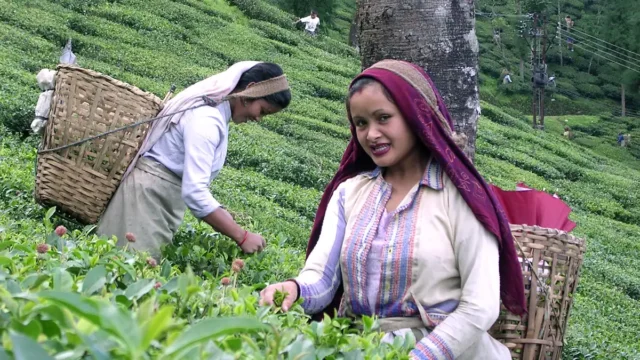
FSSAI proposes residue limits for acetamiprid and imidacloprid in tea
On 17 October 2026 FSSAI explained draft limits for two insecticides in tea: 20 ppm for acetamiprid and 50 ppm for imidacloprid. The draft, published in the Gazette on 16 October, amends the rules on contaminants, toxins and residues. India’s proposed acetamiprid limit is lower than Japan’s 30 ppm and the USA’s 50 ppm.
UPSC angle: Prelims: MRL, neonicotinoids, Insecticides Act 1968, FSS Act 2006. · Mains GS-III: pesticide regulation and food safety.
17 Oct 2026Learn the concept
Question text as printed in the official UPSC question paper: https://www.upsc.gov.in/sites/default/files/QP-CSM-26-010926-GENERAL-STUDIES-PAPER-III.pdf The model answer is original Battle IAS work; use it to learn structure, not to memorise.