
Indus Valley (Harappan) Civilisation: Sites, Town Planning, Economy, Religion and Decline (UPSC Notes + PYQs)
UPSC has already asked about this. Read the story with these questions in mind.
- Prelims 2011Regarding the Indus Valley Civilization, consider the following statements: It was predominantly a secular civilization and the religious element, though present, did not dominate…Solve it below ↓
- Prelims 2021Which one of the following ancient towns is well-known for its elaborate system of water harvesting and management by building a series of dams…Solve it below ↓
Background: India’s first cities
Until the 1920s, Indian history was thought to begin with the Vedas. The excavation of Harappa by Daya Ram Sahni in 1921 and of Mohenjo-daro by R.D. Banerji in 1922, under John Marshall as Director-General of the Archaeological Survey, pushed it back by more than a millennium. The civilisation is called Harappan after its first excavated site, a convention archaeologists follow. It was a Bronze Age culture, contemporary with Mesopotamia and Egypt, and larger in area than both combined. Its mature phase is usually dated to about 2600-1900 BCE, preceded by an early Harappan phase of farming villages and followed by a late phase in which cities faded and rural cultures continued. Because its script is still undeciphered, we know it entirely through material remains: brick, pottery, seals, beads, bones and the layout of settlements.
Discovery and spread
Daya Ram Sahni excavated Harappa in 1921 and R.D. Banerji Mohenjo-daro in 1922, under John Marshall’s ASI. The civilisation spread from Sutkagen Dor (Balochistan) in the west to Alamgirpur (Meerut, UP) in the east, and from Manda (Jammu) to Daimabad (Maharashtra) in the south. Most sites in India lie along the Ghaggar-Hakra.
- c. 3300-2600 BCEEarly Harappan villages
- c. 2600-1900 BCEMature Harappan cities
- c. 1900-1300 BCELate Harappan, de-urbanisation
- 1921Harappa excavated
- 2021Dholavira on UNESCO list
Sites and what they are known for
| Site | Present location | Known for |
|---|---|---|
| Harappa | Punjab, Pakistan (Ravi) | Granaries, working floors, coffin burial |
| Mohenjo-daro | Sindh, Pakistan (Indus) | Great Bath, bronze “dancing girl”, “priest-king” bust |
| Dholavira | Kutch, Gujarat | Water reservoirs, three-part city, signboard; UNESCO site 2021 |
| Lothal | Gujarat | Dockyard, bead-making |
| Kalibangan | Rajasthan | Ploughed field, fire altars |
| Rakhigarhi | Haryana | Among the largest sites; ancient DNA study (2019) |
| Banawali | Haryana | Terracotta plough model |
| Chanhudaro | Sindh | Bead factory; no citadel |
Town planning and economy
Cities were laid out in a rough grid, with a raised citadel and a lower town, covered drains and baked bricks in a fixed 1:2:4 ratio. Farmers grew wheat, barley, peas, cotton (among the earliest anywhere) and some rice at Lothal. Trade reached Mesopotamia, where texts mention “Meluhha”. Weights followed a binary-then-decimal system.
Religion, art and script
Terracotta female figurines suggest a mother goddess; the “Pashupati” seal shows a seated figure with animals; fire altars at Kalibangan and Lothal. Seals carry an undeciphered script written mostly right to left. There is no clear evidence of temples or palaces, a puzzle for historians.
- Grid streetsBlocks and lanes
- CitadelRaised western mound
- DrainsCovered, with manholes
- BricksRatio 1:2:4
- WaterWells, reservoirs
Harappan architecture: what Mains asks
Harappan architecture was practical rather than monumental. There are no palaces or grand temples, which is one reason scholars debate who held power. Key features:
- Planned layout: streets running roughly north-south and east-west, dividing towns into blocks; many cities had a raised western citadel and a larger lower town, while Dholavira had three parts.
- Standard bricks: burnt and sun-dried bricks in a ratio of about 1:2:4, used across a vast area.
- Drainage: covered drains along streets, with soak pits and manholes, connected to house drains; bathrooms in many homes.
- Houses: built around courtyards, doors opening onto side lanes for privacy, some with wells and upper storeys.
- Public structures: the Great Bath and the so-called granary at Mohenjo-daro, the dockyard at Lothal, and huge water reservoirs at Dholavira.
| Structure | Site | Significance |
|---|---|---|
| Great Bath | Mohenjo-daro | Waterproofed with bitumen; likely ritual bathing |
| Dockyard | Lothal | Linked to maritime trade |
| Water reservoirs | Dholavira | Advanced water harvesting |
| Fire altars | Kalibangan, Lothal | Ritual practice |
| Granary (debated) | Harappa, Mohenjo-daro | Storage or public hall |
Why it declined
No single cause fits all sites. Theories include shifts and drying of rivers (Ghaggar-Hakra), floods, a weaker monsoon around 2200 BCE, decline in Mesopotamian trade, and ecological strain. The “Aryan invasion” theory is no longer accepted; cities faded and people moved east and south into smaller settlements.
Trade and contacts
Harappans traded within the subcontinent for raw materials: copper from the Khetri area of Rajasthan, lapis lazuli from Shortugai in Afghanistan, shell from the Gujarat coast, and carnelian from western India. Long-distance trade with Mesopotamia is well attested: Mesopotamian texts mention Meluhha, generally identified with the Indus region, and intermediate stations called Dilmun (Bahrain) and Magan (Oman). Indus seals and beads have been found in Mesopotamia, and a Persian Gulf type seal at Lothal. Trade was probably barter, as no coins have been found, and standardised cubical weights based on multiples of 16 show careful regulation.
Harappan and Vedic cultures compared
| Point | Harappan | Rigvedic |
|---|---|---|
| Nature | Urban | Rural and pastoral |
| Metals | Copper and bronze; no iron | Copper and bronze; iron later |
| Horse | Rare evidence | Central to life |
| Writing | Script on seals (undeciphered) | Oral texts |
| Religion | Mother goddess, proto-Shiva, nature | Indra, Agni, Varuna; sacrifice |
Legacy and recognition
Many features survived in later Indian life: the use of bullock carts, the bangles and the parting of hair with vermilion seen in figurines, worship of trees and animals, yoga-like postures, and the standardised weights. Dholavira in Gujarat was inscribed as a UNESCO World Heritage Site in 2021, the first Harappan site in India on the list; Mohenjo-daro in Pakistan has been on the list since 1980. Rakhigarhi in Haryana, one of the largest Harappan sites, has also yielded ancient DNA studies that have fuelled debate about the population history of South Asia.
Indus Valley Civilisation: UPSC angle
For UPSC CSE
Prelims: site-feature matching, rivers, which site is not Harappan. Mains GS-I: urban planning, continuity into later Indian culture.
Indus Valley Civilisation UPSC PYQs (Prelims)
Questions UPSC has actually asked, from the official papers. Pick an option to check yourself.
Regarding the Indus Valley Civilization, consider the following statements :
– 1. It was predominantly a secular civilization and the religious element, though present, did not dominate the scene.
– 2. During this period, cotton was used for manufacturing textiles in India.
Which of the statements given above is/are correct ?
Harappan cities have no grand temples or palaces of priest-kings; figurines and seals show religion was present but did not dominate public life, so the key treats it as largely secular. Harappans were among the first to grow cotton and weave it, and cotton cloth traces were found at Mohenjo-daro. Answer as per the official UPSC key · Battle IAS PYQ bankAnswer (c) & why
Which one of the following ancient towns is well-known for its elaborate system of water harvesting and management by building a series of dams and channelizing water into connected reservoirs?
Dholavira (Khadir island, Kachchh) stood between two seasonal streams, the Mansar and Manhar. Its people built dams across them and cut stone reservoirs along the city walls to store monsoon water. It became a UNESCO World Heritage Site in 2021. Answer as per the official UPSC key · Battle IAS PYQ bankAnswer (a) & why
Which one of the following is not a Harappan site?
Chanhudaro (bead-making) and Kot Diji are in Sindh, and Desalpur is in Kachchh. All three are Harappan. Sohgaura (Gorakhpur district, UP) is known for a Mauryan-period copper plate in Brahmi about famine relief storehouses. Answer as per the official UPSC key · Battle IAS PYQ bankAnswer (c) & why
With reference to the difference between the culture of Rigvedic Aryans and Indus Valley people, which of the following statements is/are correct ?
– 1. Rigvedic Aryans used the coat of mail and helmet in warfare whereas the people of Indus Valley Civilization did not leave any evidence of using them.
– 2. Rigvedic Aryans knew gold, silver and copper whereas Indus Valley people knew only copper and iron.
– 3. Rigvedic Aryans had domesticated the horse whereas there is no evidence of Indus Valley people having been aware of this animal.
Select the correct answer using the code given below :
The Rigveda names armour (varman) and helmets (shipra), and no such gear has been found at Harappan sites. The Harappans used gold, silver, copper and bronze, but not iron, which came only around 1000 BCE. The horse is central to the Rigveda, while Harappan evidence for it is doubtful at best. Answer as per the official UPSC key · Battle IAS PYQ bankAnswer (c) & why
Mains PYQs on this topic
Questions from the official UPSC Mains papers (2023-2026 in the Battle IAS Mains bank), newest first. Each links to a model answer.
- UPSC Mains 2025 · GS Paper I · Q1 · 10 marks
Discuss the salient features of the Harappan architecture.
Quick quiz
Which Harappan site had a dockyard?
Lothal in Gujarat.Answer (b)
Which is the easternmost mature Harappan site, located in UP?
Alamgirpur, Meerut district.Answer (b)
Dholavira became a UNESCO World Heritage Site in
July 2021.Answer (c)
FAQs
Who discovered the Indus Valley Civilisation?
Daya Ram Sahni excavated Harappa in 1921, under John Marshall as Director-General of the ASI.
Has the Harappan script been deciphered?
No.
Did the Harappans know iron?
No. It was a Bronze Age culture; copper and bronze were used.
Which Harappan site is the largest in India?
Rakhigarhi in Haryana is among the largest; Dholavira is the most famous in Gujarat.
Why is the Harappan script not deciphered?
The inscriptions are very short, there is no bilingual text like the Rosetta Stone, and the language behind them is unknown.
What was Meluhha?
The name used in Mesopotamian records for a trading region generally identified with the Indus valley.
Which Harappan site is on the UNESCO World Heritage list in India?
Dholavira in Gujarat, inscribed in 2021.
Spotted an error? Tell us. We correct within 48 hours.
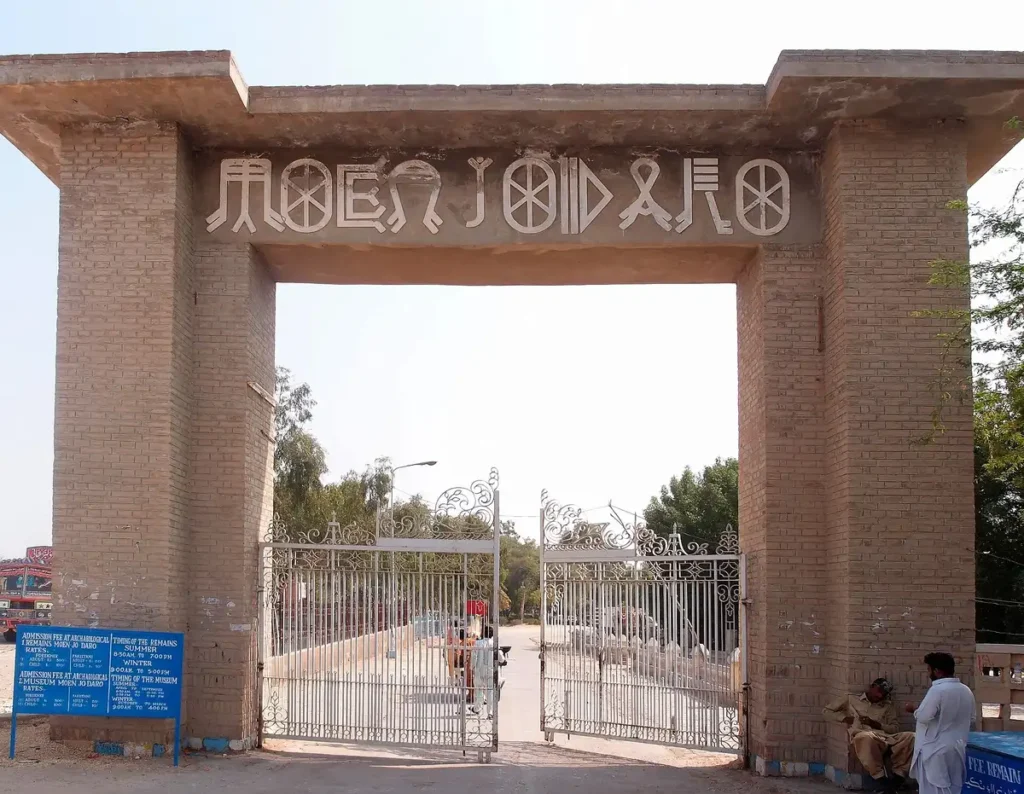
Image: Saqib Qayyum, Wikimedia Commons, CC BY-SA 3.0
How to use this in Mains
If asked: What is the enduring legacy of the Harappan civilisation in Indian life? (GS-I)
Quote: “Many features survived in later Indian life: the use of bullock carts, the bangles and the parting of hair with vermilion seen in figurines, worship of trees and animals, yoga-like postures, and the standardised weights.”
Use it: Ready evidence of continuity for your body.
In the news
Pollen study links Harappan decline to weak monsoon (5100–4000 BP)
A pollen study by the Birbal Sahni Institute of Palaeosciences links the shrinking of the Harappan Civilization to a weak Indian Summer Monsoon between about 5100 and 4000 years before present, the Science Ministry said on 29 July 2026. Sediments from Deoria Tal in the Garhwal Himalaya show an abrupt dry spell, the "4.2 ka event".
29 Jul 2026
Sarnath inscribed as India’s 45th UNESCO World Heritage Site
On 25 July 2026 the 48th World Heritage Committee in Busan inscribed the "Ancient Buddhist Site of Sarnath" on the UNESCO World Heritage List. It is India's 45th property. The serial site in Varanasi covers Chaukhandi Stupa and the Archaeological Remains of Sarnath, where the Buddha gave his first sermon.
25 Jul 2026
Rakhigarhi skeletal remains handed to Anthropological Survey of India
ASI handed human skeletal remains from Rakhigarhi, Haryana, to the Anthropological Survey of India under a new MoU, the Culture Ministry said on 22 June 2026. The 2025-26 dig at Mound No. 7 found eight burials; three complete skeletons plus fragments went to AnSI's Kolkata repository. Planned work includes aDNA, isotopes and palaeopathology with partner labs.
22 Jun 2026
Relics of the Buddha’s chief disciples enshrined for exposition in Mongolia
The holy relics of Arhat Sariputra and Arhat Mahamoggallana, the Buddha's two chief disciples, were ceremonially enshrined at Gandantegchenling Monastery in Ulaanbaatar on Buddha Purnima (Vesak) 2026. Brought from India for a ten-day exposition from 31 May to 10 June 2026, they arrived on a special IAF IL-76 aircraft and had travelled abroad only once before, to Thailand in 2024.
31 May 2026