
UPSC Mains 2013 GS Paper 1 Q3: model answer
Defying the barriers of age, gender and religion, the Indian women became the torch-bearer during the struggle for freedom in India. Discuss.
What the question wants
Show how women across age, gender norms and religion led and sustained the freedom struggle.
How to structure it
Discuss: the statement names three barriers (age, gender, religion), so use them as a structure.
- Early phase
- Gandhian mass phase
- Revolutionary and INA roles
- Across age and religion
How to think it through
The question hands you the skeleton: age, gender, religion. Use it. Show young and old (Matangini Hazra was 73 in 1942; Kanaklata Barua was 17), Hindu, Muslim and Parsi women (Bi Amman, Aruna Asaf Ali, Madame Cama), and roles from salt marches to bombs to the INA. Names with roles beat names alone.
Model answer
Matangini Hazra was 73 when police shot her at Tamluk in 1942, still holding the tricolour; Kanaklata Barua was 17 when she fell at Gohpur the same year. Women turned the freedom struggle into a mass movement, crossing barriers of age, gender and religion.
Early phase
- Women attended Congress sessions from 1889; Swadeshi (1905) saw women boycott foreign goods.
- Madame Bhikaji Cama unfurled an Indian flag at Stuttgart (1907); Annie Besant led the Home Rule League.
Gandhian mass phase
- Non-Cooperation and Civil Disobedience: picketing of liquor and cloth shops, the Salt Satyagraha; Sarojini Naidu led the Dharasana raid (1930).
- Kasturba Gandhi, Kamaladevi Chattopadhyay and others mobilised women.
Revolutionary and INA roles
- Pritilata Waddedar and Kalpana Dutt in the Chittagong group; Bina Das.
- Rani of Jhansi Regiment of the INA under Lakshmi Sahgal.
Quit India (1942)
- Aruna Asaf Ali hoisted the flag at Gowalia Tank; Usha Mehta ran the Congress Radio; Matangini Hazra (aged 73) and Kanaklata Barua (17) were shot leading processions.
Across religion
- Bi Amman (mother of the Ali brothers) in the Khilafat movement; Parsi, Muslim, Sikh and Hindu women were all active.
- Women in the Telangana and Tebhaga movements, and Rani Gaidinliu in the Naga hills, show that rural and tribal women joined too.
Final word
Women not only joined but led the struggle, and their participation laid the foundation for their political rights in independent India.
Draw: Three-column table: age, gender, religion, with names in each.
Keywords, cases and data to drop in
Madame Cama, Sarojini Naidu, Aruna Asaf Ali, Usha Mehta, Matangini Hazra, Kanaklata Barua, Bi Amman, Rani of Jhansi Regiment.
Where most answers lose marks
- A long list of names with no roles or phases.
Related Mains PYQs
- Why did the armies of the British East India Company - mostly comprising of Indian soldiers - win consistently against the more… UPSC 2022 · GS-I
- Why was there a sudden spurt in famines in colonial India since the mid-eighteenth century? Give reasons. UPSC 2022 · GS-I
- Bring out the constructive programmes of Mahatma Gandhi during Non-Cooperation Movement and Civil Disobedience Movement. UPSC 2021 · GS-I
- Trace the rise and growth of socio-religious reform movements with special reference to Young Bengal and Brahmo Samaj. UPSC 2021 · GS-I
Fresh examples from current affairs
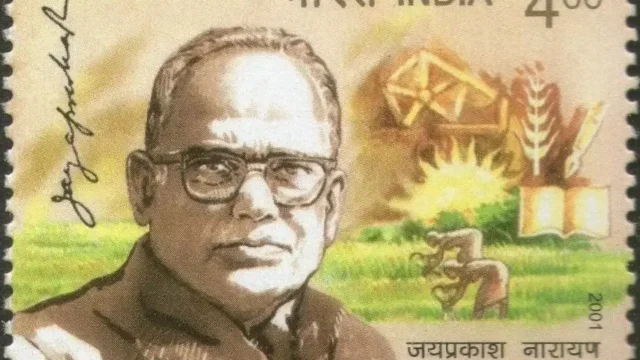
Birth anniversaries: Jayaprakash Narayan and Nanaji Deshmukh
11 October is the birth anniversary of Loknayak Jayaprakash Narayan and Nanaji Deshmukh, both Bharat Ratna awardees. The Prime Minister recalled JP's voice during the Emergency and his concern for good governance, and Nanaji's work in rural development and community participation. Treat this as a personality note for Prelims.
UPSC angle: Prelims: personalities, Bharat Ratna years. · Mains: limited; GS-IV examples of public service.
11 Oct 2026
ASI and Denmark museum to search for 1619 Danish shipwreck Oresund off Karaikal
The Archaeological Survey of India's Underwater Archaeology Wing and the National Museum of Denmark (Njord Centre, Copenhagen) signed an MoU to locate and document the Danish ship Oresund, wrecked off Karaikal, Puducherry, in 1619 CE. It is described as the first Danish ship known to have reached India.
UPSC angle: Prelims: Danish settlements in India.
15 Jun 2026
Veer Bal Diwas and the Rashtriya Bal Puraskar
The PM announced the day on 9 January 2022 and the first Veer Bal Diwas was held on 26 December 2022 [PMO].
UPSC angle: Prelims: Sikh history.
26 Dec 2025
Stamp on Emperor Perumbidugu Mutharaiyar II
Questions on lesser-known regional dynasties are common in Prelims. Stamps and anniversaries often bring them into the news.
UPSC angle: Prelims: early medieval Tamil dynasties.
14 Dec 2025Learn the concept
Question text as printed in the official UPSC Civil Services (Main) question paper. The model answer is original Battle IAS work; use it to learn structure, not to memorise.
Want every PYQ in one place? See the Battle IAS PYQ Book.