
UPSC Mains 2013 GS Paper 1 Q5: model answer
"In many ways, Lord Dalhousie was the founder of modern India." Elaborate.
What the question wants
Elaborate the statement by showing Dalhousie's modernising measures, and note the other side of his rule.
How to structure it
Elaborate: develop the statement in detail. A short balancing note keeps it mature.
- Communication and infrastructure
- Administrative and educational reforms
- Social reforms
- The other side and verdict
How to think it through
Dalhousie (1848–56) is the man who gave India railways, telegraphs and a postage stamp, and also took away kingdoms like a debt collector with a clipboard. The question says 'in many ways', so most of your answer is the modernising list. But one paragraph on annexations shows you know why 1857 followed his exit.
Model answer
Lord Dalhousie, Governor-General from 1848 to 1856, carried out reforms that laid the material and administrative base of a modern state in India.
Communication and infrastructure
- First railway line from Bombay to Thane (1853); the telegraph network linking major cities.
- Post Office Act, 1854: uniform postage and stamps.
- A separate Public Works Department; work on the Ganga Canal (opened 1854) and the Grand Trunk Road.
Administration and education
- Wood's Despatch (1854), the 'Magna Carta' of English education, under his tenure: graded schools, universities planned for Calcutta, Bombay and Madras (founded 1857).
- Centralised, unified administration of the newly consolidated territory.
Social measures
- The Hindu Widows' Remarriage Bill was taken up during his tenure and passed in July 1856, soon after he left.
The other side
- The Doctrine of Lapse (Satara, Jhansi, Nagpur) and the annexation of Awadh (1856) on grounds of misrule caused deep resentment and fed the revolt of 1857.
- Reforms served imperial economic and strategic interests.
- Annexed Punjab (1849) and Lower Burma (1852), giving British India much of its final shape, and created the Bengal LieutenantGovernorship to ease the Governor-General's load.
Looking ahead
Dalhousie did build the skeleton of modern India's communication and administration. But he built it for empire, and the anger his annexations caused shows that modernisation and alienation went together.
Draw: Two-column ledger: 'Built' vs 'Broke'.
Keywords, cases and data to drop in
Doctrine of Lapse, Awadh 1856, railway 1853, Post Office Act 1854, Wood's Despatch 1854, PWD.
Where most answers lose marks
- Only a list of reforms. Without the annexations, 'founder of modern India' looks like praise, not analysis.
Related Mains PYQs
- Why did the armies of the British East India Company - mostly comprising of Indian soldiers - win consistently against the more… UPSC 2022 · GS-I
- Why was there a sudden spurt in famines in colonial India since the mid-eighteenth century? Give reasons. UPSC 2022 · GS-I
- Bring out the constructive programmes of Mahatma Gandhi during Non-Cooperation Movement and Civil Disobedience Movement. UPSC 2021 · GS-I
- Trace the rise and growth of socio-religious reform movements with special reference to Young Bengal and Brahmo Samaj. UPSC 2021 · GS-I
Fresh examples from current affairs
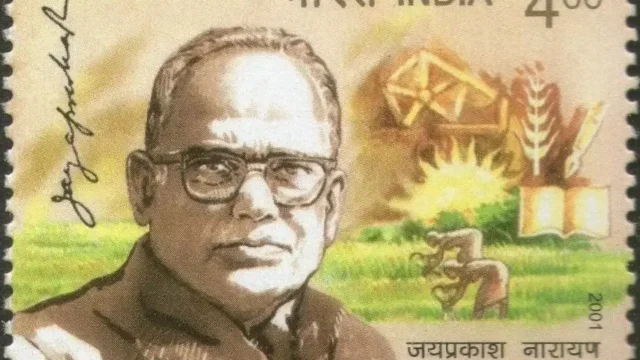
Birth anniversaries: Jayaprakash Narayan and Nanaji Deshmukh
11 October is the birth anniversary of Loknayak Jayaprakash Narayan and Nanaji Deshmukh, both Bharat Ratna awardees. The Prime Minister recalled JP's voice during the Emergency and his concern for good governance, and Nanaji's work in rural development and community participation. Treat this as a personality note for Prelims.
UPSC angle: Prelims: personalities, Bharat Ratna years. · Mains: limited; GS-IV examples of public service.
11 Oct 2026
ASI and Denmark museum to search for 1619 Danish shipwreck Oresund off Karaikal
The Archaeological Survey of India's Underwater Archaeology Wing and the National Museum of Denmark (Njord Centre, Copenhagen) signed an MoU to locate and document the Danish ship Oresund, wrecked off Karaikal, Puducherry, in 1619 CE. It is described as the first Danish ship known to have reached India.
UPSC angle: Prelims: Danish settlements in India.
15 Jun 2026
Veer Bal Diwas and the Rashtriya Bal Puraskar
The PM announced the day on 9 January 2022 and the first Veer Bal Diwas was held on 26 December 2022 [PMO].
UPSC angle: Prelims: Sikh history.
26 Dec 2025
Stamp on Emperor Perumbidugu Mutharaiyar II
Questions on lesser-known regional dynasties are common in Prelims. Stamps and anniversaries often bring them into the news.
UPSC angle: Prelims: early medieval Tamil dynasties.
14 Dec 2025Learn the concept
Question text as printed in the official UPSC Civil Services (Main) question paper. The model answer is original Battle IAS work; use it to learn structure, not to memorise.
Want every PYQ in one place? See the Battle IAS PYQ Book.