
UPSC Mains 2013 GS Paper 3 Q4: model answer
Food Security Bill is expected to eliminate hunger and malnutrition in India. Critically discuss various apprehensions in its effective implementation along with the concerns it has generated in WTO.
What the question wants
Critically discuss the doubts over effective implementation of the Food Security Bill and the concerns it raised at the WTO.
How to structure it
Promise, apprehensions, WTO.
- What the Bill offered
- Implementation apprehensions
- Concerns at the WTO
- Way forward
How to think it through
The Bill (Act, 2013) promised 5 kg of grain per person at ₹1–3 per kg to two-thirds of the population. Doubts: leaky PDS, wrong targeting, fiscal cost, procurement and storage, cereal focus ignoring nutrition. WTO: procurement at administered prices counts as Amber Box support; developed countries feared India would breach the 10% de minimis. Bali (2013) gave a peace clause.
Model answer
The National Food Security Bill, passed as an Act in September 2013, promised 5 kg of grain a month to each eligible person at ₹3, ₹2 and ₹1 a kg for rice, wheat and coarse grains. Two-thirds of Indians would be covered. The promise was bold; the doubts were real.
Apprehensions in implementation
- Leakages: the Planning Commission's 2005 evaluation had found large leakages in the PDS.
- Targeting errors: identification of beneficiaries without a reliable census.
- Fiscal burden: food subsidy was expected to exceed ₹1.2 lakh crore a year.
- Procurement concentrated in a few states; storage was short and grain rotted.
- Cereal bias: hunger was addressed, but not micronutrient malnutrition.
- Centre–state friction over coverage and costs.
- Cash or kind: debate over whether cash transfers would serve better.
Concerns at the WTO
- Buying grain at administered prices for stocks counts as trade-distorting Amber Box support.
- The de minimis limit is 10% of the value of production, calculated with 1986–88 reference prices, which exaggerates India's support.
- Exporters feared Indian stocks would be dumped on world markets.
- At Bali (December 2013) India secured an interim peace clause, later made open-ended until a permanent solution is found.
Way forward
- End-to-end PDS computerisation, Aadhaar-linked ePoS, nutritional add-ons and a permanent WTO solution.
The Act made food a legal right; the decade since has been about making that right leak-proof and WTO-proof.
Draw: A flow: procurement at MSP → FCI stock → PDS, with a WTO flag at the procurement stage.
Keywords, cases and data to drop in
NFSA 2013, 5 kg per person, AAY 35 kg, PDS leakage, Amber Box, de minimis 10%, 1986–88 external reference price, Bali peace clause, public stockholding.
Where most answers lose marks
- Writing only domestic issues. The WTO concern is half the question.
Related Mains PYQs
- Discuss the different types of subsidies and supports provided by the Government of India to agricultural sector. Examine the related issues pertaining… UPSC 2026 · GS-III
- Elucidate the importance of buffer stocks for stabilizing agricultural prices in India. What are the challenges associated with the storage of buffer… UPSC 2024 · GS-III
- What are the direct and indirect subsidies provided to farm sector in India? Discuss the issues raised by the World Trade Organization… UPSC 2023 · GS-III
- What are the major challenges of Public Distribution System (PDS) in India? How can it be made effective and transparent? UPSC 2022 · GS-III
Fresh examples from current affairs
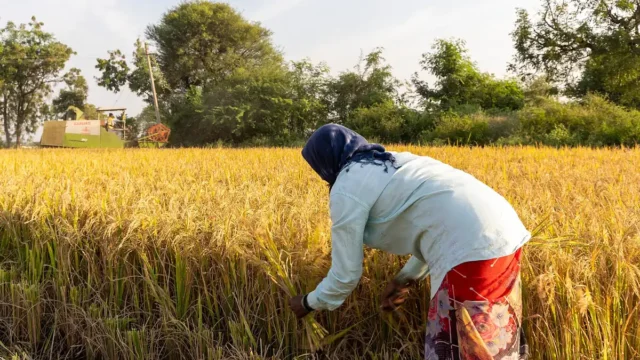
11 crore Farmer IDs created five months early under the Digital Agriculture Mission and Agri Stack
The Centre is building a digital register of farmers, so that each farmer has one verified identity for all schemes. Under the Digital Agriculture Mission, 11 crore Farmer IDs were created by the night of 23 October, five months before the March 2027 deadline. With this ID, farmers need not submit the same papers again and again for loans, crop insurance or relief. For you, this links Agri Stack, the Kisan Credit Card, PMFBY and land-record reform.
UPSC angle: Prelims: Digital Agriculture Mission, Agri Stack, KCC, PMFBY, DILRMP. · Mains GS-III: technology in agriculture; DBT.
25 Oct 2026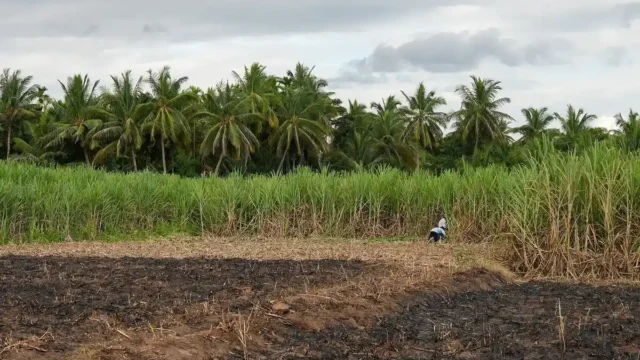
Ramesh Chand committee to examine sugarcane farmers’ and sugar sector issues
On 14 October 2026 the Centre set up a committee under Prof. Ramesh Chand, former NITI Aayog Member, on issues raised by sugarcane farmers. It will examine returns to cane growers, the ex-mill Minimum Selling Price of sugar, how sugar recovery is tested, weighment at mills, and deductions on mechanically harvested cane.
UPSC angle: Prelims: chair, terms of reference, ex-mill MSP of sugar. · Mains GS-III: cane pricing, sugar sector economics, farm incomes.
14 Oct 2026
Cotton Corporation of India showcases procurement reforms: digital slot booking, traceability, Kasturi Cotton
The Textiles Ministry, through the Cotton Corporation of India, held a reform showcase in Hyderabad on 6 October 2026 under Reform Utsav 2026. It covered the Kapas Kisan digital platform for registration, slot booking and Aadhaar-enabled payments, traceability and the Kasturi Cotton Bharat brand, and the High-Density Planting System to lift yields.
UPSC angle: Prelims: CCI, Kasturi. · Mains GS-III: MSP procurement, textiles.
4 Oct 2026
Rabi MSP 2027-28: safflower gets the biggest hike, wheat ₹2,610
On 30 September 2026 the CCEA approved Minimum Support Prices for Rabi crops for marketing season 2027-28. Wheat MSP is ₹2,610 a quintal, up ₹25. Safflower got the largest increase, ₹675, followed by rapeseed and mustard at ₹413. Expected margins over cost range from 50 per cent for safflower to 106 per cent for wheat.
UPSC angle: Prelims: which crops are Rabi mandated crops; cost concept used. · Mains: Is MSP-led diversification towards pulses/oilseeds working?
30 Sep 2026Learn the concept
Question text as printed in the official UPSC Civil Services (Main) question paper. The model answer is original Battle IAS work; use it to learn structure, not to memorise.
Want every PYQ in one place? See the Battle IAS PYQ Book.