
UPSC Mains 2014 GS Paper 1 Q2: model answer
Gandhara sculpture owed as much to the Romans as to the Greeks. Explain.
What the question wants
Show the Greek and Roman elements in Gandhara sculpture and judge whether the Roman debt matches the Greek.
How to structure it
Explain: make the statement clear with reasons and examples. A short view at the end is welcome.
- What Gandhara art is
- Greek (Hellenistic) elements
- Roman elements
- Indian content and verdict
How to think it through
Everyone remembers 'Indo-Greek art' from school, so the examiner is checking whether you know the Romans showed up too. The Kushana period was the age of Roman trade. Think of it like this: Greek grammar, Roman accent, Buddhist story.
Model answer
Gandhara art flourished in the north-west (present Pakistan and Afghanistan) mainly under the Kushanas, producing some of the earliest human images of the Buddha.
Greek (Hellenistic) elements
- A legacy of Bactrian Greek rule: Apollo-like faces, wavy hair, Corinthian capitals, acanthus leaves.
Roman elements
- Kushana contact with the Roman empire through trade: heavy, toga-like drapery with deep folds, realistic portraiture, continuous narrative friezes, and garland-bearing cupids borrowed from Roman sarcophagi.
- Many motifs came through Roman provincial art of the eastern empire, itself built on Greek models.
Indian and Buddhist content
- The themes are Buddhist: Jataka tales, the Buddha's life, bodhisattvas; mudras and the ushnisha are Indian.
- Kushana coins with Roman-style portraits and Roman gold found at Taxila and Begram confirm the contact.
The verdict
Gandhara is a fusion art: Greek in its roots, strongly Roman in style and period, and Indian in spirit. The statement largely holds, because the Kushana-era Roman connection shaped the school as much as the older Greek legacy did.
Keywords, cases and data to drop in
Kushanas, Kanishka, grey schist, stucco, Hellenistic, Roman provincial art, ushnisha.
Where most answers lose marks
- Calling it purely 'Greek art'. The question is built to catch exactly that.
Related Mains PYQs
- How will you explain that medieval Indian temple sculptures represent the social life of those days? UPSC 2022 · GS-I
- Discuss the main contributions of Gupta period and Chola period to Indian heritage and culture. UPSC 2022 · GS-I
- Discuss the significance of the lion and bull figures in Indian mythology, art, and architecture. UPSC 2022 · GS-I
- Evaluate the nature of the Bhakti literature and its contribution to Indian culture. UPSC 2021 · GS-I
Fresh examples from current affairs
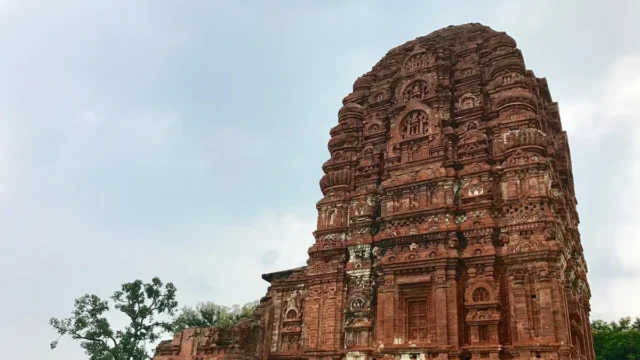
Sirpur in Chhattisgarh enters UNESCO’s Tentative List of World Heritage sites
Sirpur, an archaeological site in Chhattisgarh’s Mahasamund district with Hindu, Buddhist and Jain remains from the 5th to the 12th century CE, has been added to UNESCO’s Tentative List. The ASI now has about a year to prepare a nomination dossier proving its Outstanding Universal Value. Sirpur was once the capital of Dakshina Kosala.
UPSC angle: Prelims: Sirpur location, Lakshmana Temple, dynasties, UNESCO process. · Mains GS-I: heritage conservation and composite culture.
20 Oct 2026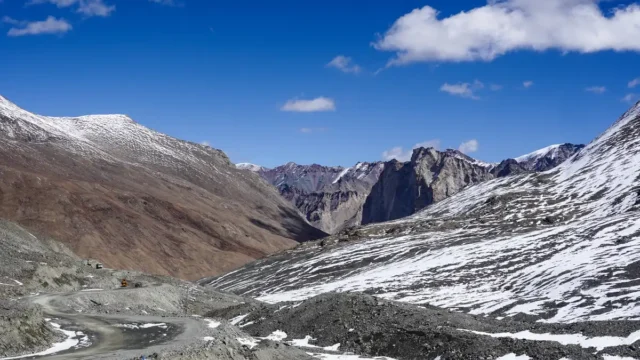
PM inaugurates five Ladakh projects: Nimmu–Padum–Darcha road, Leh terminal, Hanu hydro
On 15 October 2026 the Prime Minister inaugurated, by video conference, five projects worth about ₹3,350 crore in Ladakh: a new passenger terminal at Leh's Kushok Bakula Rimpochee Airport, the 298-km Nimmu–Padum–Darcha road built by BRO, the 9 MW Hanu small hydro project with a 66 kV line, India's first Petroglyph Conservation Park at Sindhu Ghat, and 40 water bodies under Project Him Sarovar.
UPSC angle: Prelims: Shinkun La, Zanskar, Nimmu–Padum–Darcha road, BRO, petroglyphs, Him Sarovar. · Mains GS-III: border infrastructure and security; GS-I: heritage conservation.
15 Oct 2026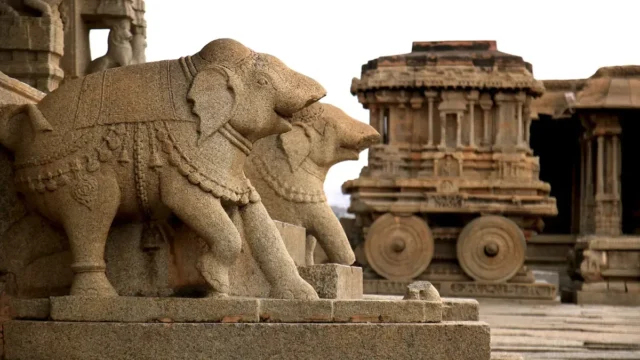
HAL, NCF and ASI sign MoA for Hampi, Taj Mahal and Bekal Fort
On 13 October 2026 HAL, the National Culture Fund and ASI signed an MoA for conservation and visitor works at Hampi, the Taj Mahal and Bekal Fort. HAL has approved about ₹23.60 crore in CSR support over three years; NCF facilitates the projects and ASI supervises them technically.
UPSC angle: Prelims: ASI, NCF, Hampi (UNESCO), Taj Mahal, Bekal Fort. · Mains GS-I: heritage conservation and corporate CSR.
14 Oct 2026
Centres of Excellence approved for five newer classical languages
On 3 October 2026 the Ministry of Education approved five Centres of Excellence for Classical Assamese, Bengali, Marathi, Pali and Prakrit, hosted by Tezpur University, Visva-Bharati, Deccan College Pune, Central University of Odisha and Central University of Gujarat. These five got classical status in October 2024, taking India's total to 11 classical languages.
UPSC angle: Prelims: match language with CoE institution; list of classical languages.
3 Oct 2026Learn the concept
Question text as printed in the official UPSC Civil Services (Main) question paper. The model answer is original Battle IAS work; use it to learn structure, not to memorise.
Want every PYQ in one place? See the Battle IAS PYQ Book.