
UPSC Mains 2014 GS Paper 1 Q4: model answer
The third battle of Panipat was fought in 1761. Why were so many empire-shaking battles fought at Panipat?
What the question wants
Explain why so many decisive battles were fought at Panipat (geographical and strategic reasons), with the 1761 battle as context.
How to structure it
Why: give reasons. This is geography of power, not a battle narrative.
- The three battles in one line
- Geography of the site
- Strategic logic
- Conclusion
How to think it through
Three empire-shaking battles in one small town: 1526, 1556, 1761. Real estate agents would call it 'location, location, location'. And that's your answer: it sat on the only wide corridor from the north-west to Delhi, with a river on one side and desert on the other. Spend most words on why, not on who won.
Model answer
Panipat, about 90 km north of Delhi, saw three decisive battles: 1526 (Babur defeated Ibrahim Lodi), 1556 (Akbar's forces defeated Hemu) and 1761 (Ahmad Shah Abdali defeated the Marathas).
Geographical reasons
- It lies on the narrow Indo-Gangetic divide between the Thar desert and the Himalayan foothills and the Yamuna: the natural gateway from the north-west to the Ganga plain.
- Flat, open terrain suited cavalry, artillery and large armies.
- Water and supplies from the Yamuna region could feed armies.
Strategic reasons
- Invaders from Afghanistan and Central Asia came through the Khyber and Punjab; defenders of Delhi chose to meet them before they reached the capital.
- The Grand Trunk route ran through the area, so whoever won here controlled the road to Delhi and Agra.
- Delhi was the symbolic seat of power, so a victory near it decided the throne.
- The 1761 battle alone may have killed over 70,000, a measure of what was at stake.
Conclusion
Panipat's repeated battles show how geography shaped Indian history: whoever held this corridor held the key to North India.
Draw: Sketch map: Khyber → Punjab → Panipat → Delhi, with Thar and Yamuna marked.
Keywords, cases and data to drop in
1526, 1556, 1761, Indo-Gangetic divide, Grand Trunk route, Abdali, Sadashivrao Bhau.
Where most answers lose marks
- Writing a detailed account of the 1761 battle and never answering 'why Panipat'.
Related Mains PYQs
- Why did the armies of the British East India Company - mostly comprising of Indian soldiers - win consistently against the more… UPSC 2022 · GS-I
- Why was there a sudden spurt in famines in colonial India since the mid-eighteenth century? Give reasons. UPSC 2022 · GS-I
- Bring out the constructive programmes of Mahatma Gandhi during Non-Cooperation Movement and Civil Disobedience Movement. UPSC 2021 · GS-I
- Trace the rise and growth of socio-religious reform movements with special reference to Young Bengal and Brahmo Samaj. UPSC 2021 · GS-I
Fresh examples from current affairs
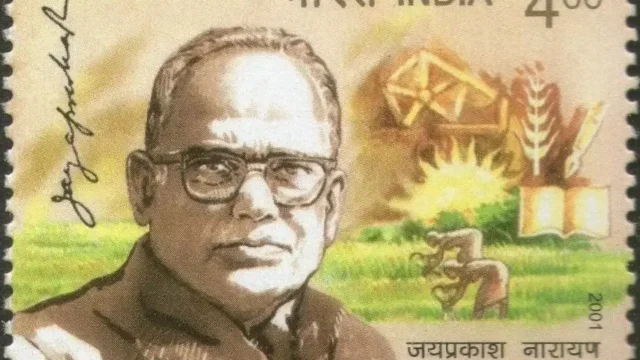
Birth anniversaries: Jayaprakash Narayan and Nanaji Deshmukh
11 October is the birth anniversary of Loknayak Jayaprakash Narayan and Nanaji Deshmukh, both Bharat Ratna awardees. The Prime Minister recalled JP's voice during the Emergency and his concern for good governance, and Nanaji's work in rural development and community participation. Treat this as a personality note for Prelims.
UPSC angle: Prelims: personalities, Bharat Ratna years. · Mains: limited; GS-IV examples of public service.
11 Oct 2026
ASI and Denmark museum to search for 1619 Danish shipwreck Oresund off Karaikal
The Archaeological Survey of India's Underwater Archaeology Wing and the National Museum of Denmark (Njord Centre, Copenhagen) signed an MoU to locate and document the Danish ship Oresund, wrecked off Karaikal, Puducherry, in 1619 CE. It is described as the first Danish ship known to have reached India.
UPSC angle: Prelims: Danish settlements in India.
15 Jun 2026
Veer Bal Diwas and the Rashtriya Bal Puraskar
The PM announced the day on 9 January 2022 and the first Veer Bal Diwas was held on 26 December 2022 [PMO].
UPSC angle: Prelims: Sikh history.
26 Dec 2025
Stamp on Emperor Perumbidugu Mutharaiyar II
Questions on lesser-known regional dynasties are common in Prelims. Stamps and anniversaries often bring them into the news.
UPSC angle: Prelims: early medieval Tamil dynasties.
14 Dec 2025Learn the concept
Question text as printed in the official UPSC Civil Services (Main) question paper. The model answer is original Battle IAS work; use it to learn structure, not to memorise.
Want every PYQ in one place? See the Battle IAS PYQ Book.