
UPSC Mains 2014 GS Paper 1 Q5: model answer
Sufis and medieval mystic saints failed to modify either the religious ideas and practices or the outward structure of Hindu/Muslim societies to any appreciable extent. Comment.
What the question wants
Assess whether Sufis and Bhakti saints changed religious ideas, practices or social structure; give a balanced verdict.
How to structure it
Comment: take a view. The statement is strong ('failed... to any appreciable extent'), so test it from both sides.
- What they tried to change
- Where the statement is right
- Where it overstates
- Verdict
How to think it through
UPSC is baiting you into an emotional 'they changed everything' answer. Resist. The fair reading: they changed hearts and language more than institutions. Caste and orthodoxy survived; devotion in regional languages, shared shrines and the idea of a God open to all did change the culture.
Model answer
From the 12th to the 17th century, Sufi orders (Chishti, Suhrawardi) and saints such as Kabir, Guru Nanak, Ravidas and Mirabai preached devotion over ritual.
What they sought
- Love of a personal God, rejection of ritualism and, among nirguna saints, criticism of caste and religious boundaries.
Where the statement is right
- The caste order and priestly authority survived; the orthodox Brahmanical and ulema establishments stayed intact.
- Several followings turned into sects with rituals of their own.
Where it overstates
- Regional literatures flowered in Hindavi, Punjabi, Marathi and Bengali.
- Shared spaces such as the Ajmer dargah drew people of all faiths, nurturing a composite culture.
- Sikhism emerged as a new faith; Kabir's dohas still shape popular ethics.
- Kabir's verses, collected in the Bijak and the Guru Granth Sahib, are still sung in Malwa's Kabir mandalis.
Final word
The statement is only partly true. Sufis and saints did not overturn social structure, but they transformed religious sensibility and language; their legacy lies in culture and conscience rather than institutions.
Keywords, cases and data to drop in
Chishti silsila, sama, khanqah, nirguna/saguna, composite culture.
Where most answers lose marks
- Listing saints and teachings without ever answering 'did they fail?'
Related Mains PYQs
- How will you explain that medieval Indian temple sculptures represent the social life of those days? UPSC 2022 · GS-I
- Discuss the main contributions of Gupta period and Chola period to Indian heritage and culture. UPSC 2022 · GS-I
- Discuss the significance of the lion and bull figures in Indian mythology, art, and architecture. UPSC 2022 · GS-I
- Evaluate the nature of the Bhakti literature and its contribution to Indian culture. UPSC 2021 · GS-I
Fresh examples from current affairs
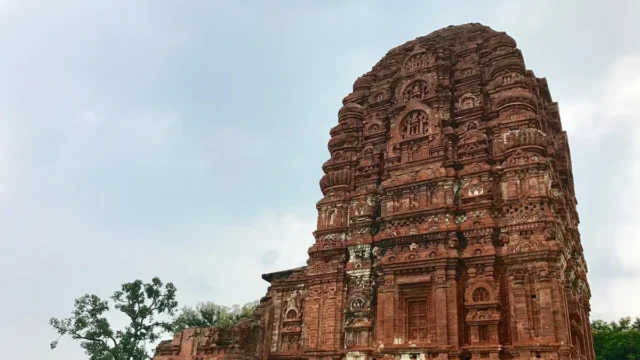
Sirpur in Chhattisgarh enters UNESCO’s Tentative List of World Heritage sites
Sirpur, an archaeological site in Chhattisgarh’s Mahasamund district with Hindu, Buddhist and Jain remains from the 5th to the 12th century CE, has been added to UNESCO’s Tentative List. The ASI now has about a year to prepare a nomination dossier proving its Outstanding Universal Value. Sirpur was once the capital of Dakshina Kosala.
UPSC angle: Prelims: Sirpur location, Lakshmana Temple, dynasties, UNESCO process. · Mains GS-I: heritage conservation and composite culture.
20 Oct 2026
PM inaugurates five Ladakh projects: Nimmu–Padum–Darcha road, Leh terminal, Hanu hydro
On 15 October 2026 the Prime Minister inaugurated, by video conference, five projects worth about ₹3,350 crore in Ladakh: a new passenger terminal at Leh's Kushok Bakula Rimpochee Airport, the 298-km Nimmu–Padum–Darcha road built by BRO, the 9 MW Hanu small hydro project with a 66 kV line, India's first Petroglyph Conservation Park at Sindhu Ghat, and 40 water bodies under Project Him Sarovar.
UPSC angle: Prelims: Shinkun La, Zanskar, Nimmu–Padum–Darcha road, BRO, petroglyphs, Him Sarovar. · Mains GS-III: border infrastructure and security; GS-I: heritage conservation.
15 Oct 2026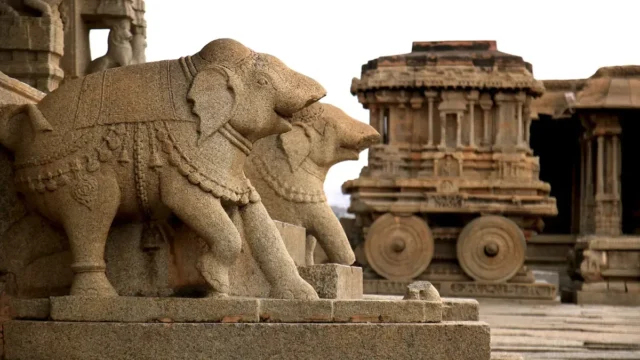
HAL, NCF and ASI sign MoA for Hampi, Taj Mahal and Bekal Fort
On 13 October 2026 HAL, the National Culture Fund and ASI signed an MoA for conservation and visitor works at Hampi, the Taj Mahal and Bekal Fort. HAL has approved about ₹23.60 crore in CSR support over three years; NCF facilitates the projects and ASI supervises them technically.
UPSC angle: Prelims: ASI, NCF, Hampi (UNESCO), Taj Mahal, Bekal Fort. · Mains GS-I: heritage conservation and corporate CSR.
14 Oct 2026
Centres of Excellence approved for five newer classical languages
On 3 October 2026 the Ministry of Education approved five Centres of Excellence for Classical Assamese, Bengali, Marathi, Pali and Prakrit, hosted by Tezpur University, Visva-Bharati, Deccan College Pune, Central University of Odisha and Central University of Gujarat. These five got classical status in October 2024, taking India's total to 11 classical languages.
UPSC angle: Prelims: match language with CoE institution; list of classical languages.
3 Oct 2026Learn the concept
Question text as printed in the official UPSC Civil Services (Main) question paper. The model answer is original Battle IAS work; use it to learn structure, not to memorise.
Want every PYQ in one place? See the Battle IAS PYQ Book.