
UPSC Mains 2014 GS Paper 1 Q6: model answer
Examine critically the various facets of economic policies of the British in India from mid-eighteenth century till independence.
What the question wants
Critically examine the different facets of British economic policy over almost two centuries.
How to structure it
Examine critically: break into facets (phases and sectors), then judge their effects.
- Phases of colonialism
- Land revenue and agriculture
- Trade, industry and drain
- Infrastructure, finance and verdict
How to think it through
Two centuries in 150 words? Impossible, unless you use phases. Use the classic three: mercantile (Company trade and plunder), free trade (industrial capitalism), finance capital (railways, loans). Then hit the facets. A critical exam means noting railways and irrigation too, while showing whose interest they served.
Model answer
In 1750 India produced roughly a quarter of the world's manufactures; by 1900, by Paul Bairoch's estimates, the share had fallen to about 2 per cent. British policy, in three stages, explains much of that fall.
Phases
- Mercantile phase (1757–1813): Company monopoly, plunder after Plassey, use of Indian revenue to buy exports.
- Free trade phase (1813–1858 onwards): India as a market for British manufactures and a source of raw materials.
- Finance capital phase (later 19th century): investment in railways and plantations with guaranteed returns.
Land revenue and agriculture
- Permanent Settlement (1793), Ryotwari and Mahalwari: high revenue demand, rise of moneylenders, commercialisation of crops, famines.
Trade and industry
- One-way free trade ruined handicrafts (de-industrialisation); limited modern industry; tariffs against Indian goods.
- The drain of wealth (Dadabhai Naoroji): home charges, salaries and profits remitted to Britain.
Infrastructure and finance
- Railways, ports and irrigation served export trade and administration; guaranteed returns to British investors.
The verdict
British policy created some modern infrastructure but subordinated India's economy to Britain's needs, leading to de-industrialisation, agrarian distress and recurrent famine.
Draw: Three-step timeline: mercantile → free trade → finance capital.
Keywords, cases and data to drop in
Plassey 1757, Charter Act 1813, Permanent Settlement 1793, drain theory, home charges, guarantee system.
Where most answers lose marks
- Writing only the drain theory. 'Various facets' wants land, trade, industry, infrastructure.
Related Mains PYQs
- Why did the armies of the British East India Company - mostly comprising of Indian soldiers - win consistently against the more… UPSC 2022 · GS-I
- Why was there a sudden spurt in famines in colonial India since the mid-eighteenth century? Give reasons. UPSC 2022 · GS-I
- Bring out the constructive programmes of Mahatma Gandhi during Non-Cooperation Movement and Civil Disobedience Movement. UPSC 2021 · GS-I
- Trace the rise and growth of socio-religious reform movements with special reference to Young Bengal and Brahmo Samaj. UPSC 2021 · GS-I
Fresh examples from current affairs
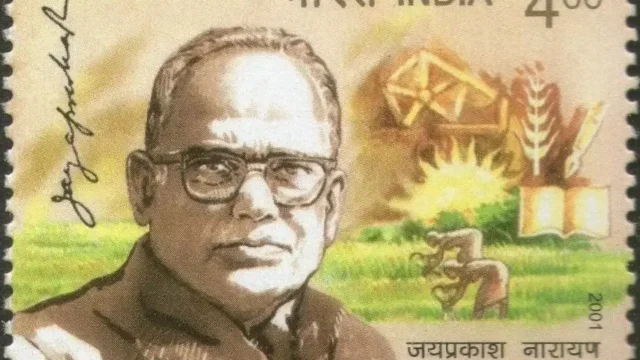
Birth anniversaries: Jayaprakash Narayan and Nanaji Deshmukh
11 October is the birth anniversary of Loknayak Jayaprakash Narayan and Nanaji Deshmukh, both Bharat Ratna awardees. The Prime Minister recalled JP's voice during the Emergency and his concern for good governance, and Nanaji's work in rural development and community participation. Treat this as a personality note for Prelims.
UPSC angle: Prelims: personalities, Bharat Ratna years. · Mains: limited; GS-IV examples of public service.
11 Oct 2026
ASI and Denmark museum to search for 1619 Danish shipwreck Oresund off Karaikal
The Archaeological Survey of India's Underwater Archaeology Wing and the National Museum of Denmark (Njord Centre, Copenhagen) signed an MoU to locate and document the Danish ship Oresund, wrecked off Karaikal, Puducherry, in 1619 CE. It is described as the first Danish ship known to have reached India.
UPSC angle: Prelims: Danish settlements in India.
15 Jun 2026
Veer Bal Diwas and the Rashtriya Bal Puraskar
The PM announced the day on 9 January 2022 and the first Veer Bal Diwas was held on 26 December 2022 [PMO].
UPSC angle: Prelims: Sikh history.
26 Dec 2025
Stamp on Emperor Perumbidugu Mutharaiyar II
Questions on lesser-known regional dynasties are common in Prelims. Stamps and anniversaries often bring them into the news.
UPSC angle: Prelims: early medieval Tamil dynasties.
14 Dec 2025Learn the concept
Question text as printed in the official UPSC Civil Services (Main) question paper. The model answer is original Battle IAS work; use it to learn structure, not to memorise.
Want every PYQ in one place? See the Battle IAS PYQ Book.