
UPSC Mains 2014 GS Paper 1 Q7: model answer
In what ways did the naval mutiny prove to be the last nail in the coffin of British colonial aspirations in India?
What the question wants
Explain how the RIN mutiny of 1946 hastened the end of British rule.
How to structure it
In what ways: list and explain the ways it mattered.
- The event
- Why it shocked the British
- Wider context
- Conclusion
How to think it through
February 1946: ratings in Bombay hoist the flags of the Congress, the League and the Communists together on their ships. When your own navy stops saluting, an empire knows its days are numbered. The point: Britain could no longer rely on Indian armed forces, the very backbone of the Raj.
Model answer
In February 1946, ratings of the Royal Indian Navy mutinied in Bombay, starting on HMIS Talwar. The strike spread to Karachi, Calcutta and other bases, involving thousands of ratings and dozens of ships.
Why it was the last nail
- It showed that the armed forces, the backbone of British rule, could no longer be relied upon. It followed unrest over the INA trials.
- The mutineers raised the flags of the Congress, Muslim League and Communist Party together, showing unity.
- Workers in Bombay went on strike in support, and the city saw street protests.
- Britain realised it could not hold India by force.
Wider context
- Britain was weakened by the Second World War; the Labour government favoured a settlement.
- The Cabinet Mission arrived in March 1946.
Limits
- The Congress and the League leadership did not support the mutiny, and it ended after Patel and Jinnah's intervention.
Bottom line
The naval mutiny did not by itself cause independence, but it confirmed the British fear that the Indian armed forces were no longer loyal. That made a quick transfer of power inevitable.
Keywords, cases and data to drop in
HMIS Talwar, February 1946, RIN ratings, INA trials, Cabinet Mission, Patel and Jinnah.
Where most answers lose marks
- Narrating the mutiny without linking it to the British decision to leave.
Related Mains PYQs
- Why did the armies of the British East India Company - mostly comprising of Indian soldiers - win consistently against the more… UPSC 2022 · GS-I
- Why was there a sudden spurt in famines in colonial India since the mid-eighteenth century? Give reasons. UPSC 2022 · GS-I
- Bring out the constructive programmes of Mahatma Gandhi during Non-Cooperation Movement and Civil Disobedience Movement. UPSC 2021 · GS-I
- Trace the rise and growth of socio-religious reform movements with special reference to Young Bengal and Brahmo Samaj. UPSC 2021 · GS-I
Fresh examples from current affairs
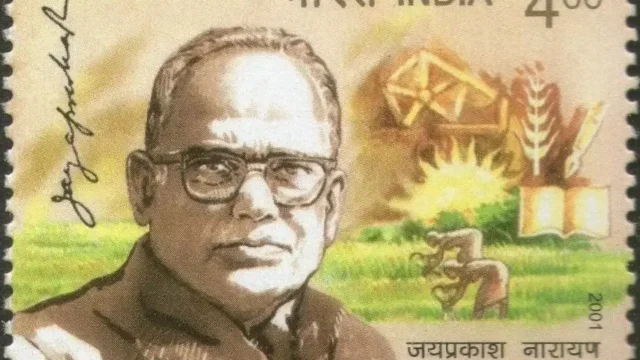
Birth anniversaries: Jayaprakash Narayan and Nanaji Deshmukh
11 October is the birth anniversary of Loknayak Jayaprakash Narayan and Nanaji Deshmukh, both Bharat Ratna awardees. The Prime Minister recalled JP's voice during the Emergency and his concern for good governance, and Nanaji's work in rural development and community participation. Treat this as a personality note for Prelims.
UPSC angle: Prelims: personalities, Bharat Ratna years. · Mains: limited; GS-IV examples of public service.
11 Oct 2026
ASI and Denmark museum to search for 1619 Danish shipwreck Oresund off Karaikal
The Archaeological Survey of India's Underwater Archaeology Wing and the National Museum of Denmark (Njord Centre, Copenhagen) signed an MoU to locate and document the Danish ship Oresund, wrecked off Karaikal, Puducherry, in 1619 CE. It is described as the first Danish ship known to have reached India.
UPSC angle: Prelims: Danish settlements in India.
15 Jun 2026
Veer Bal Diwas and the Rashtriya Bal Puraskar
The PM announced the day on 9 January 2022 and the first Veer Bal Diwas was held on 26 December 2022 [PMO].
UPSC angle: Prelims: Sikh history.
26 Dec 2025
Stamp on Emperor Perumbidugu Mutharaiyar II
Questions on lesser-known regional dynasties are common in Prelims. Stamps and anniversaries often bring them into the news.
UPSC angle: Prelims: early medieval Tamil dynasties.
14 Dec 2025Learn the concept
Question text as printed in the official UPSC Civil Services (Main) question paper. The model answer is original Battle IAS work; use it to learn structure, not to memorise.
Want every PYQ in one place? See the Battle IAS PYQ Book.