
UPSC Mains 2014 GS Paper 3 Q10: model answer
Scientific research in Indian universities is declining, because a career in science is not as attractive as are business professions, engineering or administration, and the universities are becoming consumer-oriented. Critically comment.
What the question wants
Critically comment on the view that university science research is declining because science careers are less attractive and universities have turned consumer-oriented.
How to structure it
Agree in part, add causes, fix.
- Evidence of decline
- The career argument
- The consumer-university argument
- Other causes
- Counter-evidence
- Way forward
How to think it through
R&D ~0.65% GDP; universities produce small share of research; most in IITs/IISc/CSIR. Careers: pay, slow promotion, contract posts, brain drain. Consumerism: fee-driven private colleges, rote coaching, teaching overloads. Other: fragmented funding, separation of research from teaching (research labs vs universities), poor labs, little industry link, bureaucratic grants. Counter: India 3rd in publications, rising patents, ISRO/DRDO. Reforms: ANRF Act 2023, PM Research Fellowship, NEP 2020 multidisciplinary research universities, INSPIRE.
Model answer
India now ranks third in the world in the number of scientific papers, yet most of them come from a few institutions such as the IITs, IISc and CSIR labs, not from the hundreds of state universities where most students study. The decline the statement describes is real, but it is uneven.
Is science less attractive as a career?
- Pay and promotion in academic science lag behind engineering, business and the civil services.
- Many young scientists work on contract posts with uncertain futures.
- Brain drain: top students leave for PhDs abroad and often stay.
Are universities consumer-oriented?
- Many private colleges sell degrees for jobs, with little research.
- Teaching loads leave faculty no time for research.
- Coaching culture rewards marks, not curiosity.
Other causes the statement misses
- Low spending: R&D is about 0.65% of GDP, and universities get a small share.
- Separation of research labs from universities since the 1950s.
- Bureaucratic grants, delayed fellowships and old equipment.
- Weak industry links.
- Publish-or-perish metrics that reward numbers over quality, and predatory journals.
The other side
- Patent filings by Indians are rising sharply.
- ISRO, DRDO and pharma show strong applied science.
Way forward
- The Anusandhan National Research Foundation (ANRF) Act, 2023 to fund university research.
- PM Research Fellowship and INSPIRE.
- NEP 2020 research universities and tenure-track posts.
India does not lack scientific talent; it lacks the money, time and freedom to let that talent work.
Draw: A pyramid: few elite research institutions at the top, many teaching-only universities below.
Keywords, cases and data to drop in
R&D 0.65% of GDP, third in publications, contract faculty, brain drain, consumer-oriented education, ANRF Act 2023, PMRF, INSPIRE, NEP 2020, research universities.
Where most answers lose marks
- Simply agreeing. 'Critically comment' needs counter-evidence and other causes.
Related Mains PYQs
- What is the basic principle behind vaccine development? How do vaccines work? What approaches were adopted by the Indian vaccine manufacturers to… UPSC 2022 · GS-III
- The increase in life expectancy in the country has led to newer health challenges in the community. What are those challenges and… UPSC 2022 · GS-III
- Each year a large amount of plant material, cellulose, is deposited on the surface of Planet Earth. What are the natural processes… UPSC 2022 · GS-III
- Launched on 25th December, 2021, James Webb Space Telescope has been much in the news since then. What are its unique features… UPSC 2022 · GS-III
Fresh examples from current affairs

DRDO’s indigenous AIP for Kalvari-class submarines reaches the Setting to Work Phase-2 stage
Diesel-electric submarines must come up often to run their engines and charge batteries, which can give away their position. Air Independent Propulsion (AIP) lets them stay underwater much longer. The DRDO’s Naval Materials Research Laboratory has built India’s own AIP, and its energy module began the Setting to Work Phase-2 activity at Larsen and Toubro’s Hazira yard on 24 October. For you, it links fuel cells, the Kalvari class and defence self-reliance.
UPSC angle: Prelims: AIP, fuel cells, Kalvari class, Project-75. · Mains GS-III: defence indigenisation; maritime security.
25 Oct 2026
Panel to review pharma marketing code: UCPMP 2024 and why a voluntary code is not enough
The Department of Pharmaceuticals has set up a committee under Dr. M. Srinivas, Member, NITI Aayog, to review how drug companies market medicines and to suggest ways to curb unethical practices, PIB said on 23 October 2026. Former Union Health Secretary Preeti Sudan and Dr. Naresh Trehan of Medanta are members, and the report is due within two months of its first meeting. The core issue: the Uniform Code for Pharmaceutical Marketing Practices is still voluntary.
UPSC angle: Prelims: UCPMP, Department of Pharmaceuticals, NITI Aayog. · Mains GS-II: health governance, regulation and ethics.
24 Oct 2026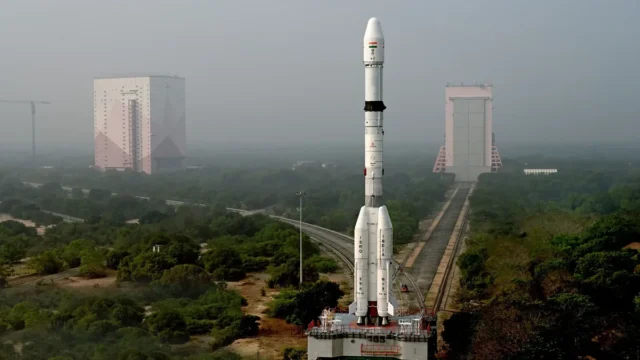
NVS-03 launch on 30 October: can ISRO’s new satellite bring NavIC back to life?
ISRO will launch NVS-03, its third new-generation navigation satellite, on 30 October 2026, The Indian Express reported on 24 October. NavIC, India’s own GPS-like system, has not been able to give location data because only three satellites work, while positioning needs at least four. If NVS-03 works, NavIC can offer positioning again. It is a lesson in why strategic technology needs both satellites and users.
UPSC angle: Prelims: NavIC/IRNSS, coverage, signals, global GNSS. · Mains GS-III: indigenisation of technology, space programme.
24 Oct 2026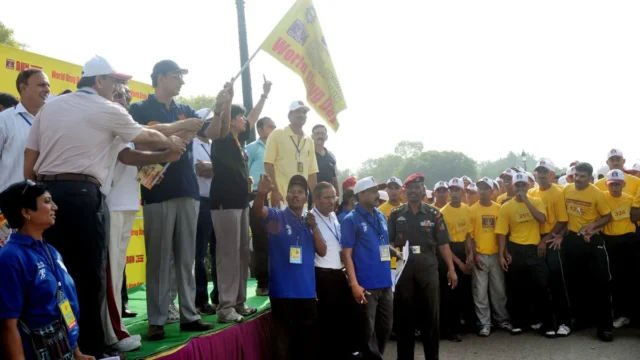
Nasha Mukt Bharat Abhiyaan reaches 35 crore people: demand reduction and the 2029 drug-free goal
The Ministry of Social Justice and Empowerment said on 22 October 2026 that the Nasha Mukt Bharat Abhiyaan has reached over 35 crore people, including 13.94 crore youth and 10.86 crore women, and more than 32 lakh educational institutions. Launched on 15 August 2020 in 272 vulnerable districts, it now runs across the country. It is the demand side of a twin strategy, while police and the NCB attack supply, with the Home Minister’s target of uprooting the drug trade by 31 December 2029.
UPSC angle: Prelims: NMBA, NAPDDR, Article 47, NDPS Act, helpline 14446. · Mains GS-II/III: drug abuse, demand and supply reduction.
23 Oct 2026Learn the concept
Question text as printed in the official UPSC Civil Services (Main) question paper. The model answer is original Battle IAS work; use it to learn structure, not to memorise.
Want every PYQ in one place? See the Battle IAS PYQ Book.