
UPSC Mains 2016 GS Paper 1 Q1: model answer
Early Buddhist Stupa-art, while depicting folk motifs and narratives successfully expounds Buddhist ideals. Elucidate.
What the question wants
Show how early stupa art used folk motifs and stories to explain Buddhist ideals.
How to structure it
Elucidate: explain and clarify with examples. Bharhut, Sanchi and Amaravati are your evidence.
- What early stupa art is
- Folk motifs
- Narratives (Jatakas)
- How they expound Buddhist ideals
How to think it through
Early Buddhist artists had a design problem: show the Buddha without showing him. Their answer was brilliant: symbols (footprints, empty throne, Bodhi tree) and the folk world people already loved: yakshas, yakshis, animals, trees. A villager who could not read the sutras could read a Sanchi gateway. That is the whole answer: popular art as a teaching tool.
Model answer
Early stupas at Bharhut, Sanchi and Amaravati (2nd century BCE to 2nd century CE) carry rich sculpture on their railings (vedika) and gateways (torana).
Folk motifs
- Yakshas and yakshis, old fertility deities, such as the shalabhanjika bracket figures on Sanchi's gateways.
- Nature: lotus, trees, animals, village scenes.
Narratives
- Jataka tales of the Buddha's previous births, such as the Vessantara and Chhaddanta Jatakas, often in continuous narration.
- Events from the Buddha's life.
How they expound Buddhist ideals
- Aniconism: the Buddha shown through symbols (Bodhi tree, wheel, footprints, empty seat), expressing his transcendence.
- Jatakas teach compassion, generosity and self-sacrifice.
- Folk deities appear as devotees, drawing popular belief into the dhamma.
- Donor inscriptions of merchants, monks and women show a broad social base.
The art as an inclusive message
- At Bharhut, inscriptions label yakshis and Jatakas by name, which helped lay viewers, many of them unable to read, follow the stories.
- The Sanchi torana shows the siege of Kushinagara and the war of the relics, linking politics with devotion.
- Mathura and Amaravati later moved towards Buddha images, but the narrative tradition continued, and Amaravati's medallions carried it to new levels of crowded, lively composition.
Bottom line
Early stupa art turned familiar folk imagery into a visual sermon, making Buddhist ethics accessible to ordinary people.
Draw: Labelled stupa: anda, harmika, chhatra, vedika, torana.
Keywords, cases and data to drop in
Torana, vedika, Bharhut, Sanchi, aniconism, Jataka, shalabhanjika, donor inscriptions.
Where most answers lose marks
- Describing Gandhara Buddha images: that is the later, iconic phase.
Related Mains PYQs
- How will you explain that medieval Indian temple sculptures represent the social life of those days? UPSC 2022 · GS-I
- Discuss the main contributions of Gupta period and Chola period to Indian heritage and culture. UPSC 2022 · GS-I
- Discuss the significance of the lion and bull figures in Indian mythology, art, and architecture. UPSC 2022 · GS-I
- Evaluate the nature of the Bhakti literature and its contribution to Indian culture. UPSC 2021 · GS-I
Fresh examples from current affairs
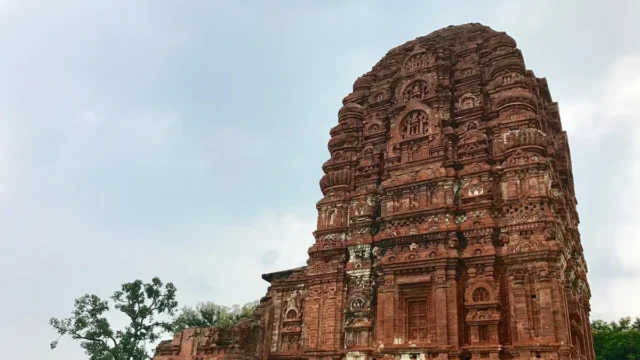
Sirpur in Chhattisgarh enters UNESCO’s Tentative List of World Heritage sites
Sirpur, an archaeological site in Chhattisgarh’s Mahasamund district with Hindu, Buddhist and Jain remains from the 5th to the 12th century CE, has been added to UNESCO’s Tentative List. The ASI now has about a year to prepare a nomination dossier proving its Outstanding Universal Value. Sirpur was once the capital of Dakshina Kosala.
UPSC angle: Prelims: Sirpur location, Lakshmana Temple, dynasties, UNESCO process. · Mains GS-I: heritage conservation and composite culture.
20 Oct 2026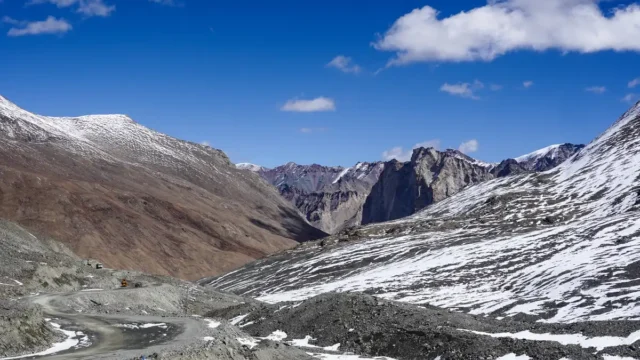
PM inaugurates five Ladakh projects: Nimmu–Padum–Darcha road, Leh terminal, Hanu hydro
On 15 October 2026 the Prime Minister inaugurated, by video conference, five projects worth about ₹3,350 crore in Ladakh: a new passenger terminal at Leh's Kushok Bakula Rimpochee Airport, the 298-km Nimmu–Padum–Darcha road built by BRO, the 9 MW Hanu small hydro project with a 66 kV line, India's first Petroglyph Conservation Park at Sindhu Ghat, and 40 water bodies under Project Him Sarovar.
UPSC angle: Prelims: Shinkun La, Zanskar, Nimmu–Padum–Darcha road, BRO, petroglyphs, Him Sarovar. · Mains GS-III: border infrastructure and security; GS-I: heritage conservation.
15 Oct 2026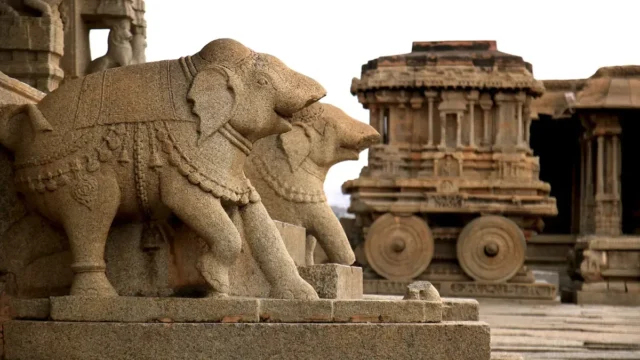
HAL, NCF and ASI sign MoA for Hampi, Taj Mahal and Bekal Fort
On 13 October 2026 HAL, the National Culture Fund and ASI signed an MoA for conservation and visitor works at Hampi, the Taj Mahal and Bekal Fort. HAL has approved about ₹23.60 crore in CSR support over three years; NCF facilitates the projects and ASI supervises them technically.
UPSC angle: Prelims: ASI, NCF, Hampi (UNESCO), Taj Mahal, Bekal Fort. · Mains GS-I: heritage conservation and corporate CSR.
14 Oct 2026
Centres of Excellence approved for five newer classical languages
On 3 October 2026 the Ministry of Education approved five Centres of Excellence for Classical Assamese, Bengali, Marathi, Pali and Prakrit, hosted by Tezpur University, Visva-Bharati, Deccan College Pune, Central University of Odisha and Central University of Gujarat. These five got classical status in October 2024, taking India's total to 11 classical languages.
UPSC angle: Prelims: match language with CoE institution; list of classical languages.
3 Oct 2026Learn the concept
Question text as printed in the official UPSC Civil Services (Main) question paper. The model answer is original Battle IAS work; use it to learn structure, not to memorise.
Want every PYQ in one place? See the Battle IAS PYQ Book.