
UPSC Mains 2016 GS Paper 1 Q3: model answer
Explain how the uprising of 1857 constitutes an important watershed in the evolution of British policies towards colonial India.
What the question wants
Explain how the revolt of 1857 changed British policy towards India.
How to structure it
Explain: compare policy before and after 1857, area by area.
- Before 1857
- Changes in governance
- Changes in army, princes and society
- Long-term effect
How to think it through
A watershed means the water flows differently on each side. So organise it as before and after. Before: annexation, reform, Company rule. After: the Crown, no annexations, a rebuilt army, alliance with princes and landlords, caution on social reform, and divide and rule. Keep every point in a 'from → to' form.
Model answer
In November 1858, Queen Victoria's Proclamation was read out at Allahabad: the Company was gone, and the Crown promised no more annexations. The revolt of 1857 had forced Britain to rethink how it ruled India.
Governance
- The Government of India Act, 1858 ended Company rule; the Crown ruled through a Secretary of State and a Viceroy.
- The Queen's Proclamation (1858) promised no further annexations and religious non-interference.
Princes and landed classes
- From annexation (Doctrine of Lapse) to alliance: princes were made pillars of the Raj, and taluqdars of Awadh had estates restored.
Army
- The ratio of European to Indian troops rose; artillery stayed in British hands.
- Recruitment shifted to so-called 'martial races' (Punjab, Nepal), with units mixed by caste and region.
Social and political policy
- Caution in social reform, an alliance with conservative elements, and growing divide and rule.
- Indian Councils Act, 1861: limited association of Indians with legislation.
Long-term effect
- A more racial and distant Raj, but also the rise of new educated Indians who would build the national movement.
Economic policy
- Railways, irrigation and plantations expanded, binding India more firmly to the British economy.
- The Indian Civil Service stayed closed in practice to most Indians despite the Proclamation's promise.
Final word
1857 turned British policy from expansion and reform towards consolidation, caution and division, making it a true watershed in colonial rule.
Draw: Two-column 'Before 1857 → After 1857' table.
Keywords, cases and data to drop in
GoI Act 1858, Queen's Proclamation, Peel Commission, martial races, Indian Councils Act 1861.
Where most answers lose marks
- Describing the revolt's causes and events. The question is about after.
Related Mains PYQs
- Why did the armies of the British East India Company - mostly comprising of Indian soldiers - win consistently against the more… UPSC 2022 · GS-I
- Why was there a sudden spurt in famines in colonial India since the mid-eighteenth century? Give reasons. UPSC 2022 · GS-I
- Bring out the constructive programmes of Mahatma Gandhi during Non-Cooperation Movement and Civil Disobedience Movement. UPSC 2021 · GS-I
- Trace the rise and growth of socio-religious reform movements with special reference to Young Bengal and Brahmo Samaj. UPSC 2021 · GS-I
Fresh examples from current affairs
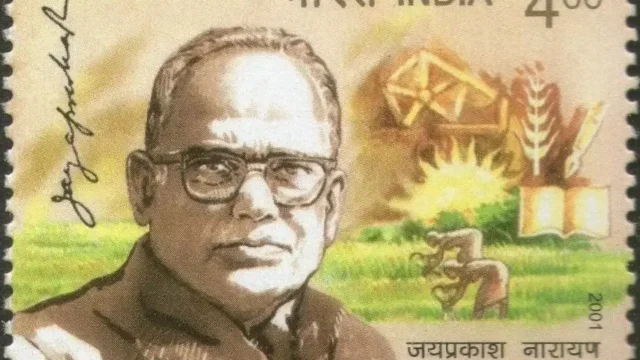
Birth anniversaries: Jayaprakash Narayan and Nanaji Deshmukh
11 October is the birth anniversary of Loknayak Jayaprakash Narayan and Nanaji Deshmukh, both Bharat Ratna awardees. The Prime Minister recalled JP's voice during the Emergency and his concern for good governance, and Nanaji's work in rural development and community participation. Treat this as a personality note for Prelims.
UPSC angle: Prelims: personalities, Bharat Ratna years. · Mains: limited; GS-IV examples of public service.
11 Oct 2026
ASI and Denmark museum to search for 1619 Danish shipwreck Oresund off Karaikal
The Archaeological Survey of India's Underwater Archaeology Wing and the National Museum of Denmark (Njord Centre, Copenhagen) signed an MoU to locate and document the Danish ship Oresund, wrecked off Karaikal, Puducherry, in 1619 CE. It is described as the first Danish ship known to have reached India.
UPSC angle: Prelims: Danish settlements in India.
15 Jun 2026
Veer Bal Diwas and the Rashtriya Bal Puraskar
The PM announced the day on 9 January 2022 and the first Veer Bal Diwas was held on 26 December 2022 [PMO].
UPSC angle: Prelims: Sikh history.
26 Dec 2025
Stamp on Emperor Perumbidugu Mutharaiyar II
Questions on lesser-known regional dynasties are common in Prelims. Stamps and anniversaries often bring them into the news.
UPSC angle: Prelims: early medieval Tamil dynasties.
14 Dec 2025Learn the concept
Question text as printed in the official UPSC Civil Services (Main) question paper. The model answer is original Battle IAS work; use it to learn structure, not to memorise.
Want every PYQ in one place? See the Battle IAS PYQ Book.