
UPSC Mains 2016 GS Paper 2 Q9: model answer
Professor Amartya Sen has advocated important reforms in the realms of primary education and primary health care. What are your suggestions to improve their status and performance?
What the question wants
Suggest how India can improve primary education and primary health care, in the light of Amartya Sen's proposed reforms.
How to structure it
Your suggestions: begin with Sen's diagnosis, then concrete proposals for each sector.
- Sen's argument
- Primary education
- Primary health
- Common enablers
How to think it through
Sen and Drèze, in 'An Uncertain Glory' (2013), argued that India tried to grow rich before becoming healthy and educated, unlike East Asia and Kerala. Use that, then give specific, current suggestions, not generalities.
Model answer
In An Uncertain Glory (2013), Jean Drèze and Amartya Sen pointed out that Bangladesh, with half India's income per head, had better child immunisation and female literacy. Their message: growth does not automatically buy health and learning; public action does.
Sen's core argument
- Public investment in basic education and health came first in Japan, South Korea and Kerala; growth followed.
- Primary schools and health centres need accountability to communities, not just buildings.
Suggestions for primary education
- Foundational learning first: the NIPUN Bharat mission's target of reading and numeracy by Grade 3; ASER surveys show many Class 5 children cannot read a Class 2 text.
- Teaching at the right level, as Pratham's model shows.
- Teacher accountability and support: fill vacancies, cut non-teaching duties, train continuously.
- Mother-tongue instruction in early years (NEP 2020).
- School management committees with parents' real power.
Suggestions for primary health
- Raise public spending towards 2.5% of GDP, with most of it for primary care.
- Ayushman Arogya Mandirs with doctors, medicines and diagnostics, not only signboards.
- Community health workers with fair pay: ASHAs remain 'volunteers' on incentives.
- Preventive care: nutrition, sanitation, immunisation.
- Free essential medicines (Tamil Nadu model).
Common enablers
Decentralised funds to panchayats, public data on outcomes, and women's participation in school and health committees.
Sen's lesson is that capability comes before prosperity; India's growth will last only if its children learn and stay healthy.
Draw: A staircase: health and education (base), productivity, growth; Kerala and East Asia on the steps.
Keywords, cases and data to drop in
Drèze and Sen 'An Uncertain Glory' 2013, capability approach, Kerala model, NIPUN Bharat, ASER, TaRL, NEP 2020, NHP 2017, Ayushman Arogya Mandirs, ASHA.
Where most answers lose marks
- Writing general suggestions without linking them to Sen.
Related Mains PYQs
- The Right of Children to Free and Compulsory Education Act, 2009 remains inadequate in promoting an incentive-based system for children’s education without… UPSC 2022 · GS-II
- “Besides being a moral imperative of a Welfare State, primary health structure is a necessary precondition for sustainable development.” Analyze. UPSC 2021 · GS-II
- In order to enhance the prospects of social development, sound and adequate health care policies are needed, particularly in the fields of… UPSC 2020 · GS-II
- National Education Policy 2020 is in conformity with the Sustainable Development Goal-4 (2030). It intends to restructure and reorient education system in… UPSC 2020 · GS-II
Fresh examples from current affairs

Panel to review pharma marketing code: UCPMP 2024 and why a voluntary code is not enough
The Department of Pharmaceuticals has set up a committee under Dr. M. Srinivas, Member, NITI Aayog, to review how drug companies market medicines and to suggest ways to curb unethical practices, PIB said on 23 October 2026. Former Union Health Secretary Preeti Sudan and Dr. Naresh Trehan of Medanta are members, and the report is due within two months of its first meeting. The core issue: the Uniform Code for Pharmaceutical Marketing Practices is still voluntary.
UPSC angle: Prelims: UCPMP, Department of Pharmaceuticals, NITI Aayog. · Mains GS-II: health governance, regulation and ethics.
24 Oct 2026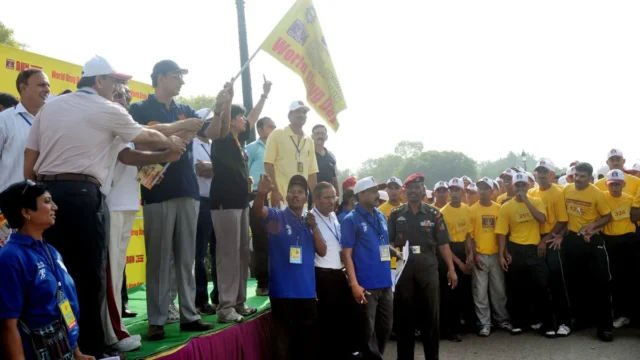
Nasha Mukt Bharat Abhiyaan reaches 35 crore people: demand reduction and the 2029 drug-free goal
The Ministry of Social Justice and Empowerment said on 22 October 2026 that the Nasha Mukt Bharat Abhiyaan has reached over 35 crore people, including 13.94 crore youth and 10.86 crore women, and more than 32 lakh educational institutions. Launched on 15 August 2020 in 272 vulnerable districts, it now runs across the country. It is the demand side of a twin strategy, while police and the NCB attack supply, with the Home Minister’s target of uprooting the drug trade by 31 December 2029.
UPSC angle: Prelims: NMBA, NAPDDR, Article 47, NDPS Act, helpline 14446. · Mains GS-II/III: drug abuse, demand and supply reduction.
23 Oct 2026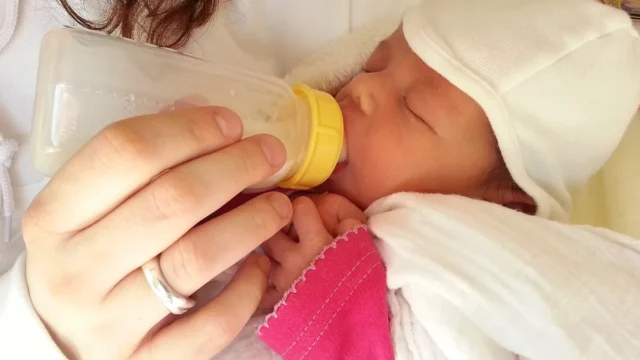
FSSAI notices to Nestlé and Zydus over baby-food and Complan claims: what the rules say
The Food Safety and Standards Authority of India (FSSAI) has issued show-cause notices to Nestlé India over two infant products and to Zydus Wellness over Complan, asking for scientific proof of claims such as ‘easy to digest’, ‘supports normal immune system’ and ‘2X Faster Growth’. The move comes as FSSAI also proposes ending the allowance for added sucrose and fructose in foods for infants up to six months.
UPSC angle: Prelims: FSSAI, IMS Act 1992, Codex, HMOs. · Mains GS-II: regulation of food advertising; child nutrition.
22 Oct 2026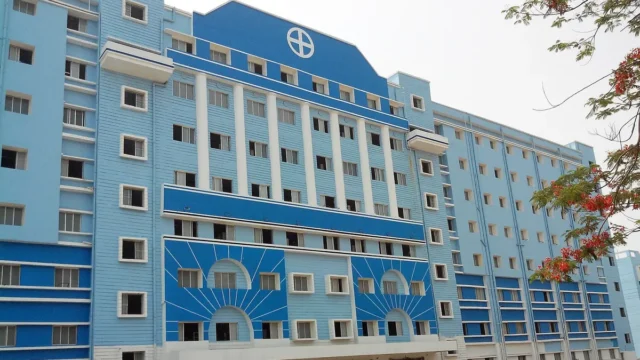
NMC withdraws MSMER-2023: medical colleges lose the fixed penalty rulebook, annual disclosure stays
The National Medical Commission (NMC) has de-notified the Maintenance of Standards of Medical Education Regulations, 2023 (MSMER-2023) by a notification dated 14 October 2026, published in the Gazette on 16 October. Its fixed penalties, including seat cuts and fines of up to ₹5 lakh for false records, go with it. The Annual Disclosure Report stays.
UPSC angle: Prelims: NMC Act 2019, autonomous boards, Concurrent List Entry 25. · Mains GS-II: regulation of medical education.
19 Oct 2026Learn the concept
Question text as printed in the official UPSC Civil Services (Main) question paper. The model answer is original Battle IAS work; use it to learn structure, not to memorise.
Want every PYQ in one place? See the Battle IAS PYQ Book.