
UPSC Mains 2017 GS Paper 1 Q3: model answer
Why did the Moderates fail to carry conviction with the nation about their proclaimed ideology and political goals by the end of the nineteenth century?
What the question wants
Explain why the Moderates could not carry the nation with their ideology and goals by the end of the 19th century.
How to structure it
Why: give the reasons for their failure; a brief credit to them adds balance.
- Who the Moderates were
- Their ideology and methods
- Reasons for failure
- Their lasting contribution
How to think it through
The Moderates were the polite petition-writers of the movement: brilliant economists, loyal subjects, believers in British justice. The problem: the British weren't listening, and the masses weren't in the room. Their famous critic Aurobindo called their politics 'mendicancy'. That's the heart of 'why they failed to carry conviction'.
Model answer
The Moderates (1885–1905), including Dadabhai Naoroji, Pherozeshah Mehta, Surendranath Banerjea and G.K. Gokhale, led the Congress in its early years.
Their ideology and methods
- Faith in British justice; demands for reform in councils, Indianisation of services and lower military spending.
- Methods of 'prayer, petition and protest': resolutions, memoranda and delegations to Britain.
Why they failed to carry conviction
- Narrow social base: mostly educated urban professionals; no link with peasants and workers.
- Meagre results: the Indian Councils Act of 1892 was a small concession; most demands were ignored.
- Their loyalty to the Crown looked contradictory beside their criticism of colonial exploitation.
- Rising anger over famines and plague in the 1890s, and Curzon's arrogance, made petitions seem futile.
- Extremists such as Tilak, Lajpat Rai and Bipin Chandra Pal called their methods 'political mendicancy' (Aurobindo's phrase).
Their contribution
- The drain theory, which exposed colonial exploitation, and a training in political work.
Final word
The Moderates failed to inspire the nation because their methods were too mild and their base too narrow, but their economic critique laid the intellectual foundation of Indian nationalism.
Keywords, cases and data to drop in
Dadabhai Naoroji, Gokhale, drain theory, Indian Councils Act 1892, 'political mendicancy', Lal-Bal-Pal.
Where most answers lose marks
- Only praising the Moderates. The question asks why they failed.
Related Mains PYQs
- Why did the armies of the British East India Company - mostly comprising of Indian soldiers - win consistently against the more… UPSC 2022 · GS-I
- Why was there a sudden spurt in famines in colonial India since the mid-eighteenth century? Give reasons. UPSC 2022 · GS-I
- Bring out the constructive programmes of Mahatma Gandhi during Non-Cooperation Movement and Civil Disobedience Movement. UPSC 2021 · GS-I
- Trace the rise and growth of socio-religious reform movements with special reference to Young Bengal and Brahmo Samaj. UPSC 2021 · GS-I
Fresh examples from current affairs
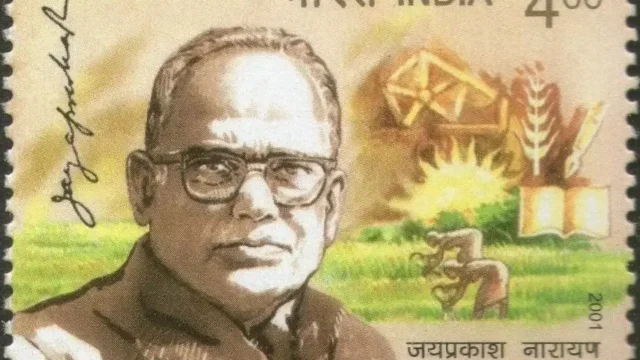
Birth anniversaries: Jayaprakash Narayan and Nanaji Deshmukh
11 October is the birth anniversary of Loknayak Jayaprakash Narayan and Nanaji Deshmukh, both Bharat Ratna awardees. The Prime Minister recalled JP's voice during the Emergency and his concern for good governance, and Nanaji's work in rural development and community participation. Treat this as a personality note for Prelims.
UPSC angle: Prelims: personalities, Bharat Ratna years. · Mains: limited; GS-IV examples of public service.
11 Oct 2026
ASI and Denmark museum to search for 1619 Danish shipwreck Oresund off Karaikal
The Archaeological Survey of India's Underwater Archaeology Wing and the National Museum of Denmark (Njord Centre, Copenhagen) signed an MoU to locate and document the Danish ship Oresund, wrecked off Karaikal, Puducherry, in 1619 CE. It is described as the first Danish ship known to have reached India.
UPSC angle: Prelims: Danish settlements in India.
15 Jun 2026
Veer Bal Diwas and the Rashtriya Bal Puraskar
The PM announced the day on 9 January 2022 and the first Veer Bal Diwas was held on 26 December 2022 [PMO].
UPSC angle: Prelims: Sikh history.
26 Dec 2025
Stamp on Emperor Perumbidugu Mutharaiyar II
Questions on lesser-known regional dynasties are common in Prelims. Stamps and anniversaries often bring them into the news.
UPSC angle: Prelims: early medieval Tamil dynasties.
14 Dec 2025Learn the concept
Question text as printed in the official UPSC Civil Services (Main) question paper. The model answer is original Battle IAS work; use it to learn structure, not to memorise.
Want every PYQ in one place? See the Battle IAS PYQ Book.