
UPSC Mains 2018 GS Paper 1 Q13: model answer
Why indentured labour was taken by the British from India to other colonies? Have they been able to preserve their cultural identity over there?
What the question wants
Explain why the British took Indian indentured labour to other colonies, and whether the migrants preserved their culture.
How to structure it
Two questions: why (causes) and have they preserved (assess, with examples).
- Why indenture began
- Where and how
- Preservation of identity
- Change and verdict
How to think it through
Slavery ended in the British empire in 1833–34, and sugar plantations suddenly needed new hands. India's poverty and famine made it the supply. That's the 'why'. For the 'identity' part, think of Bhojpuri chutney music in Trinidad, Ramayana mandalis in Fiji, Diwali in Mauritius. The fair verdict: preserved and transformed.
Model answer
The indenture system (from 1834 to its abolition in 1917–1920) took over a million Indians to British and other colonies.
Why indentured labour was taken
- The abolition of slavery (1833) created a labour shortage on sugar, rubber and tea plantations.
- Poverty, famine, debt and the decline of crafts in India, especially in Bihar, eastern UP and Madras, created a willing or recruitable supply.
- Contracts (girmit) of about five years, with promises of return passage.
Where
- Mauritius (from 1834), British Guiana, Trinidad, Fiji, Natal (South Africa), Suriname and others.
Preservation of identity
- Religion and festivals: Hindu and Muslim practices, Diwali and Eid; Ramayana recitation and temples.
- Language: Bhojpuri-based languages survive in Mauritius and Suriname; Fiji Hindi.
- Food, music (chutney music in the Caribbean) and family customs.
Change and adaptation
- Caste weakened during the voyage and on plantations; creole and local cultures mixed.
- Political prominence today: leaders of Indian origin in Mauritius, Trinidad and Guyana.
Conditions
- Long hours, harsh punishments, low wages and poor housing led critics to call it 'a new system of slavery' (Hugh Tinker).
- Gandhi and Gokhale campaigned against it, and Gokhale moved a resolution for abolition in the Imperial Legislative Council (1912); C. F. Andrews reported on Fiji; the system ended in 1917.
Cultural continuity today
- Mauritius marks Aapravasi Day on 2 November; the Aapravasi Ghat is a UNESCO site (2006).
- Pravasi Bharatiya Divas honours the diaspora's ties with India.
- Girmitiya descendants such as Mahendra Chaudhry (Fiji) and Kamla Persad-Bissessar (Trinidad) rose to head governments.
Looking ahead
The girmitiyas preserved a remarkable share of their culture while adapting it. Their descendants form an important part of the Indian diaspora today.
Draw: World map with arrows from Calcutta and Madras to the colonies.
Keywords, cases and data to drop in
Abolition of slavery 1833, girmit, Mauritius 1834, Fiji, Natal, Bhojpuri, chutney music, abolition 1917.
Where most answers lose marks
- Answering only the first part. The second part (identity) carries half the marks.
Related Mains PYQs
- Why did the armies of the British East India Company - mostly comprising of Indian soldiers - win consistently against the more… UPSC 2022 · GS-I
- Why was there a sudden spurt in famines in colonial India since the mid-eighteenth century? Give reasons. UPSC 2022 · GS-I
- Bring out the constructive programmes of Mahatma Gandhi during Non-Cooperation Movement and Civil Disobedience Movement. UPSC 2021 · GS-I
- Trace the rise and growth of socio-religious reform movements with special reference to Young Bengal and Brahmo Samaj. UPSC 2021 · GS-I
Fresh examples from current affairs
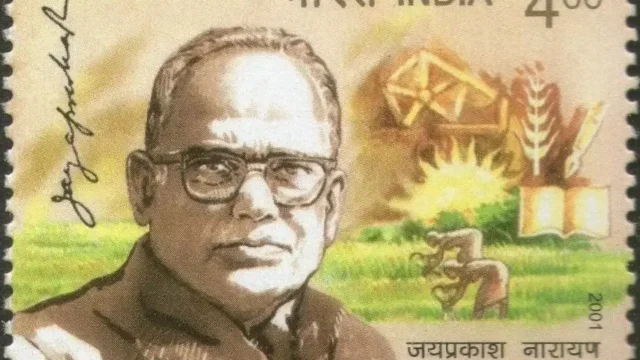
Birth anniversaries: Jayaprakash Narayan and Nanaji Deshmukh
11 October is the birth anniversary of Loknayak Jayaprakash Narayan and Nanaji Deshmukh, both Bharat Ratna awardees. The Prime Minister recalled JP's voice during the Emergency and his concern for good governance, and Nanaji's work in rural development and community participation. Treat this as a personality note for Prelims.
UPSC angle: Prelims: personalities, Bharat Ratna years. · Mains: limited; GS-IV examples of public service.
11 Oct 2026
ASI and Denmark museum to search for 1619 Danish shipwreck Oresund off Karaikal
The Archaeological Survey of India's Underwater Archaeology Wing and the National Museum of Denmark (Njord Centre, Copenhagen) signed an MoU to locate and document the Danish ship Oresund, wrecked off Karaikal, Puducherry, in 1619 CE. It is described as the first Danish ship known to have reached India.
UPSC angle: Prelims: Danish settlements in India.
15 Jun 2026
Veer Bal Diwas and the Rashtriya Bal Puraskar
The PM announced the day on 9 January 2022 and the first Veer Bal Diwas was held on 26 December 2022 [PMO].
UPSC angle: Prelims: Sikh history.
26 Dec 2025
Stamp on Emperor Perumbidugu Mutharaiyar II
Questions on lesser-known regional dynasties are common in Prelims. Stamps and anniversaries often bring them into the news.
UPSC angle: Prelims: early medieval Tamil dynasties.
14 Dec 2025Learn the concept
Question text as printed in the official UPSC Civil Services (Main) question paper. The model answer is original Battle IAS work; use it to learn structure, not to memorise.
Want every PYQ in one place? See the Battle IAS PYQ Book.