
UPSC Mains 2019 GS Paper 1 Q2: model answer
The 1857 Uprising was the culmination of the recurrent big and small local rebellions that had occurred in the preceding hundred years of British rule. Elucidate.
What the question wants
Elucidate how 1857 was the culmination of a century of local rebellions against British rule.
How to structure it
Elucidate: link earlier uprisings (civil, tribal, peasant, sepoy) to 1857.
- Earlier rebellions by type
- Common causes
- How 1857 brought them together
- Conclusion
How to think it through
The British liked to call 1857 a 'sepoy mutiny', as if it came out of nowhere. This question says no: it was the season finale of a long series. List the earlier episodes by type and show the same grievances piling up until 1857 united sepoys, peasants and dispossessed rulers.
Model answer
Between 1757 and 1857, British rule faced repeated local uprisings. The revolt of 1857 drew on the same grievances on a far larger scale.
Earlier rebellions
- Civil rebellions by dispossessed rulers and zamindars: Polygar rebellions in the south; Velu Thampi in Travancore (1808–09).
- Religious-peasant movements: the Sanyasi and Fakir rebellion in Bengal; the Faraizi movement.
- Tribal revolts: the Kol uprising (1831–32), the Santhal Hul (1855–56).
- Sepoy mutinies: Vellore (1806), Barrackpore (1824).
Common causes
- Heavy revenue demand and loss of land; ruin of crafts; annexations.
- Interference in religion and customs; racial discrimination in the army.
How 1857 was the culmination
- It united sepoys, peasants, artisans and dispossessed rulers (Nana Saheb, Rani Lakshmibai, Begum Hazrat Mahal, Kunwar Singh).
- It spread across large parts of north and central India and adopted the Mughal emperor as a symbol.
Limits
- Many regions and groups stayed aloof; it lacked a common programme.
Conclusion
1857 was not a sudden mutiny but the climax of a century of resistance, which is why it became a symbol for later nationalism.
Draw: Timeline 1757–1857 with rebellions above the line and 1857 at the end.
Keywords, cases and data to drop in
Vellore 1806, Barrackpore 1824, Kol 1831, Santhal Hul 1855, Sanyasi-Fakir, Bahadur Shah Zafar.
Where most answers lose marks
- Writing only the causes of 1857 with no earlier rebellions.
Related Mains PYQs
- Why did the armies of the British East India Company - mostly comprising of Indian soldiers - win consistently against the more… UPSC 2022 · GS-I
- Why was there a sudden spurt in famines in colonial India since the mid-eighteenth century? Give reasons. UPSC 2022 · GS-I
- Bring out the constructive programmes of Mahatma Gandhi during Non-Cooperation Movement and Civil Disobedience Movement. UPSC 2021 · GS-I
- Trace the rise and growth of socio-religious reform movements with special reference to Young Bengal and Brahmo Samaj. UPSC 2021 · GS-I
Fresh examples from current affairs
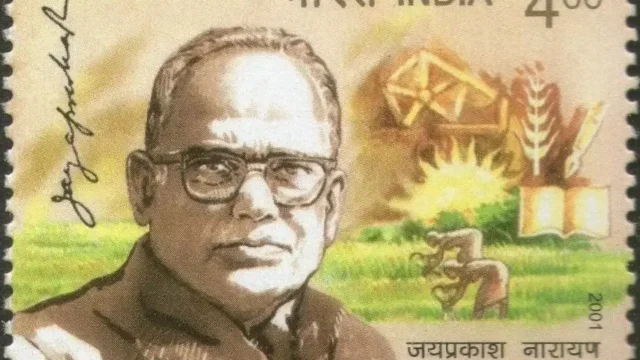
Birth anniversaries: Jayaprakash Narayan and Nanaji Deshmukh
11 October is the birth anniversary of Loknayak Jayaprakash Narayan and Nanaji Deshmukh, both Bharat Ratna awardees. The Prime Minister recalled JP's voice during the Emergency and his concern for good governance, and Nanaji's work in rural development and community participation. Treat this as a personality note for Prelims.
UPSC angle: Prelims: personalities, Bharat Ratna years. · Mains: limited; GS-IV examples of public service.
11 Oct 2026
ASI and Denmark museum to search for 1619 Danish shipwreck Oresund off Karaikal
The Archaeological Survey of India's Underwater Archaeology Wing and the National Museum of Denmark (Njord Centre, Copenhagen) signed an MoU to locate and document the Danish ship Oresund, wrecked off Karaikal, Puducherry, in 1619 CE. It is described as the first Danish ship known to have reached India.
UPSC angle: Prelims: Danish settlements in India.
15 Jun 2026
Veer Bal Diwas and the Rashtriya Bal Puraskar
The PM announced the day on 9 January 2022 and the first Veer Bal Diwas was held on 26 December 2022 [PMO].
UPSC angle: Prelims: Sikh history.
26 Dec 2025
Stamp on Emperor Perumbidugu Mutharaiyar II
Questions on lesser-known regional dynasties are common in Prelims. Stamps and anniversaries often bring them into the news.
UPSC angle: Prelims: early medieval Tamil dynasties.
14 Dec 2025Learn the concept
Question text as printed in the official UPSC Civil Services (Main) question paper. The model answer is original Battle IAS work; use it to learn structure, not to memorise.
Want every PYQ in one place? See the Battle IAS PYQ Book.