
UPSC Mains 2019 GS Paper 2 Q10: model answer
‘Too little cash, too much politics, leaves UNESCO fighting for life.’ Discuss the statement in the light of US’ withdrawal and its accusation of the cultural body as being ‘anti-Israel bias’.
What the question wants
Discuss UNESCO's financial and political crisis in the light of the US withdrawal and its charge of anti-Israel bias.
How to structure it
Discuss in the light of: the crisis, causes, India's view.
- The crisis
- Why the US left
- Effects
- Later developments
How to think it through
The US cut funding after Palestine was admitted in 2011, about 22% of the budget. It left in 2018, rejoined in 2023, and announced another withdrawal in 2025. Show the money and the politics.
Model answer
In 2011 UNESCO admitted Palestine as a full member. Under US law, Washington stopped paying its dues, about 22% of UNESCO's budget. The agency has been short of money and caught in politics ever since.
Why the US left
- Resolutions on Jerusalem's Old City and Hebron sites, which the US and Israel called anti-Israel.
- Unpaid dues of over $500 million.
- The US left at the end of 2018, as did Israel.
Effects
- Budget cuts, frozen posts and fewer programmes in education and science.
- Greater influence of other funders, including China.
- Doubts about UNESCO's neutrality and its heritage listing process.
Later developments
The US rejoined in 2023 and pledged to clear its dues, then announced in 2025 that it would leave again, with effect from the end of 2026.
India's view
India supports UNESCO's role in heritage, education and science, and backs reform through dialogue rather than exit.
The statement is fair: specialised agencies survive on trust and money, and politics drains both. UNESCO's future depends on broadening its funding and keeping its focus on education, science and culture.
Draw: A UNESCO building with a funding tank draining from a pipe labelled 'politics'.
Keywords, cases and data to drop in
Palestine admission 2011, US funding cut (22%), withdrawal 2018, rejoining 2023, 2025 withdrawal announcement, World Heritage politicisation, assessed vs voluntary contributions.
Where most answers lose marks
- Ignoring the 'too little cash' half.
Related Mains PYQs
- “BRICS acts as a powerful counterweight in global governance, actively amplifying the voice and influence of the Global South.” Explain the role… UPSC 2026 · GS-II
- India-Africa digital partnership is achieving mutual respect, co-development and long-term institutional partnerships. Elaborate. UPSC 2025 · GS-II
- “With the waning of globalization, post-Cold War world is becoming a site of sovereign nationalism.” Elucidate. UPSC 2025 · GS-II
- “The reform process in the United Nations remains unresolved, because of the delicate imbalance of East and West and entanglement of the… UPSC 2025 · GS-II
Fresh examples from current affairs
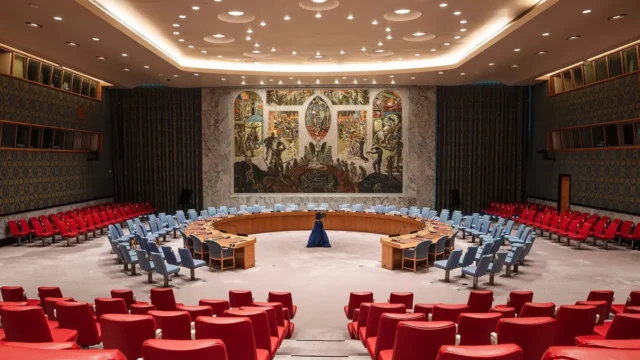
UNSC faces a ‘legitimacy deficit’: India’s case for Security Council reform at the UN
On 22 October 2026, India’s Permanent Representative to the UN, Ambassador P. Harish (Harish Parvathaneni), told the General Assembly that authority won in a war 80 years ago cannot make up for the ‘deficit in legitimacy’ of an unrepresentative Security Council today. He pointed out that Asia-Pacific, with over 60% of the world’s population, has just one permanent seat, and blamed a small group led by Italy, which includes Pakistan, for blocking a negotiating text. This is the classic GS-II question on UNSC reform, now with fresh quotes you can use.
UPSC angle: Prelims: UNSC composition, Article 108, G4, UfC, IGN. · Mains GS-II: reform of global institutions, India’s multilateral diplomacy.
24 Oct 2026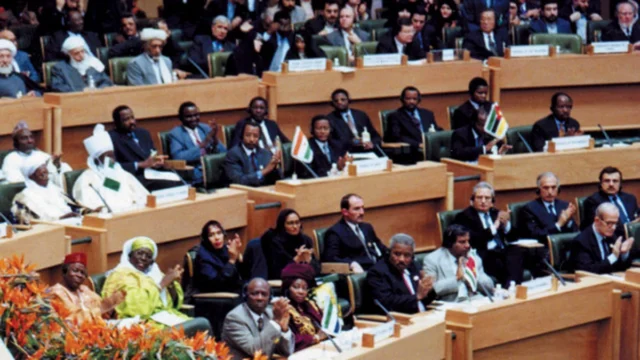
India rejects OIC’s Baghdad resolutions on Jammu and Kashmir as ‘malicious, biased and false’
On 19 October 2026 the Ministry of External Affairs rejected references to India in resolutions adopted at the Organisation of Islamic Cooperation (OIC) Council of Foreign Ministers in Baghdad on 17–18 October. It called them ‘malicious, biased and false’, said Pakistan orchestrated them, and said the OIC has no locus standi on India’s internal matters.
UPSC angle: Prelims: OIC facts, J&K Reorganisation Act, UN Charter Article 2(7). · Mains GS-II: India, OIC and Pakistan.
19 Oct 2026
India to host 61st CIML meeting on legal metrology in New Delhi, 26–28 October
India will host the 61st meeting of the International Committee of Legal Metrology (CIML) for the first time, in New Delhi from 26 to 28 October 2026. The Department of Consumer Affairs is organising it with the International Organization of Legal Metrology (OIML), and more than 100 delegates are expected, PIB said on 19 October.
UPSC angle: Prelims: OIML, CIML, Legal Metrology Act 2009, Union List Entry 50. · Mains GS-III: standards and trade.
19 Oct 2026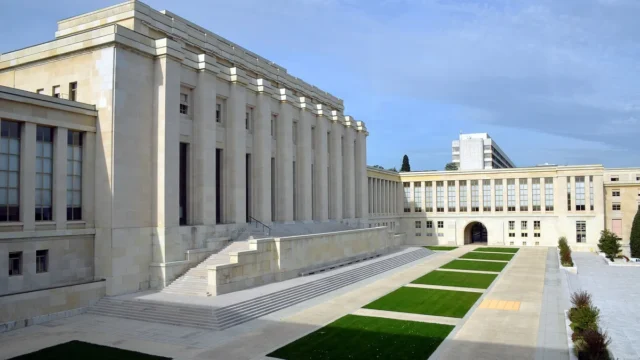
India rejects OHCHR remarks on Delhi events
On 11 October 2026 India rejected remarks by the UN Office of the High Commissioner for Human Rights on events in New Delhi the day before. MEA said peaceful assembly is a constitutional right exercised subject to public order, courts are open to all, and the remarks were interference in internal affairs.
UPSC angle: Prelims: Article 19(1)(b) and 19(3). · Mains GS-II: fundamental rights; India and international human-rights bodies.
11 Oct 2026Learn the concept
Question text as printed in the official UPSC Civil Services (Main) question paper. The model answer is original Battle IAS work; use it to learn structure, not to memorise.
Want every PYQ in one place? See the Battle IAS PYQ Book.