
UPSC Mains 2019 GS Paper 3 Q17: model answer
Define the concept of carrying capacity of an ecosystem as relevant to an environment. Explain how understanding this concept is vital while planning for sustainable development of a region.
What the question wants
Define an ecosystem's carrying capacity and explain why it is vital for planning sustainable regional development.
How to structure it
Concept, then planning use.
- Definition
- Factors
- Why it matters in planning
- Indian cases
- How to apply
How to think it through
Carrying capacity: maximum population of a species (or human activity) an environment can sustain indefinitely without degrading it; determined by limiting resources (water, food, waste absorption). Human: depends on technology, consumption. Planning: hill towns (Shimla water crisis 2018), Joshimath subsidence 2023, tourism caps (Ladakh, Sikkim, Char Dham), Wayanad, Goa; SC asked for carrying capacity studies of Himalayan states (2024). Apply: carrying capacity studies before master plans, EIA cumulative, limits on construction, tourist permits, water budgets.
Model answer
In the summer of 2018, Shimla ran out of water, and residents told tourists to stay away. The town had been built for about 25,000 people in British times; it now held lakhs of residents and visitors. Shimla had crossed its carrying capacity.
The concept
- Carrying capacity is the largest population, or level of activity, that an environment can support indefinitely without being damaged.
- It is set by limiting factors: water, food, space, energy and the ability to absorb waste.
- For humans, it changes with technology and consumption: the same valley supports more people with efficient use, fewer with wasteful use.
Its parts
- Ecological: what nature can supply and absorb.
- Physical: land, slopes and infrastructure.
- Social: what local communities will tolerate.
Why it matters in planning
- Prevents overshoot, which leads to water shortages, pollution and disasters.
- Guides limits on construction, tourism and industry.
- Reveals cumulative impacts that single-project EIAs miss.
- Protects future generations, the heart of sustainable development.
Indian cases
- Joshimath (2023): land subsidence worsened by heavy construction on unstable slopes.
- Himalayan towns: in 2024 the Supreme Court asked for carrying capacity studies of hill states.
- Tourism caps: permits in Ladakh and Sikkim, and limits on visitors to some Himalayan shrines.
- Goa and Kerala's coasts face pressure from tourism and construction.
How to apply it
- Carrying capacity studies before master plans and tourism plans.
- Water budgets for towns and river basins.
- Zoning of fragile areas and building height limits.
- Regional, cumulative EIA instead of project-by-project clearance.
- Use of technology to raise capacity: rainwater harvesting, waste recycling, public transport.
- Local participation in setting limits.
Development that ignores carrying capacity borrows from nature, and nature always collects.
Draw: A curve rising to a ceiling (carrying capacity) and crashing after overshoot.
Keywords, cases and data to drop in
carrying capacity, limiting factors, overshoot, ecological footprint, Shimla 2018, Joshimath 2023, SC on Himalayan carrying capacity 2024, tourism caps, cumulative EIA, water budget.
Where most answers lose marks
- Giving only the textbook definition without the planning link.
Related Mains PYQs
- Discuss in detail photochemical smog emphasizing its formation, effects, and mitigation. Explain the 1999 Gothenburg Protocol. UPSC 2022 · GS-III
- Discuss global warming and mention its effects on the global climate. Explain the control measures to bring down the level of greenhouse… UPSC 2022 · GS-III
- Explain the purpose of the Green Grid Initiative launched at World Leaders Summit of the COP26 UN Climate Change Conference in Glasgow… UPSC 2021 · GS-III
- Describe the key points of the revised Global Air Quality Guidelines (AQGs) recently released by the World Health Organisation (WHO). How are… UPSC 2021 · GS-III
Fresh examples from current affairs

Bleached corals revived in the lab: two studies on algae transfer and heat-tolerant symbionts
Between 2023 and 2025, about 80% of the world’s coral reefs, including India’s around Lakshadweep, faced extreme heat stress in the fourth global mass bleaching event. Now two lab studies show that bleached corals can recover, either by touching healthy corals of the same genetic stock or by receiving a lab-made heat-tolerant algae. Scientists call it a foundation for future recovery work, not a cure. For you, it is the right time to revise coral biology, India’s reefs and the threats they face.
UPSC angle: Prelims: zooxanthellae, Cnidaria, Indian reef sites, Biorock. · Mains GS-I/III: global warming and coral ecosystems.
25 Oct 2026
₹1.04 crore of access and benefit-sharing money from crops shared with 27 States and 2 UTs
When companies use India’s plants and crops for research or business, the law says they must share some of the benefit with those who conserve them. The National Biodiversity Authority has now given about ₹1.04 crore, paid by three seed and crop companies, to the biodiversity boards of 27 States and two Union Territories. Because the crops came through markets, it shared the money by each State’s crop area. For you, this links the Biological Diversity Act, the Nagoya Protocol and the Kunming–Montreal Framework.
UPSC angle: Prelims: Biological Diversity Act, NBA, BMCs, Nagoya vs Cartagena, GEF. · Mains GS-III: biodiversity conservation; farmers’ rights.
25 Oct 2026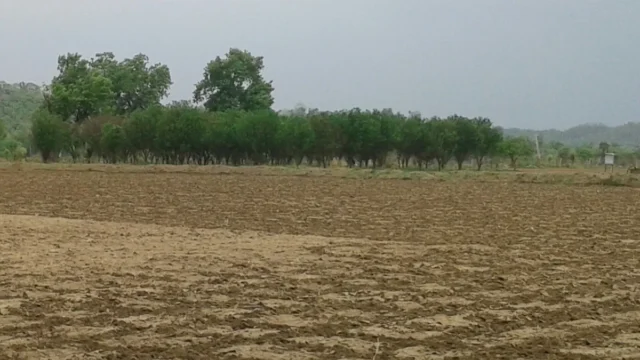
North India is drying: IMD–IITM study on shifting climate zones and the Pacific ‘Victoria Mode’
A study by scientists of the India Meteorological Department and the Indian Institute of Tropical Meteorology says India’s climate zones are shifting. In northwest India, the hot, semi-arid ‘steppe’ zone grew from about a quarter of the area to a third between 1951–80 and 1991–2020. The authors link the drying of the northern plains to a North Pacific pattern called the Victoria Mode. For you, this is a fresh way to revise the Köppen classification and the desertification debate.
UPSC angle: Prelims: Köppen types, steppe vs savannah, Victoria Mode. · Mains GS-I: desertification; climate change and agriculture.
25 Oct 2026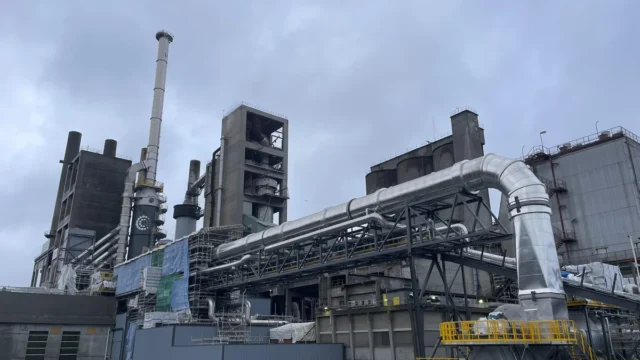
Carbon capture: how India can make its ₹20,000 crore CCUS push count, in three phases
Union Budget 2026 set aside ₹20,000 crore over five years for carbon capture, utilisation and storage (CCUS). An expert piece in the Indian Express (23 October 2026) suggests spending it in three phases: about ₹4,000 crore on research, pilots and mapping storage sites; about ₹9,000 crore on public–private plants; and ₹6,000–7,000 crore on scale-up. The aim is to help steel, cement and refineries cut emissions they cannot easily avoid.
UPSC angle: Prelims: CCUS, DAC, Deccan Traps basalt, CCTS 2023. · Mains GS-III: decarbonising industry; climate finance.
23 Oct 2026Learn the concept
Question text as printed in the official UPSC Civil Services (Main) question paper. The model answer is original Battle IAS work; use it to learn structure, not to memorise.
Want every PYQ in one place? See the Battle IAS PYQ Book.