
UPSC Mains 2020 GS Paper 1 Q11: model answer
Indian Philosophy and tradition played a significant role in conceiving and shaping the monuments and their art in India. Discuss.
What the question wants
Explain how Indian philosophy and religious tradition shaped monuments and their art.
How to structure it
Discuss: link ideas to forms, with examples across religions.
- Buddhist and Jain
- Hindu temple as cosmos
- Islamic and syncretic
- Conclusion
How to think it through
The big idea: in India, buildings are philosophy in stone. A stupa is a cosmic mound, a temple is a mountain (Meru), a Mughal garden is paradise. Pick three or four traditions and show one idea, one form for each. A structure the examiner will enjoy.
Model answer
Indian monuments were rarely built for function alone; they gave shape to ideas about the cosmos, the divine and liberation.
Buddhist and Jain traditions
- The stupa recalls the Buddha's parinirvana; circumambulation (pradakshina) mirrors the path to enlightenment.
- Aniconic symbols express the Buddha's transcendence; viharas reflect monastic discipline.
- Jain temples (Dilwara, Ranakpur) express order and renunciation.
Hindu traditions
- The temple as cosmic mountain Meru; the vastu-purusha mandala links cosmos and body.
- The small, dark garbhagriha symbolises the journey inward to the divine.
- Images of deities, avatars and Nataraja express cosmic cycles.
Islamic and syncretic traditions
- Aniconic geometry and calligraphy express the oneness of God.
- The charbagh garden of Humayun's Tomb and the Taj Mahal evokes paradise.
- Fatehpur Sikri blends traditions, reflecting Akbar's ideal of sulh-i-kul.
Examples in detail
- The Great Stupa at Sanchi has four gateways at the cardinal points, aligning the devotee with the cosmos.
- Konark is built as the chariot of Surya, the sun god, with 24 wheels representing time.
- The Kailasa temple at Ellora was carved top-down from one rock to recreate Mount Kailash.
- Ajanta murals depict compassion through bodhisattvas like Padmapani.
Living tradition
- Temple towns like Madurai, Srirangam and Puri continue as centres of ritual and festivals.
- Sikh architecture of the Golden Temple, with four doors, expresses openness to all.
- Even modern buildings borrow the vocabulary: the Lotus Temple in Delhi and Akshardham draw on old ideas of purity and sacred geometry, proof that the philosophy still guides design.
Where this leaves India
Indian monuments are philosophy made visible; understanding the ideas behind them is the key to their art.
Draw: Square mandala grid with the garbhagriha at the centre.
Keywords, cases and data to drop in
Stupa, pradakshina, Meru, vastu-purusha mandala, garbhagriha, charbagh, sulh-i-kul.
Where most answers lose marks
- Listing monuments without naming the idea behind each.
Related Mains PYQs
- How will you explain that medieval Indian temple sculptures represent the social life of those days? UPSC 2022 · GS-I
- Discuss the main contributions of Gupta period and Chola period to Indian heritage and culture. UPSC 2022 · GS-I
- Discuss the significance of the lion and bull figures in Indian mythology, art, and architecture. UPSC 2022 · GS-I
- Evaluate the nature of the Bhakti literature and its contribution to Indian culture. UPSC 2021 · GS-I
Fresh examples from current affairs
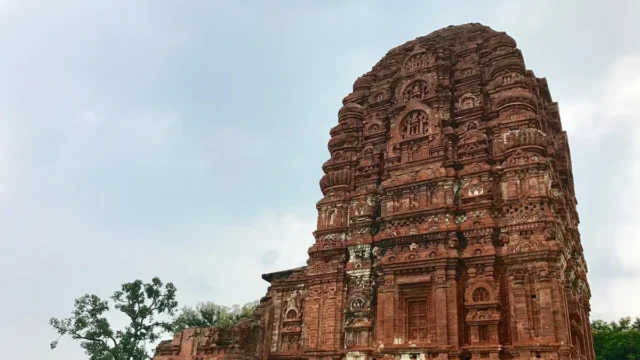
Sirpur in Chhattisgarh enters UNESCO’s Tentative List of World Heritage sites
Sirpur, an archaeological site in Chhattisgarh’s Mahasamund district with Hindu, Buddhist and Jain remains from the 5th to the 12th century CE, has been added to UNESCO’s Tentative List. The ASI now has about a year to prepare a nomination dossier proving its Outstanding Universal Value. Sirpur was once the capital of Dakshina Kosala.
UPSC angle: Prelims: Sirpur location, Lakshmana Temple, dynasties, UNESCO process. · Mains GS-I: heritage conservation and composite culture.
20 Oct 2026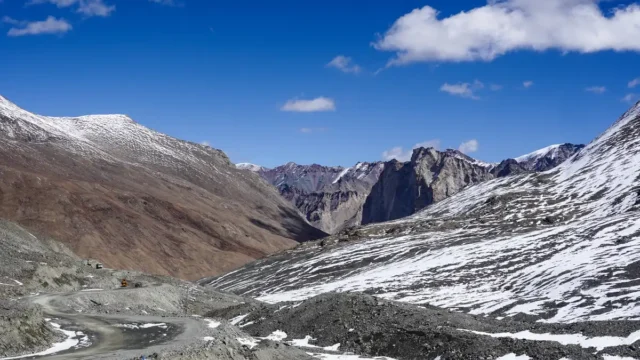
PM inaugurates five Ladakh projects: Nimmu–Padum–Darcha road, Leh terminal, Hanu hydro
On 15 October 2026 the Prime Minister inaugurated, by video conference, five projects worth about ₹3,350 crore in Ladakh: a new passenger terminal at Leh's Kushok Bakula Rimpochee Airport, the 298-km Nimmu–Padum–Darcha road built by BRO, the 9 MW Hanu small hydro project with a 66 kV line, India's first Petroglyph Conservation Park at Sindhu Ghat, and 40 water bodies under Project Him Sarovar.
UPSC angle: Prelims: Shinkun La, Zanskar, Nimmu–Padum–Darcha road, BRO, petroglyphs, Him Sarovar. · Mains GS-III: border infrastructure and security; GS-I: heritage conservation.
15 Oct 2026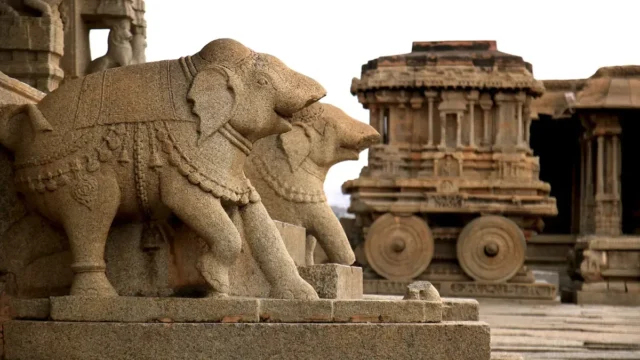
HAL, NCF and ASI sign MoA for Hampi, Taj Mahal and Bekal Fort
On 13 October 2026 HAL, the National Culture Fund and ASI signed an MoA for conservation and visitor works at Hampi, the Taj Mahal and Bekal Fort. HAL has approved about ₹23.60 crore in CSR support over three years; NCF facilitates the projects and ASI supervises them technically.
UPSC angle: Prelims: ASI, NCF, Hampi (UNESCO), Taj Mahal, Bekal Fort. · Mains GS-I: heritage conservation and corporate CSR.
14 Oct 2026
Centres of Excellence approved for five newer classical languages
On 3 October 2026 the Ministry of Education approved five Centres of Excellence for Classical Assamese, Bengali, Marathi, Pali and Prakrit, hosted by Tezpur University, Visva-Bharati, Deccan College Pune, Central University of Odisha and Central University of Gujarat. These five got classical status in October 2024, taking India's total to 11 classical languages.
UPSC angle: Prelims: match language with CoE institution; list of classical languages.
3 Oct 2026Learn the concept
Question text as printed in the official UPSC Civil Services (Main) question paper. The model answer is original Battle IAS work; use it to learn structure, not to memorise.
Want every PYQ in one place? See the Battle IAS PYQ Book.