
UPSC Mains 2022 GS Paper 1 Q15: model answer
Describing the distribution of rubber-producing countries, indicate the major environmental issues faced by them.
What the question wants
Describe where natural rubber is produced and the major environmental problems in those countries.
How to structure it
Two parts: distribution and environmental issues.
- Requirements
- Distribution
- Environmental issues
- Way forward
How to think it through
Rubber is a fussy equatorial tree: it wants heat, heavy rain spread across the year and well-drained soils. That puts it in Southeast Asia. The environmental story is about forests replaced by monocultures, a cousin of the palm oil problem.
Model answer
Thailand, Indonesia and Vietnam together produce more than half of the world's natural rubber, and about 70% of it goes into tyres.
Requirements
- Equatorial climate: 25–35°C, 200 cm or more of evenly spread rainfall, high humidity.
- Deep, well-drained lateritic or loamy soils; low-lying slopes.
- Plenty of labour for daily tapping.
Distribution
- Southeast Asia (about 90%): Thailand (largest), Indonesia, Vietnam, Malaysia, Cambodia, Myanmar, Laos.
- South Asia: India (Kerala produces most, also Tripura, Karnataka), Sri Lanka.
- Africa: Côte d'Ivoire (now a major exporter), Liberia, Nigeria.
- Latin America: Brazil, the native home of rubber, now small due to leaf blight.
- China: Hainan and Yunnan.
Environmental issues
- Deforestation: rubber expansion cleared millions of hectares of tropical forest in Southeast Asia and West Africa.
- Biodiversity loss: monocultures replace rich forests; threats to habitats in Cambodia and Laos.
- Soil erosion and degradation on hill slopes, especially when planted without cover crops.
- Water: rubber uses more water than natural forests, reducing streams and groundwater in the dry season (studies in Xishuangbanna, China).
- Chemicals: fertilisers, pesticides and herbicides pollute water.
- Processing pollution: effluents from latex and sheet processing contaminate rivers.
- Climate: carbon emissions from forest clearing; monocultures store less carbon.
- Land conflicts and displacement of indigenous communities.
- Disease risk in monocultures, such as leaf fall diseases.
- Landslides on steep plantations during heavy rain, as seen in parts of Kerala.
Way forward
- Agroforestry and intercropping; certification under the Forest Stewardship Council.
- The EU Deforestation Regulation (2023) bans rubber linked to deforestation.
- Synthetic rubber recycling and better yields on existing land.
Sustainable rubber is possible, but only if growth comes from yields, not from forests.
Draw: World map with rubber belts shaded within the tropics.
Keywords, cases and data to drop in
Equatorial climate, Thailand, Kerala, Côte d'Ivoire, South American leaf blight, monoculture, EUDR 2023, FSC.
Where most answers lose marks
- Describing rubber only in India. The question is global.
Related Mains PYQs
- Discuss the natural resource potentials of ‘Deccan Trap’. UPSC 2022 · GS-I
- Examine the potential of wind energy in India and explain the reasons for their limited spatial spread. UPSC 2022 · GS-I
- Mention the significance of straits and isthmus in international trade. UPSC 2022 · GS-I
- Despite India being one of the countries of the Gondwanaland, its mining industry contributes much less to its Gross Domestic Product (GDP)… UPSC 2021 · GS-I
Fresh examples from current affairs

Cauvery panel tells Karnataka to release 3,000 cusecs to Tamil Nadu: Article 262 and the inter-State water dispute
The Cauvery Water Regulation Committee has told Karnataka to ensure 3,000 cusecs of water a day at Biligundlu for 15 days, and the Cauvery Water Management Authority has endorsed it. Tamil Nadu wanted almost five times more, including a claimed backlog. Karnataka says a weak monsoon has left its four Cauvery reservoirs 55% short and most of its taluks in drought. For you, this is a live case study of Article 262, water tribunals and how a dry year turns sharing into a crisis.
UPSC angle: Prelims: Cauvery source and tributaries, Article 262, ISWD Act 1956, CWMA. · Mains GS-II: inter-State water disputes; cooperative federalism.
25 Oct 2026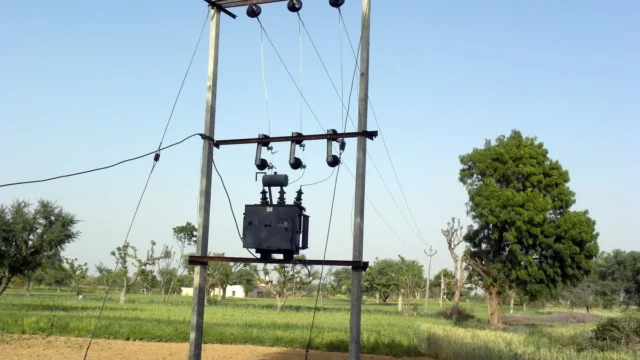
Haryana’s first private power distributor: what a parallel licence means for Gurugram and Nuh
The Haryana Electricity Regulatory Commission (HERC) on 19 October 2026 gave Eleven Power Pvt Ltd a 25-year parallel distribution licence for Gurugram and Nuh. It will be Haryana’s first private distributor and India’s second case of parallel licensing after Mumbai. The State government and power-sector staff oppose it and plan to appeal to the Appellate Tribunal for Electricity.
UPSC angle: Prelims: Section 14, APTEL, Concurrent List Entry 38. · Mains GS-III: discom reform, cross-subsidy, competition.
22 Oct 2026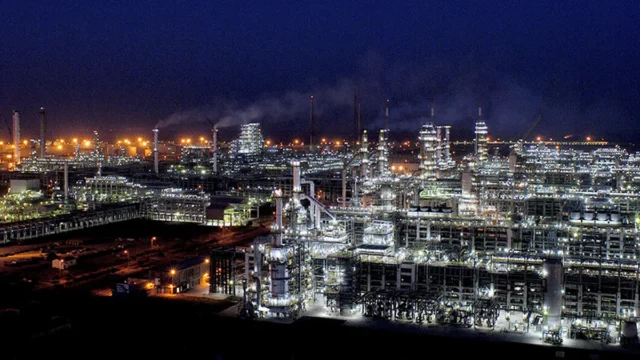
Rubio at Jamnagar: US pitches oil and Venezuelan crude to India’s ‘refining superpower’
US Secretary of State Marco Rubio visited Reliance’s Jamnagar refinery complex in Gujarat on 21 October 2026, a day after calling India a ‘refining superpower’. He wants India to buy more US oil and refine more Venezuelan crude. In Mumbai on 20 October, External Affairs Minister S. Jaishankar also held an unannounced India–US–UAE meeting on energy and connectivity, with the Strait of Hormuz blocked.
UPSC angle: Prelims: Jamnagar, Hormuz, I2U2, IMEC, SPR sites. · Mains GS-II/III: energy security vs strategic autonomy; India–US–UAE.
21 Oct 2026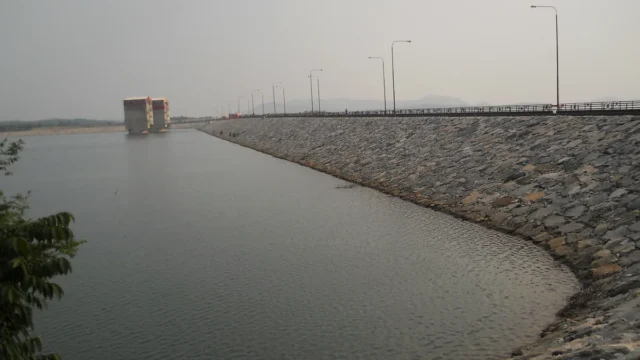
Pumped storage hydropower: India’s roadmap for 100 GW of ‘water batteries’ by 2035-36
A PIB backgrounder of 19 October 2026 explains how pumped storage projects (PSPs) will store solar and wind power for India’s grid. India runs 7.43 GW of pumped storage today, is building 15.87 GW more and has an assessed potential of 345.38 GW. A roadmap aims to add about 100 GW between 2025-26 and 2035-36.
UPSC angle: Prelims: PSP types, CEA, ISTS waiver, IRENA ranking. · Mains GS-III: storage and the clean energy transition.
19 Oct 2026Learn the concept
Question text as printed in the official UPSC Civil Services (Main) question paper. The model answer is original Battle IAS work; use it to learn structure, not to memorise.
Want every PYQ in one place? See the Battle IAS PYQ Book.